The cost of building and operating new utility-scale PV is now cheaper than running existing coal plants in China, India and across much of Europe. However, rising commodity prices could see PV projects become temporarily more expensive in the second half of 2021, according to BloombergNEF analysis.
The US’ fleet of solar and wind generation capacity is set to almost triple over the next decade, but even this is not enough to meet President Biden’s ambitious decarbonisation targets, according to a recent BloombergNEF report.
The US renewables industry overcame headwinds in 2020 to post record deployment figures and continue a decade-long growth trend, a joint report from BloombergNEF (BNEF) and the Business Council for Sustainable Energy (BCSE) has revealed.
Generating capacity from solar projects in developing economies reached 325GW in 2019, with China and India the biggest emerging markets for clean energy investment, according to new findings from BloombergNEF.
A massive renewables scale up by China to help it achieve its recently announced carbon neutrality pledge could see the country reach 4.2TW of solar capacity by 2050, a new study from BloombergNEF says.
The US residential solar sector is set to break installation records this year as clean energy development proves resilient to disruptions caused by COVID-19.
Driven by declining module costs, solar was by far the world’s leading power-generating technology installed in 2019, making up 45% of new capacity, according to BloombergNEF.
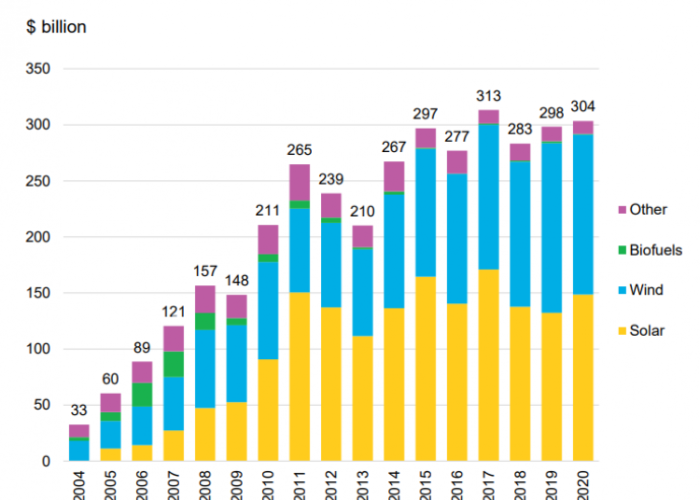
Investment in new solar capacity fell in the first half of 2020 by 12% year-on-year to US$54.7 billion as the COVID-19 pandemic hit both project financing and scheduled auctions.
Liam Stoker and José Rojo detail the impacts of the COVID-19 pandemic on the global solar industry, analysing both how the sector has responded to and tackled the crisis, and how PV is preparing for a greener future.