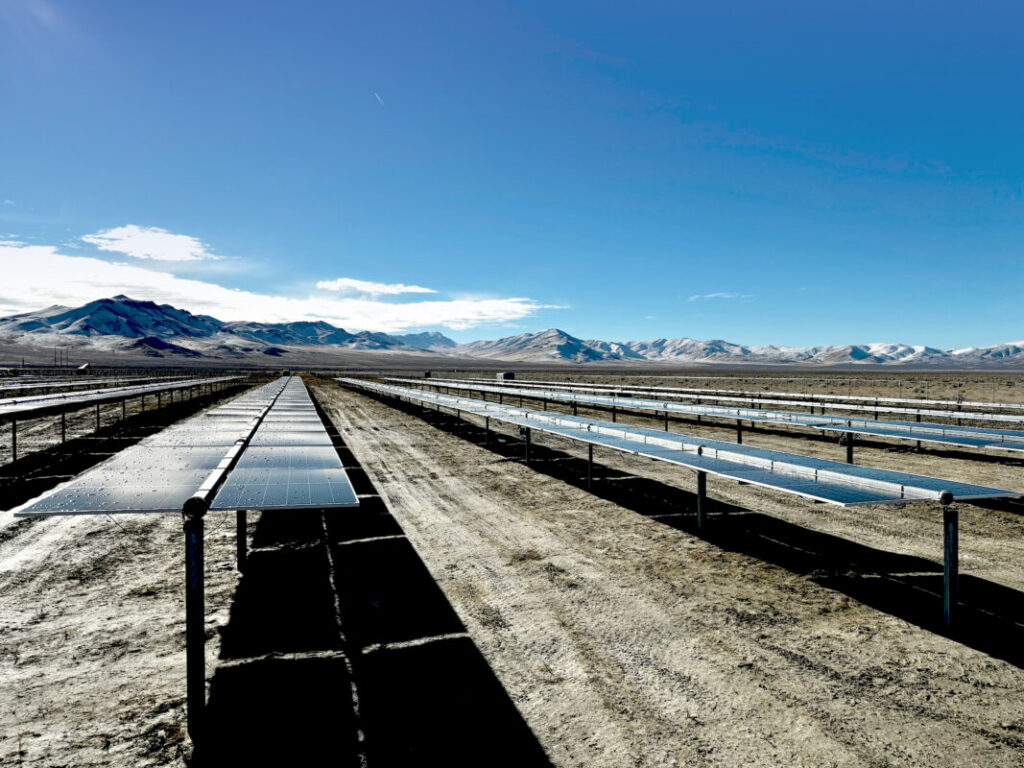
In under a month, the window for “safe harbour” to secure federal tax credits for US solar projects will shut. Project developers need to have proved the “start of construction” on their projects before 4 July if they want to secure access to the investment and procurement tax credits (ITC/PTC) that have supported the massive expansion of utility-scale solar in the US recently.
As it stands, to meet safe harbour a project must pass a “physical work test”, to prove that a “significant” amount of actual work—construction, manufacturing of certain products and so on—has begun on the project before the 4 July deadline. The more tailored to the project that its products are, the better.
Try Premium for just $1
- Full premium access for the first month at only $1
- Converts to an annual rate after 30 days unless cancelled
- Cancel anytime during the trial period
Premium Benefits
- Expert industry analysis and interviews
- Digital access to PV Tech Power journal
- Exclusive event discounts
Or get the full Premium subscription right away
Or continue reading this article for free
A District of Columbia judge also recently reintroduced the long-standing “5% safe harbour” rule, where credits can be secured by committing 5% of a project’s planned investment. The Treasury had removed the 5% safe harbour permission in its guidance following President Trump’s changes to clean energy tax credits last year.
PV Tech Premium sat down with Anne Loomis, partner at US law firm Troutman Pepper Locke, to discuss the current situation for US solar developers, the ways they are trying to secure safe harbour and what could happen after 4 July.
Tried and true strategies
“Currently, the focus is on trying to grandfather as many projects as possible,” Loomis says. “A lot of developers are looking at what can they possibly do to get more projects started by that deadline, which is now very, very soon.”
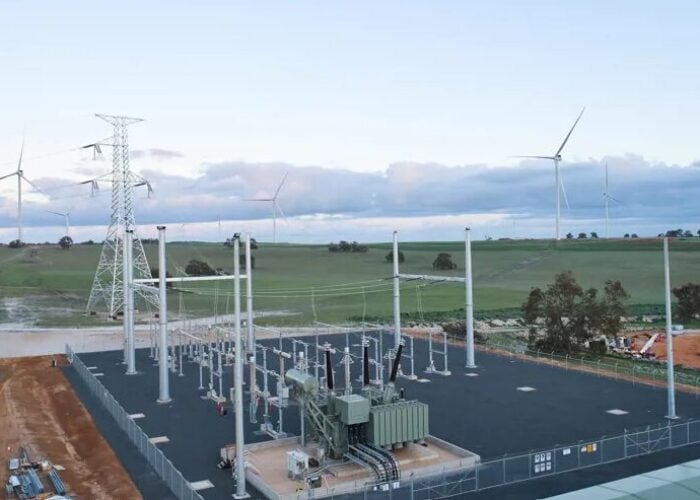
To that end, she says that companies are focusing on securing key components for their projects that can prove the start of “significant” physical work. This has mostly focused on sourcing power transformers, which are a recognised way of proving dedicated action towards constructing a solar project, partly because transformers are purpose built for solar projects.
“To the extent that they can use tried and true strategies, that’s great. Everybody loves that. But there are only so many transformers that can be manufactured by that [4 July] deadline,” Loomis explains.
This is pushing some developers to take more creative approaches to meeting the threshold. Loomis says that on the conservative end, there are developers who are working on securing medium voltage transformers rather than the main power transformers specified in the safe harbour guidance, which could give their project legitimate tax approval.
“Then we start getting more degrees of separation away from transformers,” she says, as interest moves towards products that have not got as strong a claim to being custom or bespoke to a particular project.
“The closer to the function and the manufacturing process of a transformer, the better,” as far as tax eligibility is concerned, Loomis explains.
She says she has seen some arguments that trackers can be considered custom to a project, and even arguments that modules produced for a solar project could qualify. “I think that that’s going to be a hard pill for the industry to swallow, making that type of argument. But developers are picking up every rock and turning it over and evaluating, ‘well, is this type of equipment something that can be considered custom?’”
Safe harbour can be a gamble
Relying on new strategies and products to secure safe harbour status opens developers up to future risks, Loomis says.
Fundamentally, many major financiers will be unwilling to accept novel or unknown entities when it comes to tax credits. “All of those projects are going to need more than one type of financing,” Loomis explains, “and all of those are counterparties that are typically pretty conservative, because the tax credit is still important to the capital stack” on top of construction financing and debt.
“Taking risk around the tax credit is not usually something that anybody wants to do, so with any sort of strategy that’s new, that the industry hasn’t already thought through and gotten comfortable with, those financing parties are going to be sceptical.”
She says that “top-tier” financing institutions, in particular, will steer clear of novel qualification methods “until they are pervasive in the industry.”
But maybe more importantly, a tax return is only placed on a project once it is placed in service, at which point the developer claims the tax credit. This is the same point at which the project can be audited by the IRS, and potentially find its access to the ITC or PTC denied based on the work undertaken before 4 July 2026.
“There is no process by which the IRS reviews these things early and signs off on it,” Loomis says. “So, until it’s put on a tax return, which isn’t done until the project is placed in service, the IRS won’t do any sort of evaluation on it, and then once it is on a return, then you know they’re going to audit some taxpayers and not audit others, and you don’t know whether your name is going to be called.”
That could be a real problem for some project developers. If, three or four years from now, their decision to use inverters or tracker production as a means to prove the “start of construction” is ruled invalid, then their entire financing model has to be rethought without tax credits. This is to say nothing of the domestic content and Foreign Entity of Concern (FEOC) rules, which can control the sourcing and financing behind individual components in a project also make or break tax credit eligibility and run alongside any safe harbour measures.
Loomis says the effects of the safe harbour deadline on 4 July could be felt in the US solar industry for a decade. Projects starting construction to beat the deadline then have a four-year safe harbour window to continue work, pushing them out to around 2030. Many are then set to come online in 2031-32. She explains that the project would then be put on a tax return the following year, after which the IRS has a three-year window in which it can audit the project. “So we quickly add up to a ten-year time frame,” she says.
Uncertainty over the 5% safe harbour ruling
This month’s ruling that reintroduced the 5% safe harbour qualifications made headlines. Loomis says that the ruling is probably more notable for what it may say about the long-term ability of the Trump administration to enforce and uphold the harsh changes it made to renewables support than for the immediate future of safe harbour.
“I haven’t seen a lot of change in behaviour of any of our clients, or even in talking to other tax counsel from other firms,” she says. “First of all, it’s too late, it’s too close to the July 4 deadline for people to change any sort of strategy. There’s [also] a lot of concern about the appeal—we’ve seen a lot of district courts issue injunctions related to administrative guidance for the Trump administration, and then have that be reversed on appeal. So people are not really counting on the 5% safe harbour now being intact.”
She suspects there may be “lucky” projects that qualify for the 5% rule because of the work they happen to have done, perhaps bringing more projects into eligibility via a roundabout route.
“The question that it brings up is over the Administrative Procedure Act (APA) here in the US, about how an agency is supposed to issue regulations. And I think we in the tax community have had an understanding that there needs to be a rigorous process around actual tax regulations.”
She continues to explain that the IRS often issues “subregulatory guidance”, particularly in the renewable energy space, which is not subject to comment or review. In the district court case over the 5% ruling, the court used APA standards and found the IRS’ guidance to be “arbitrary and capricious”.
Loomis wonders if this could change the way guidance is issued, and whether the appeals court—if the case is appealed—will find that greater scrutiny and procedure needs to be applied to IRS guidance on tax changes in the long-term.
From 13-14 October, PV Tech publisher Solar Media will host the PV CellTech USA conference in San Francisco, to explore how best to scale the US cell manufacturing supply chain. Read the full agenda here and book tickets on the event website.