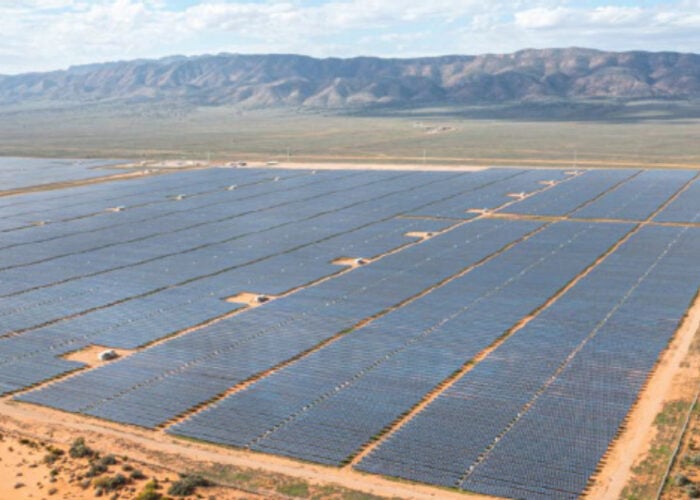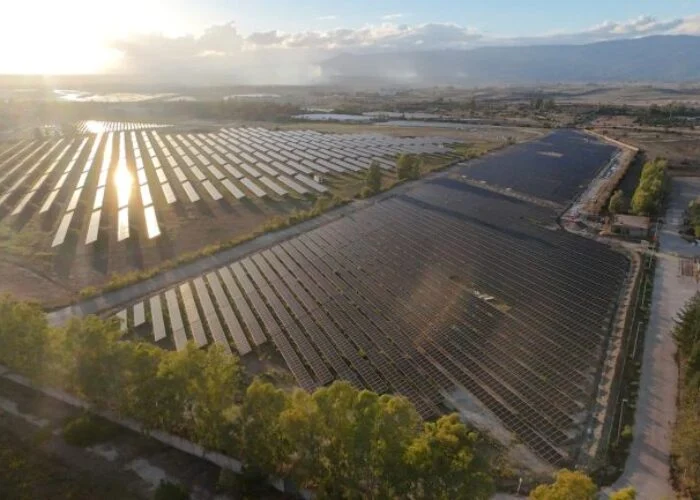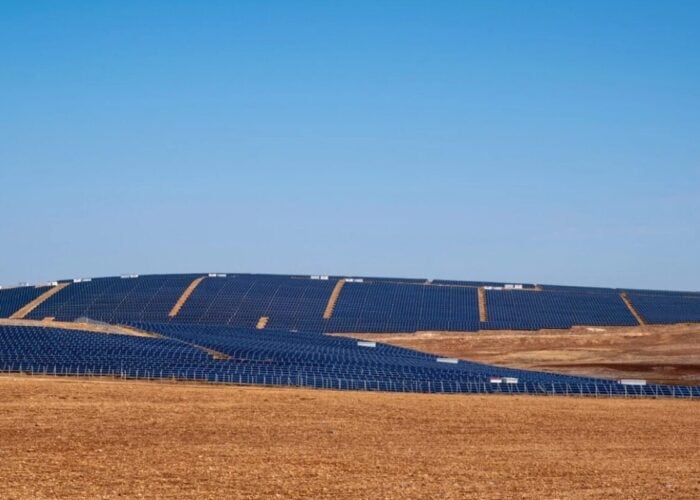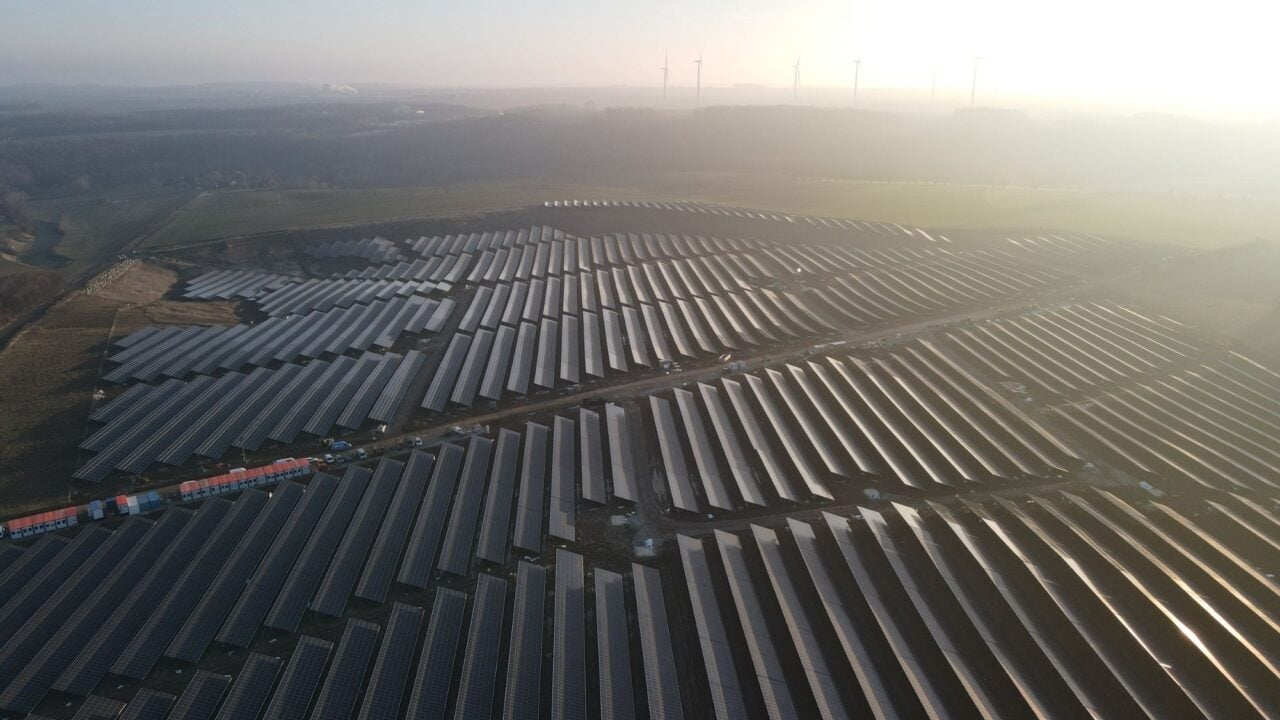
In June 2025, for the first time in history, solar PV was the single largest power generation source in Europe’s energy mix. That summer was the culmination of massive growth in the industry over the preceding ten years, which accelerated after the 2022 energy crisis that followed the outbreak of full-scale war in Ukraine.
But last year also saw the first contraction in market growth for a decade. And as another war is gearing up to wreak havoc on energy markets, and SolarPower Europe doesn’t forecast a return to 2025 deployment levels until 2030, the mood in the sector has changed.
Try Premium for just $1
- Full premium access for the first month at only $1
- Converts to an annual rate after 30 days unless cancelled
- Cancel anytime during the trial period
Premium Benefits
- Expert industry analysis and interviews
- Digital access to PV Tech Power journal
- Exclusive event discounts
Or get the full Premium subscription right away
Or continue reading this article for free
We sat down with Jan-Philip Kock, chief of staff at German independent power producer Encavis, to discuss the state of the European solar market, what impact the conflict in Iran might have and why a number of European solar companies might be in for a difficult few years. Kock is speaking at the SolarPlus Europe conference in Milan later this month, hosted by PV Tech publisher Solar Media.
‘Something needs to change’
“The mood, on a broad level, is definitely worse than two or three years ago when everybody was popping champagne,” Kock says, as we begin our discussion. We are speaking at the very end of March, over a call from his office in Munich.
“But,” he continues, “In my and in Encavis’ view, this is a development that has been in the making for a couple of years.” The signs were there, he says, in the explosion of PV development in 2022 after Russia began its full-scale invasion of Ukraine, and even rooted in the COVID-19 pandemic – and while some were external factors, some blame lies at the solar industry’s own door.
“I guess the industry has been a victim of its own success, because deployment rates have been exceptional for several years,” Kock says. “On the supply side, there has been a big reorganisation taking place.” But, he explains, energy demand has not kept pace and has actually declined.
Germany’s total industrial output has not hit late-2019 levels since the COVID pandemic, and has been on a steady, gradual decline since 2023, according to the country’s Federal Statistical Office. And the most energy-intensive industrial branches have declined significantly more than the economy-wide average. As the EU’s industrial heart and its largest solar market, the continent’s fortunes are interlinked with Germany’s.
“This is something the industry can only influence to a certain extent,” says Kock, “But I guess we have part of the blame because we haven’t been adept as an industry to build the kind of solutions that customers really want.”
By Kock’s estimation, the solutions that have been built are “nice, shiny development projects that also worked for project financing banks, and that’s it…We wanted to pass off as many risks as possible to the customer.”
This means there is a “scarcity” of PV projects in Europe that can add real value or go beyond simple energy production when the sun is out. “The whole industry knows that something needs to change,” he says.
What Europe does have is an abundance of rooftop PV and a lot of capacity in certain markets. For Kock, this also explains the current slump in fortunes, as rooftop installations “often don’t work in the way that’s most helpful for the overall energy system. They are a bit like an isolated, standalone asset, and they don’t really behave in line with other market participants,” he says. Europe saw a massive spike in rooftop solar installation after the Ukraine invasion, as citizens and companies understandably sought cushioning from gas prices.
Kock says this is one of the various reasons for “negative prices, the crowding out of PV and cannibalisation, which are a threat to all owners and operators of PV plants.
“There are a lot of projects that have been killed,” he continues, “and I guess some of them to the right extent. And we see a lot of development platforms in the market that have not yet made a successful sale. Some of them have been offered to us for the second or even third time, and this is something totally new. If you were an average developer in 2022 you would have found 10 buyers on the street in front of your office.
“Just having the abilities to develop and build a solar plant is not really something people pay for anymore,” he says.
It’s difficult, and maybe foolish, to bank on a return to 2019 levels of industrial production and energy demand (Kock points out that “If energy is too expensive, people just stop producing” – the Iran war won’t help this). But there are industries – like data centres and the defence industry – where solar development can play a strategic and growing role.
Reconstituting the competition
The shifting demands upon the solar industry are starting to change its makeup. As the call for simple solar project development has dwindled and broader geopolitical uncertainty has affected power demand and financial certainty, solar companies have to change tack.
“It’s something nicely captured by Pexapark and their ‘Next-Gen IPP,” says Kock. “IPP 1.0 was about winning the race to 1GW or 2GW of portfolio so you have something to offer a customer and not just think from plant A to plant B. The next step is now to actually build up a credible and competitive commercial organisation to play with the big boys and become competitive against the likes of Centrica, RWE and so on.”
He says that providing straightforward PPAs to companies in Europe (previously a staple diet for PV developers) has become complicated, and the demand for those products has seemingly stalled in the last year, partly due to macroeconomic changes and partly due to the shifting dynamics of energy.
“We cannot be just the provider of one small part of the solution,” Kock says. His company has apparently taken steps “to become a utility-like company ourselves” and aim to cover 100% of a given customer’s power demand.
“Not necessarily doing this by just 100% Encavis-generated electricity,” he says. “There will always be an element of electricity produced from third parties at the market. And there will always also be the need to balance between what you forecasted in terms of production and what you actually can produce.”
This is a major shift which would put renewables developers in much closer competition with utilities like RWE.
“This is an ongoing race at the moment, and where we expect to see maybe 10-12 companies able to master it by 2030,” he says. “But there are also a lot of smaller competitors that, I guess, will be forced to set off their portfolios, or forced to exit the market.
“In the last couple of years it has often just been about becoming bigger, entering new countries, scaling up and so on. Now there’s a bit of a recomposition of the competitive landscape.”
He suggests that a “couple of big players” may not be around by 2027-28: “This is, of course, a fundamental shift.”
The effects of Iran on renewables
The war in Iran (which is under a tentative ceasefire at the time of writing) may not have the same stimulatory effect on solar and other renewables as the outbreak of full-scale war in Ukraine had.
For Kock, the dynamics of energy have changed such that, “At the moment, I wouldn’t expect something dramatic to happen on the utility scale”. He says that in 2022, “every renewable plant got a free ride because the overall price level just got so high.
“First of all, we haven’t seen similar spikes yet, which could change day by day depending on what the Americans and Israelis do in the Middle East. But second, the capture rates have deteriorated so much that even a very high price back on the wholesale market is not translated one-to-one to the renewables plants. The effect is, I would say, very insubstantial at the moment.”
The conflict over Iran is currently paused under a two-week ceasefire. While it might not cause a market-based rush to install renewables, he says the Iran war may have a more circuitous impact on renewables deployment.
“If we look at the immediate fallout of the war, on wholesale prices in different European jurisdictions, you see that they are clearly skewed towards gas intensity. The effect has been most sustained in the UK and the Netherlands, and also Italy: those economies that have a high amount of gas in them”
By contrast, Spain has seen comparatively small wholesale price increases, which may indicate the success the Spanish have had in decoupling from imported gas.
“It also shows that investing in solar and wind is no green craze or no sustainability-only play. It’s really something that helps you make your economy more resilient towards geopolitical shocks.”