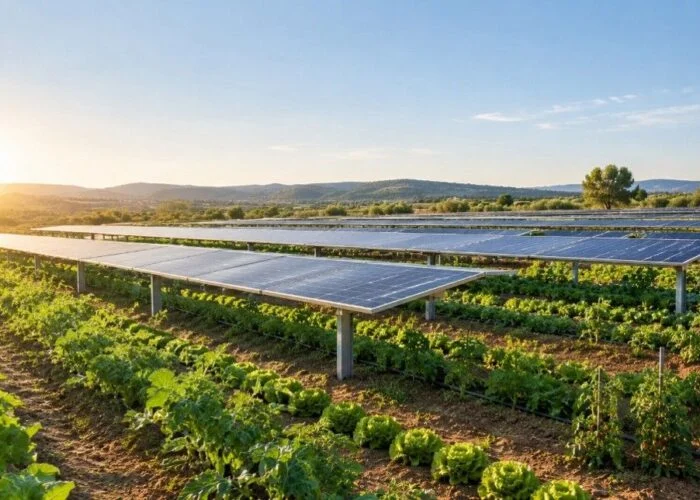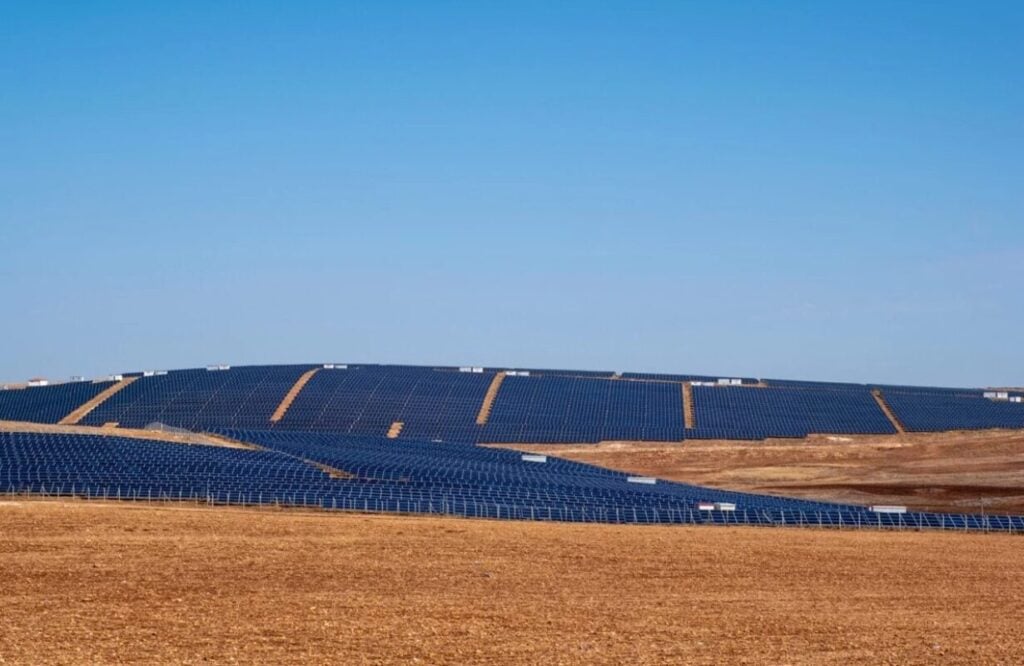
Turkey must deploy around 8GW of new capacity annually to meet its 2035 target of 120GW of installed solar and wind, a new report says.
According to Türkiye Electricity Review 2026 published by energy think tank Ember, solar and wind accounted for 22% of electricity generation in 2025, marking a record high. However, to hit its target the country must triple its installed capacity.
Try Premium for just $1
- Full premium access for the first month at only $1
- Converts to an annual rate after 30 days unless cancelled
- Cancel anytime during the trial period
Premium Benefits
- Expert industry analysis and interviews
- Digital access to PV Tech Power journal
- Exclusive event discounts
Or get the full Premium subscription right away
Or continue reading this article for free
The report notes that electricity generation in Turkey has undergone a rapid transformation over the past three years, driven by strong solar growth and record wind installations in 2025.
Solar installations reached 4.8GW in 2023, with additions remaining close to this level in subsequent years. This has resulted in solar generation doubling from 18.4TWh in 2023 to 37.3TWh in 2025. Solar’s share of electricity generation also rose from 4.7% in 2022 to 10.5% in 2025.
Combined solar and wind additions reached 6.5GW, remaining below the 8GW annual deployment required to stay on track for 2035 targets. Nevertheless, in 2025 wind and solar surpassed hydropower for the first time to become the primary drivers of renewable energy growth.
Fossil fuels remain dominant despite renewable gains
Despite the expansion of renewables, coal remains the largest source of electricity generation in Turkey, accounting for 34% in 2025. Around two-thirds of coal generation relies on imports. According to a 2025 report by Ember, coal accounted for more than one-third of Turkey’s domestic electricity generation in 2024.
Coal generation declined slightly from 122TWh in 2024 to 121TWh in 2025, and no new coal plants have been commissioned since 2022. However, the report notes that a purchase guarantee for domestic coal plants starting in 2026 could increase utilisation rates and potentially push coal generation to new highs.
Natural gas has seen a significant decline in share over time, falling from over 40% in the early 2000s and 48% in 2014 to 22% in 2025, as wind and solar capacity expanded.
Turkey underperforms in Europe while maintaining regional leadership
Total renewable energy accounted for 43% of Turkish electricity generation in 2025, including hydropower (16%) and other sources such as geothermal and biomass (5%). While this is above the global average, it remains below the EU average of 48%.
Among Europe’s 24 largest electricity-generating countries, Turkey ranks 15th in wind power,14th in solar and 16th in overall renewables share.
The country has consistently ranked 16th in recent years and has not placed in the top five since 2004. In solar, Turkey’s 10.5% share places it behind countries such as Hungary (27%), Greece and Spain (22%), and Mediterranean peers such as Portugal and Italy (17%).
However, among 16 countries in the Middle East, Caucasus and Central Asia with electricity generation above 25TWh, no country exceeds a 20% share of wind and solar. Turkey leads this group with 22%.
“In recent years, Turkey has achieved significant growth in wind and solar energy. However, when other renewable sources such as hydropower and geothermal are included, the share of renewables in electricity generation still lags behind European countries. On the other hand, Turkey is by far the regional leader in wind and solar energy among countries in the Middle East, Central Asia, and the Caucasus,” Ufuk Alparslan, regional lead, Turkey and the Caucasus, Ember, said.
Battery pipeline emerges as key differentiator
According to Ember, the country’s battery project pipeline has reached 33GW. Since 2022, new wind and solar projects are required to install battery capacity equal to their installed generation capacity
This far exceeds the pipeline in EU countries, where leading markets have 12GW-13GW of combined operational and planned capacity. Moreover, the report notes that Turkey’s battery pipeline corresponds to 83% of its current solar and wind capacity of 40GW, positioning storage as a central component of its energy transition.