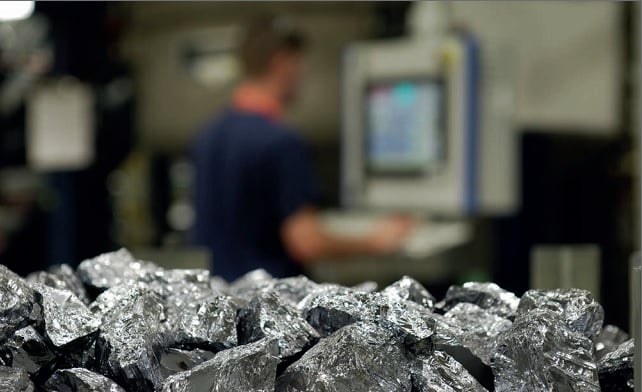
The materials sector of the photovoltaics industry saw quite a few developments in the past year. Polysilicon cost, especially given the ongoing economic downturn, had risen for most of 2008, but the expected rise in polysilicon supply has seen prices fall by around 50% over the course of the year.
Yingli Green Energy Holding Company Limited has completed acquisition of Cyber Power Group Limited, a development-stage solar-grade polysilicon producer, for approximately US$77.6 million. Yingli, the vertically integrated PV product manufacturer, marks its first venture into the polysilicon production industry with this acquisition, which was funded by available cash on hand and commitment to issue senior secured convertible notes due 2012 to Trustbridge Partners II, L.P.
LDK Solar has succumbed to the slowing demand for solar wafers from its customer base that includes Q-Cells, Sharp and Suntech, having revised revenue estimates significantly downwards for its fourth quarter guidance. The revised revenue is between US$425 and US$435 million, compared to its previous projection of between US$555 to $565 million. Wafer shipments were previously projected to be in the range of 260 to 270MW but are now expected to be in the range of 245 to 255MW. Gross margins have also been seriously affected with guidance revised to between 10% and 13%, compared to gross margins of between 18% and 21%, issued previously.
The materials sector of the photovoltaics industry saw quite a few developments in the past year. Polysilicon cost, especially given the ongoing economic downturn, had risen for most of 2008, but the expected rise in polysilicon supply has seen prices fall by around 50% over the course of the year.
The Linde Group’s, Taiwan joint venture BOC Lien Hwa (BOCLH) has been selcted to provide a range of bulk & specialty gases for Auria Solar’s new 60MW thin film production facility in Tainan, Taiwan. Auria Solar is expected to start volume production in early 2009, using a-Si thin film equipment and technology from Oerlikon Solar.
MEMC Electronic Materials, Inc. has revised downwards its revenue projections for the fourth quarter of 2008, owing to a slowdown in end demand in both the semiconductor and solar industries, according to the company. MEMC now expects to make between $400 and $425 million in the three-month period, compared to a previous guidance of $500 million plus or minus $25 million. Operating costs for the quarter are expected to remain unchanged at $27 million.
According to Taiwan’s Industrial Development Bureau, the PV industry in Taiwan is growing rapidly and requires the financial support of the Ministry of Economic Affairs (MOEA) to boost the supply of key materials required in the production of photovolatics. Assistance will be given to to support the domestic production of low-iron glass, EVA (ethyl-vinyl acetate), silver/aluminum paste, solder and other raw materials that are not currently produced in Taiwan.
By Michael Kostwald, Turner & Townsend GmbH, Germany; Hans Mahrenholtz, Linde Gas, Linde AG, Germany; &
Anish Tolia, Linde Electronics, U.S.A.
ABSTRACT
Thin-film solar cell manufacturing is poised to make a giant leap in scale with the birth of the gigawatt fab. Commercial thin-film plants are typically sized based on the capacity of the production line from the chosen equipment supplier. In most cases, initial investments have been for a single line, typically with an output capacity of no more than 60MWp. This period of initial development has allowed the industry to prove the robustness of the technology and capabilities of the equipment, as well as to understand the significance for the cost-per-watt of key cost drivers such as materials reduction, cell efficiency increases, and productivity. While large-scale manufacturing will positively impact costs, it presents a unique set of challenges for equipment and material suppliers, as well as the engineering and contracting
companies tasked with designing, building, equipping and running a facility on this scale. In this paper, we present the insights of two specialty companies in the solar industry. Turner and Townsend, a design and project management consultancy, and Linde, glass manufacturer and gas and chemical company – share their views of the challenges of the gigawatt fab in three dedicated sections.
Dr. Ann Norris, Development Scientist, Dow Corning Corporation
ABSTRACT
Silicone polymers and resins have been formulated into multiple products that have a long history of successful use in a wide variety of applications and industries. Through chemical modifications of the polymer repeat unit, the optical, mechanical, and thermal properties of the polymers can be extensively varied and tuned to meet the requirements of specific applications. The inherent properties of silicones, such as very low ionic impurities, low moisture absorption, low dielectric constant and broad temperature utility, make them excellent material choices for applications in many of the specialty markets such as automotive, healthcare, electronics and microelectronics. These properties, in conjunction with their excellent optical transparency over a wide spectrum and UV stability, make silicones highly suitable for meeting the materials requirements for encapsulation of photovoltaic cells and other opto-electronic applications. This review will focus on the unique properties of silicones that make them ideal products for the entire photovoltaic (PV) module assembly market.
Read more >>
In our first full year online, we have steadily increased the number of new products we have reviewed and also seen the new products section gain increasingly greater traffic levels throughout the year. Looking through the traffic numbers, we have identified the Top 5 most popular reviews of new products for your enjoyment.
Product Briefing Outline: Silicon Genesis has successfully produced solar substrates for the PV industry using its ‘kerf-free’ wafering process technology called ‘PolyMax’. The company has started production of the first ever kerf-free 150um solar-cell substrates at its new solar development and pilot production facility. In addition to saving poly, the wafers are claimed to be significantly more resistant to breakage than conventional wafers using its proprietary equipment.