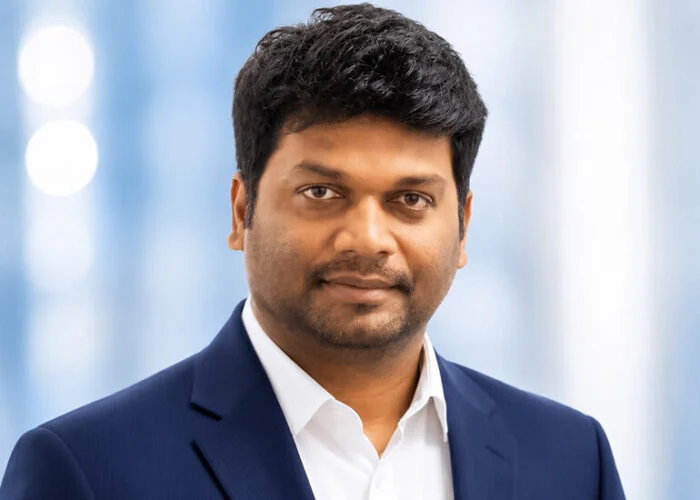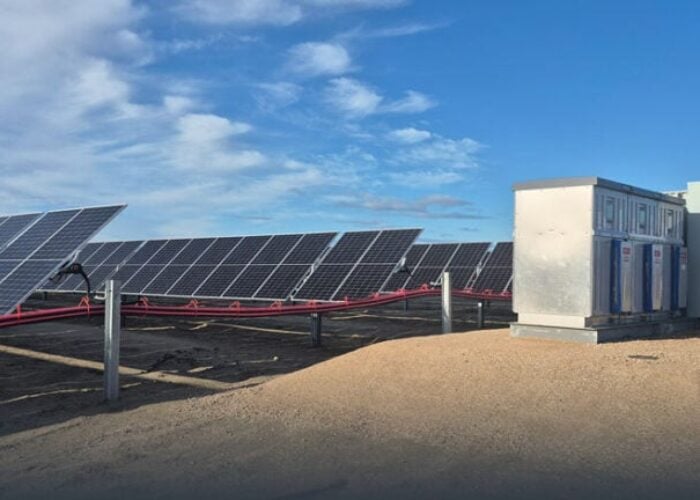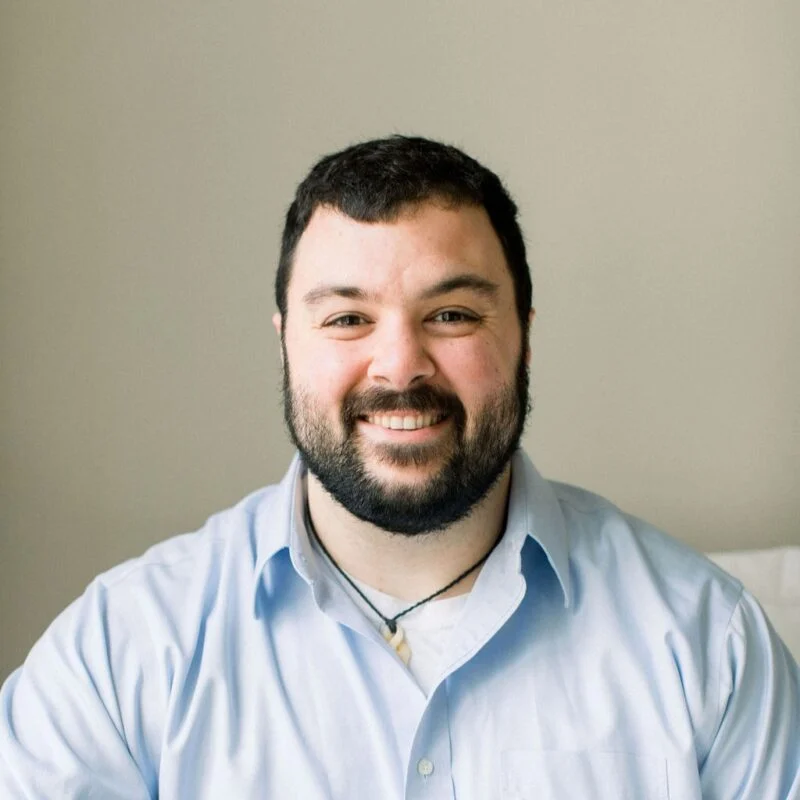
Frank Oudheusden, founder of consulting firm Azimuth Advisory Services and engineering company Resilient SolarWorks, speaks to PV Tech Premium about his work on hurricanes and extreme winds, how robotics will change the face of module installation and the importance of building a specific risk profile for a solar PV project.
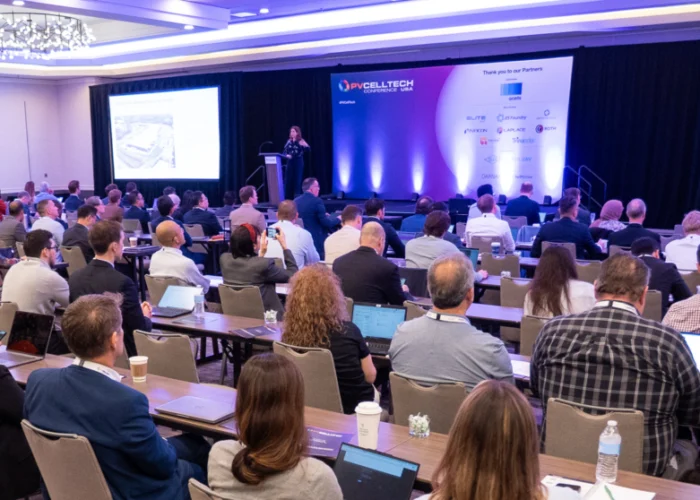
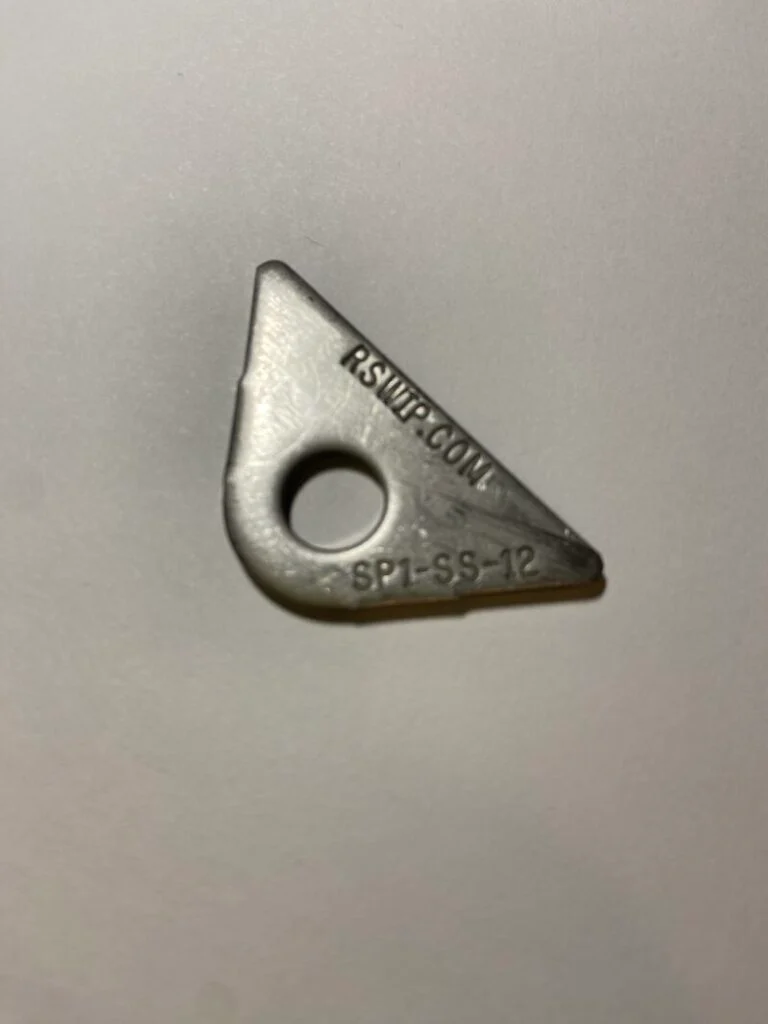
His company produces the StormPlate SP1 backing plate, which aims to improve module frame mechanical performance and reduce fatigue failure, and Oudheusden himself will speak at the PV ModuleTech USA conference in Napa, California, hosted by PV Tech publisher Solar Media on 16-17 June 2026.
Try Premium for just $1
- Full premium access for the first month at only $1
- Converts to an annual rate after 30 days unless cancelled
- Cancel anytime during the trial period
Premium Benefits
- Expert industry analysis and interviews
- Digital access to PV Tech Power journal
- Exclusive event discounts
Or get the full Premium subscription right away
Or continue reading this article for free
Oudheusden is the first of the event’s speakers to be interviewed by PV Tech Premium, and our conversation begins with the ‘Solar Under Storm’ four-part white paper series, which was published between 2017 and 2025. The reports examine PV systems’ performance during extreme weather, such as hurricanes, and Oudheusden tells PV Tech Premium that the very first report was well-received in regions, such as the Caribbean, where there is a less robust framework of standards for PV modules.
“That white paper has over five million cumulative downloads,” he says. “It is an extremely popular reference paper for specifically the Caribbean region because they don’t have codes and standards.”
Oudheusden adds that a project—a 100kW solar farm called Mayreau—has been built using all 12 recommendations from the white paper and was then hit by hurricane Beryl in 2024, which was a key source of information on the impact of a hurricane on a solar array.
“If you’re an academic, you never get any funding to do a test bed, because your test bed never gets hit twice, and ours did,” Oudheusden says, adding that a region such as the Caribbean needs to be looked at and analysed the lessons that can be learned from it, even for a small project such as Mayreau.
“Whether it’s at a 100KW scale or a gigawatt scale, we need to extrapolate out those failure modes. We need to study them deeply, and we need to innovate with those lessons learned.”
He adds that, unfortunately, the industry tends to learn lessons after extreme weather events occur and the damage is already done. “We’ve tried to be ahead of that curve.”
On the positive side, discussions about natural catastrophe (Nat cat) risk and how it works have “become very trendy” over the last 18 to 24 months.
“I’m happy to see that happening in the marketplace. But you know, to the extent that it’s rolled into actual innovation, I think that that’s lagging,” adds Oudheusden.
Misconception about a module’s load distribution
When asked in terms of easy solutions that the solar industry could implement in terms of resilience to extreme winds, Oudheusden picks from his table a triangular-shaped piece of metal that he explains is the StormPlate.
“We’re not implementing resiliency solutions that, I think, keep these large-format modules on racking systems. Our test standards are still a single module in a test rig, with even loads applied across the module’s face. That’s not the way Mother Nature does it,” says Oudheusden.
He explains that when stowing the modules at 60 degrees, the loads are highly nonlinear across the module’s face. One misconception that people would make is that if you have a four bolted connection that are evenly loaded, this does not make the loads evenly split.
“In reality, the top side of that module gets twice as much load as the bottom side of that module, and they’re in opposite directions, so two of those bolted connections are seeing 2x the load that you’re assuming, and two of those modules are in compression, so they’re seeing none of the load. So by definition, that test standard makes it so that every bolted connection is almost universally underdesigned. That’s a huge gap,” explains Oudheusden.
A similar misconception happens with trackers on larger modules. “When you go from a 1P tracker to a 2P tracker, everybody thinks the loads are going to double, because you have twice as much surface area. When your chord length doubles, the pressures don’t go up by two. They go up by four. It is nonlinear.”
Tailored risk profiles
As the industry is trending towards larger modules, Oudheusden opinion is that module companies should make “the cheapest, ubiquitous rectangle” that they possibly can.
“And then the racking community should be adding cost to its system, depending on the application, to appropriately mount that system,” he continues. “That means if you’re in an extremely high wind zone, you’re using longer rails and you’re doing multi-point mounting, and you’re adding the cost in that way. If you’re on a carport system that’s over people and property, that’s a different risk profile.”
For Oudheusden, developers and OEM partners should develop a risk profile based on where the project will be located, although that is not what is currently happening.
“The reality in the marketplace is they’re going to mount it to whatever is the cheapest available mounting that’s allowed by industry-applicable codes and standards. And that’s because racking manufacturers are in a race to the bottom on cost, in order to win the job. And even IEs (independent engineers) and the other people who govern the risk profile, they’re in a competition with each other to win the work.”
Because of that, Oudheusden says that in the short term, this means that certain module OEMs will retract from larger format lines, while things will settle at 575W for a while in terms of mass deployment.
“That’s because when you go up to 700-800″ wattsW, adding a thicker frame, adding thicker glass for hail, it just becomes too heavy for manual installation.”
Robotics: the next big paradigm shift
A solution to the problem of heavier modules could come from robotics. Human limitations and regulations on how much a module can weigh would no longer exist once robots can carry these modules around a site, eliminating that type of physical work.
“We’re waiting on robotics for a big paradigm shift,” says Oudheusden.
A paradigm shift that could also imply that not only can modules get bigger and heavier, but that frames and glass can be thicker too. This would also be the “ultimate answer to hail”, he continues.
“That’s a real gap in the marketplace when it comes to hail. We all kind of pretend that hail stow is this silver bullet that’s going to be required to deal with hail. If you look at the most recent hail maps, it is 50% of the contingent United States. If you’re relying on hail stow to service that market, you’re abdicating every carport, commercial rooftop and residential rooftop in 50% of the continental United States. That’s a lot of jobs.”
Going back to the role robotics could play in the solar industry, Oudheusden explains that companies such as NextPower, Array Technologies or Game Change Solar will need to own the module frame as well as the robotics that do module manipulation.
“They’re going to have to own that module frame and that robotic process to enable that mechanical connection to happen in an automated way, whether or not that happens at a higher quality because it went to robotics or not, I believe it could certainly happen. We see that in manufacturing; robotics and manufacturing definitely increase repeatability and quality.”
He adds that the electrical connection will still be required to be performed by an electrician, but if that process can be done at the same time as the mechanical connection, which is handled by a robot, it could lead to higher repeatability and ultimate precision.
“I do think that robotics is the future of installing that way. But at the moment, I think it’s more supporting human labour. Now, all of a sudden, one person can install twice as many modules in a day because they literally have two robots just soft landing [and] running to get the other one while the next one soft lands.”
This is something that we covered earlier this year in a conversation with solar robotics company Maximo, which also said that robotic installation at utility-scale would accelerate the installation process.
Establishing risk profile as early as possible
Finally, when asked about a key focus point for a company to consider when developing a project, Oudheusden says that people need to establish a “deeper investment in establishing a true risk profile as early as possible in the project”.
“And if I were advising our clients, who do a lot of M&A of projects, it’s pre-M&A. I want them investing in developing that risk profile for that project prior to acquiring that asset, and then that allows them at the negotiating table to go get a better price.”
He explains that companies establish 90% of the risk profile the day they select an engineering, procurement, and construction (EPC) contractor, which he adds is done “extremely early in the process”. His reasoning is that the EPC will determine which tracker, module and inverter will be used for a given project, which are the most determining factors for the project’s risk profile.
“My best advice for anybody who cares about resiliency is to care about it as early as possible,” concludes Oudheusden.
Frank Oudheusden will be a speaker at the upcoming PV ModuleTech USA Conference in Napa, California, on 16-17 June 2026. More details about the event’s agenda and how to attend can be viewed on PV ModuleTech USA’s website.