Israel

Country/Tariff Roof-Top Ground-Based BIPV Term
Israel

<50kW = 0.75

51kW-12MW = 0.33

12MW-60MW = 0.24

>60MW = 0.22

<51kW = 0.75

51kW-12MW = 0.33

12MW-60MW = 0.24

>60MW = 0.22

20 years

Update: December 2011

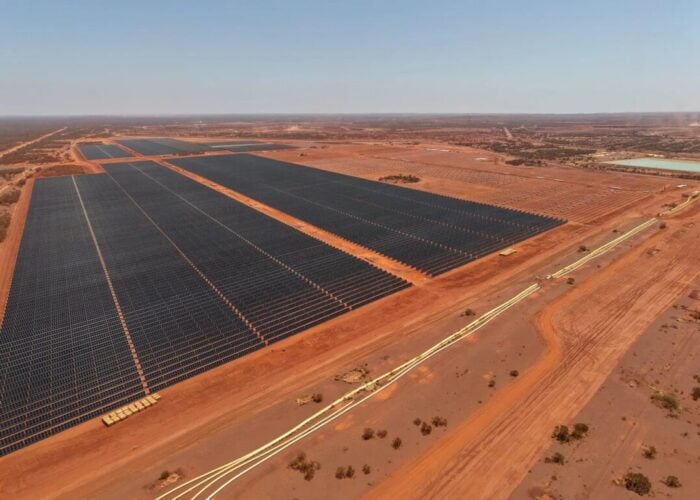
In addition to a small-scale rooftop program, a PV-dedicated scheme for 300MW of medium-sized ground-mounted and commercial rooftop systems from 50kW up to about 12MW could soon be joined by a program for supporting 500MW of larger projects for the high-voltage grid. Israel’s Public Utilities Authority (PUA) says as of mid-May 2011 more than half the 300MW scheme – 177MW from 114 projects - had already been approved for connecting to the distribution grid.

Presently, the FiT rate for 51kW to 12MW installations is dependent on how much the high voltage grid can handle. For the 51kW-12MW rate, it will drop 5% when set capacity or year-end is reached - whichever comes first. Further to that, the 12MW cap is stilll awaiting ministeral approval although it is expected to be all for PV.

History

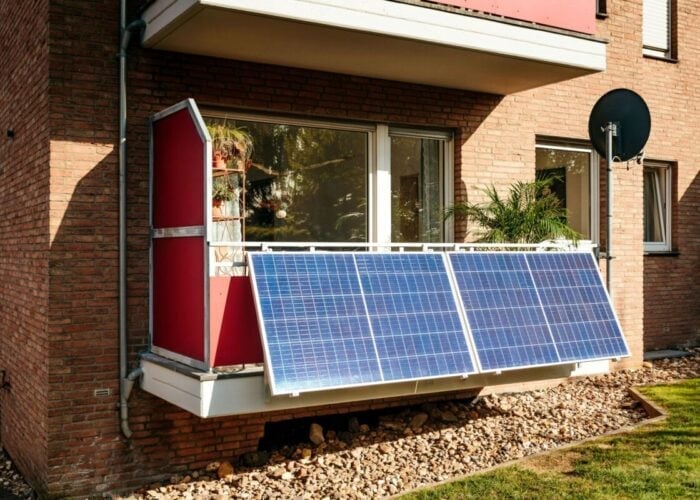
The Israeli solar market has been broken down into three segments: small, medium and large installations. Small installations of up to 50KW do not require power purchase agreements (PPA) and have been proliferating since the feed-in tariff was announced in 2008.

Medium installations of 50KW to 5MW as well as larger installations of 5MW and up do require a PPA however. The medium and large solar fields represent the state's efforts to fulfill a government decision to produce 10% of electricity from renewable sources by 2020 and 5% by 2014.

Latest Comments

  • Yuvaraj09 April 2012

    1. The propsed cut in Feed In Tariff from 43.3p to 21p/kW from April Ist is rincoadan & greater than 50% since the 43.3p figure will rise with CPI from April. A 30% reduction would be acceptable >50% is not. 2. Registration for new systems must be completed by December 12th & this means that virtually all installations started after November 1st will fail to meet this target since registration can take 6-8 weeks partly due to Government Dept involvement. Far fairer would be a registration completion date of March 12th 2012. The existing proposal could kill off 80% of solar instalation firms immediately. 3. To have a registration completion date two weeks before the end of the consultation document appraisal period cannot be legal. 4. Currently for home systems of less than 4kW output the energy companies pay an exit tariff of 3.1p/kW. Surely there is a case for raising the exit tariff rate to 6 or 7p/kW & payable on 75% of our production rather than the current 50% which doesn’t reflect the reality of the situation. 5. The majority of the population are lukewarm over green energy saving proposals, but for home solar panel installations there has been tremendous enthusiasm. The current tariff reduction proposals will kill this off .6. Finally why the moral objection to the existing generous tariffs for home solar panel installations when landowners who install wind turbines are paid subsidies at an obscene level.  Joe Bloggs is not to be allowed to profit, but Lord Joe Bloggs is. This is discimination.

Post a Comment

Post

Newsletter

Preview Latest Subscribe
We won't share your details - promise!

Publications

  • Photovoltaics International 16th Edition

    Photovoltaics International 16th Edition

    This sixteenth edition of Photovoltaics International marks four years of production of the quarterly journal. As always, our focus is on efficiency and quality improvement and cost reduction in manufacturing. As 2012 rolls along, companies are falling by the wayside due to supply and demand issues, ASP declines and drastic governmental subsidy cuts. A clear picture of 2012 is offered through papers from the likes of TÜV Rheinland, Fraunhofer ISE, SEMI PV Group and EPIA, amongst others.

  • Photovoltaics International Lite, Volume 05 - 2011

    Photovoltaics International Lite, Volume 05 - 2011

    This digital interactive Lite sees Tom Cheyney follow Agua Caliente’s progress on becoming one of first truly utility-scale PV power farms, where 40–50MW (AC) will be commissioned by the end of the year. We also feature one of the world’s largest silicon thin-film PV power plants, Avenal; a report on warnings of the collapse of module prices from Solarbuzz and PI-Berlin presents tips on PV module testing. A print version of this edition will be distributed at Solar Power International 2011 in Dallas, Texas.

  • Manufacturing The Solar Future: The 2012 Production Annual

    Manufacturing The Solar Future: The 2012 Production Annual

    Manufacturing the Solar Future 2012, the second in the Photovoltaics International PV Production Annual series, delivers the next installment of in-depth technical manufacturing information on PV production processes.

Partners

Acknowledgements

Solar Media