To hear Dr Benedikt Ortmann tell it, the deployment of a subsidy-free solar successor to BayWa r.e.’s landmark 175MWp Don Rodrigo was nothing short of a foregone conclusion.
“After the first PPA success with [offtaker] Statkraft it was kind of an obvious question between us to say – shall we go on together with a second project?,” remembers the firm’s managing director and head of solar projects. “Statkraft was doing very well in selling electricity to their customers so they agreed immediately and negotiations began.”
Try Premium for just $1
- Full premium access for the first month at only $1
- Converts to an annual rate after 30 days unless cancelled
- Cancel anytime during the trial period
Premium Benefits
- Expert industry analysis and interviews
- Digital access to PV Tech Power journal
- Exclusive event discounts
Or get the full Premium subscription right away
Or continue reading this article for free
As Ortmann explains in a call with PV Tech, held two days after 50MWp Don Rodrigo was formally announced, BayWa r.e. has to a certain extent retained its PPA approach with its smaller, second iteration.
As with the 175MWp predecessor, Don Rodrigo 2’s agreement features a fixed price and covers a sizeable share of the solar plant’s output, from 70% in a first phase to 50% at the following stage. A difference, however, is a slight squeezing of the PPA's duration from 15 to 12 years.

According to Ortmann, the shorter timeframes are meant to reflect the market’s broader sentiments around power prices. “If we lock ourselves for too long then investors see more of a risk than a chance, they worry about not being able to profit if prices going up,” he notes. “If prices drop, offtakers would not be too satisfied with the contract taking too long either.”
Recent deals have evidenced banks’ appetite for merchant-heavy Spanish projects but BayWa r.e. has, Ortmann says, so far steered clear of bank support for Don Rodrigo 2. “I doubt we’ll involve a bank. Right now, we are talking exclusively to investors who want to go full equity,” he adds, describing these firms as European asset managers, infrastructure and renewable financiers.
GCL modules, Huawei inverters
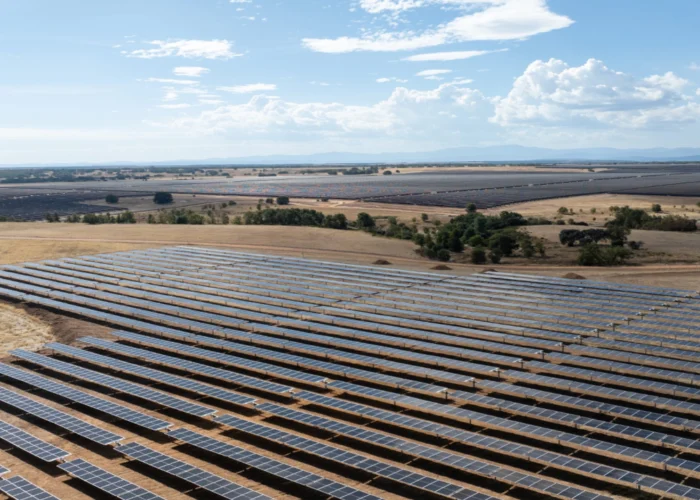
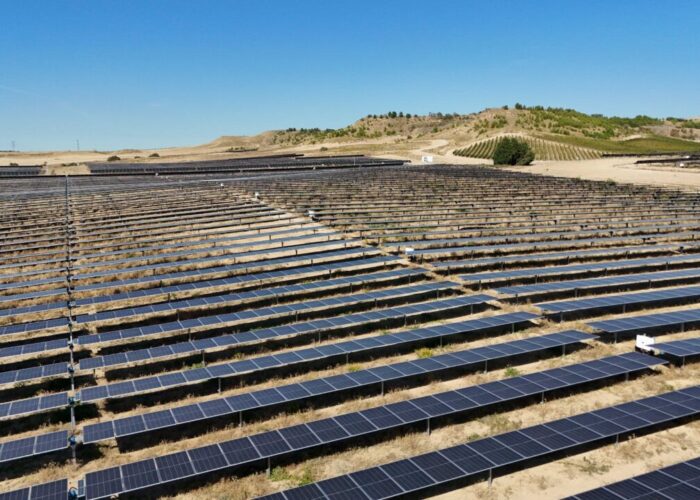
BayWa r.e.’s efforts to line up finance for Don Rodrigo 2 emerge as construction of the 50MWp plant progresses near the town of Alcalá de Guadaira, close to where its predecessor stands. The latest subsidy-free solar addition should be complete by the end of 2019, BayWa r.e. estimates.
For its Spanish sequel, BayWa r.e. has again turned (see table below) to the upstream names that equipped 175MWp Don Rodrigo. GCL, one of two module providers to the predecessor alongside Astronergy, will supply its monocrystalline half-cell products to Don Rodrigo 2. Satisfaction with Huawei’s inverters left BayWa r.e. with “no reason” to change supplier, Ortmann says.
Suppliers to BayWa r.e.’s Don Rodrigo 2
| Modules | Inverters | Trackers |
|---|---|---|
| GCL’s monocrystalline half-cell GCL-M3/72H, with an efficiency of 19.7% | Huawei’s 105KTL / 60KTL | Zimmermann PV-Tracker’s ZM Single Axis Tracker |
As Ortmann reveals, Don Rodrigo 2’s smaller size wholly responds to planning considerations. “In Spain, projects of above 50MW must be authorised by Madrid and with the first plant, it took us so long. The regional process with Don Rodrigo 2 was much, much quicker,” he says, adding that grid arrangements were smooth as the plant will tap into the same substation as its predecessors.
BayWa r.e. – whose typical business model is to offload plants after construction – sold the 175MWp forerunner to German asset manager MEAG and will likely find a different buyer for Don Rodrigo 2, Ortmann predicts.
He reports “new interested parties” keen on the 50MWp successor and adds: “Of course you get questions from all over the world but the list comes down to the most experienced operators, typically here in Europe.”
Bullish on Italy, Germany but bearish on Portugal
As PV Tech has documented this year, BayWa r.e. is not alone in its faith in the merchant potential of subsidy-free projects in Spain, a country the firm targets via O&M-focused teams in Barcelona and a more recent project development office in Madrid.
Ortmann believes financiers’ subsidy-free appetite is on the rise. “Solar’s low LCOE [levelised cost of electricity] levels are making banks comfortable with higher merchant portions,” he says. “Right now the sentiment is that it’s okay to contract a maximum of 50% of a project’s lifetime revenues.”
BayWa r.e.’s zero-subsidy PV ambitions are not limited to Spain, where the firm is evaluating further under-50MW projects as it eyes a 1GW deployment target. They extend to Italy, where a 1GW-2GW pipeline is under consideration. “Let’s see how quick Italian authorities are in granting permits,” Ortmann says. “It would be subsidy-free as investors are afraid of relying on government schemes.”
The managing director appears, however, less impressed by the Portuguese government's solar campaign, complete with record-smashing auctions. “I feel we were right in being slightly cautious because the recent tender was a bit ridiculous,” he says. “The prices we’ve seen are not realistic, I doubt there’ll be much construction for some of these projects.”
Where Ortmann describes Portugal as “less interesting”, he labels Germany’s subsidy-free solar prospects as “serious”. Having wrapped up a first 8.8MW unsubsidised project, BayWa r.e. is now looking at a pipeline of around 200MW. “There might be challenges, like finding a big site able to host 50MW or more, but subsidy-free is absolutely doable in Germany,” he comments.
The prospects and challenges of European solar's new subsidy-free era will take centre stage at Solar Media's Large Scale Solar Europe 2020, to be held in Lisbon on 31 March and 1 April 2020