As the world’s biggest producer and consumer of PV modules, China is well placed to become a global leader in sustainable PV recycling and circular manufacturing, writes Huan Li, a Research Fellow at Curtin University.
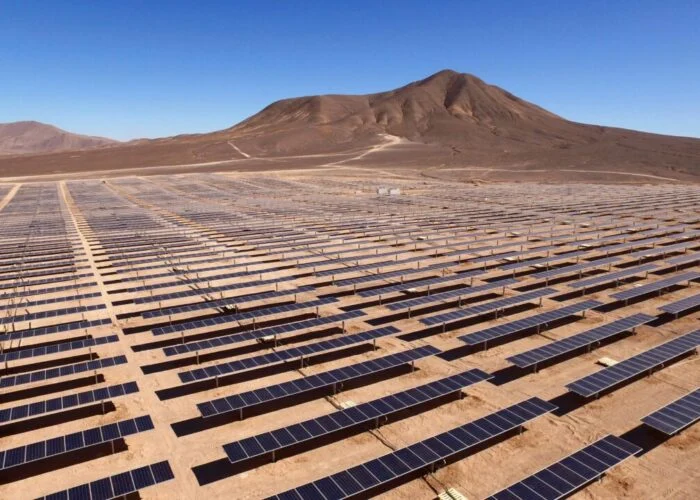
Over the past two decades, China’s photovoltaic (PV) sector has undergone unprecedented expansion, ranking first worldwide in PV module production for 17 consecutive years and in installed capacity for nine consecutive years.
Try Premium for just $1
- Full premium access for the first month at only $1
- Converts to an annual rate after 30 days unless cancelled
- Cancel anytime during the trial period
Premium Benefits
- Expert industry analysis and interviews
- Digital access to PV Tech Power journal
- Exclusive event discounts
Or get the full Premium subscription right away
Or continue reading this article for free
In the first quarter of 2025, China’s combined installed capacity of solar PV (946GW) and wind power (536GW) surpassed thermal power capacity for the first time, marking a major milestone in the country’s energy transition and signalling what is likely to become a long-term structural trend. By the end of March 2026, China’s cumulative installed PV capacity had further increased to approximately 1.24TW.
Under carbon-neutral development scenarios, projections suggest that China’s cumulative PV capacity could exceed 2.8TW by 2035 and potentially approach 6TW by 2050.
This rapid deployment is expected to result in a parallel surge in end-of-life (EoL) PV modules. Crystalline silicon (c-Si) modules, which constitute 85-95% of the market, typically have a design lifetime of 25-30 years. However, real-world lifetimes may be shortened to15-20 years or less due to failures and early replacements.
Model-based predictions indicate that China will experience its first major wave of PV decommissioning around 2030. However, substantial quantities of PV waste are already being generated during manufacturing, from weather-related damage, and through replacement under renewal initiatives. Estimates suggest PV waste could reach approximately 1.5 million tonnes by 2030 and increase to nearly 20 million tonnes by 2050.
More comprehensive projections indicate cumulative decommissioned capacity could reach 675-752GW by the end of 2045, corresponding to 50-60 million tonnes of waste modules.
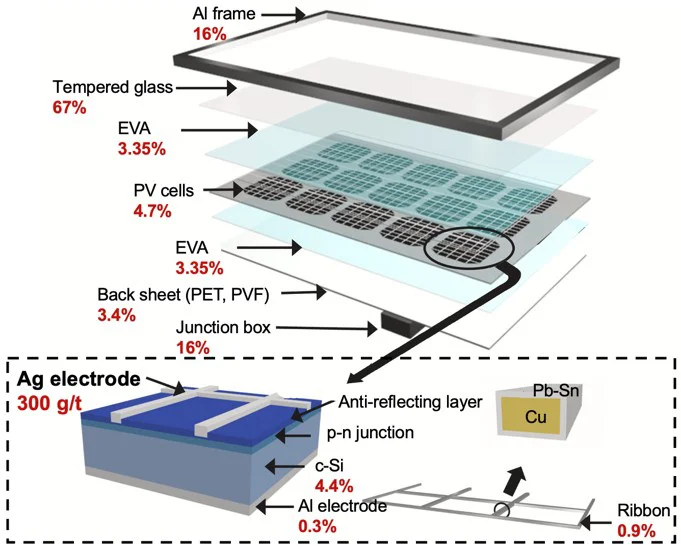
Importantly, this waste stream represents a significant secondary resource. Typical PV modules contain aluminium (~16%), glass (~67%) and smaller but high-value fractions such as silver (~300g/t), copper and high-purity silicon (6N purity). In particular, the silver grade in solar cells, which accounts for more than 60% of the economic value of a PV module, is approximately 24,100 g/t, enormously higher than that found in virgin ores.
Therefore, the EoL surge presents both an environmental challenge and a strategic opportunity for resource recovery.
Policy and regulatory environment
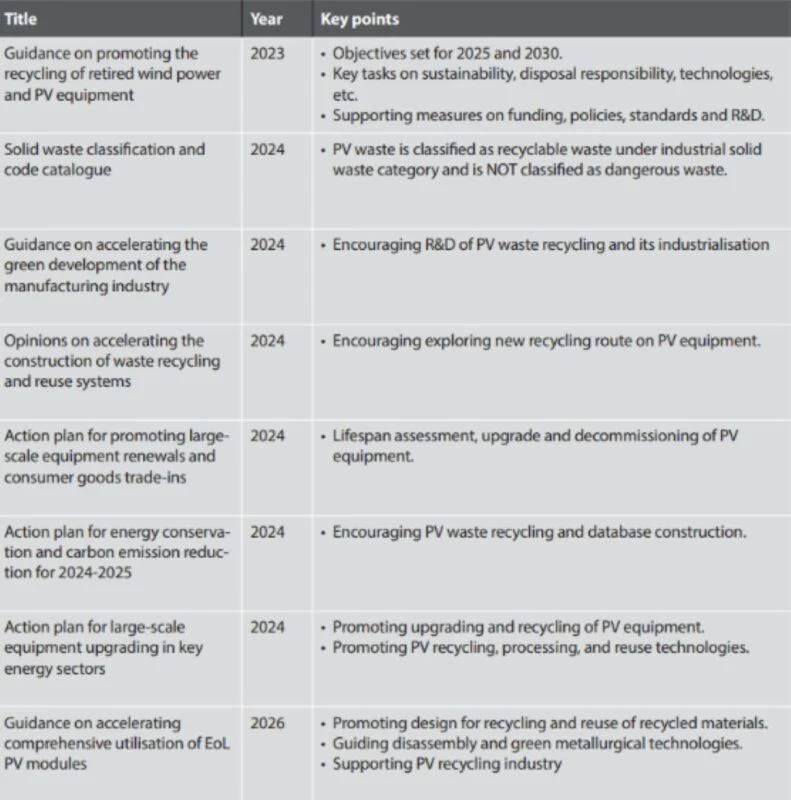
To date, China has proactively established a regulatory framework to manage PV waste (Table 1). The system is anchored in overarching legislation such as the Law on Environmental Protection and the Law on the Promotion of Circular Economy, forming a top-down governance structure.
A key milestone is the 2023 policy, ‘Guidance on Promoting the Recycling of Retired Wind Power and PV Equipment’, issued by the National Development and Reform Commission (NDRC), which represents China’s first dedicated national directive on PV recycling. The policy outlines phased targets:
- By 2025: establish basic recycling responsibility mechanisms and improve standards
- By 2030: develop a comprehensive recycling system aligned with decommissioning volumes
A game changer was the ‘Solid Waste Classification and Code Catalogue’, issued by the Ministry of Ecology and Environment (MEE) in 2024, which for the first time defined PV waste as recyclable waste rather than hazardous waste. This provides recyclers and processors with a more flexible regulatory environment for handling PV waste. Subsequent policy updates in 2024, ‘Action Plan for Large-scale Equipment Upgrading in Key Energy Sectors’, jointly issued by NDRC and the National Energy Administration (NEA), further emphasise equipment renewal, recycling technologies and financial incentives.
China’s approach can be characterised as a hybrid governance model. It incorporates elements like the Extended Producer Responsibility (EPR) framework used in the EU, where producers bear responsibility for EoL products, while adapting to China’s utility-scale PV deployment structure. Large power generation enterprises are expected to take responsibility for decommissioned equipment, supported by strong central coordination.
In parallel, China has rapidly developed a standardisation system for PV recycling since 2020, covering recycling processes, technical requirements, environmental management and material recovery. To date, approximately 15 standards (excluding local government standards) have been issued by entities at different levels, including industry groups, professional associations and central government authorities with varying degrees of regulatory authority.
A recent standard, ‘Technical Specification for Pollution Control of Waste Photovoltaic Equipment Recycling and Treatment’ (HJ 1463-2026), issued by MEE, is the first ministerial-level standard regulating pollution control requirements for PV recycling. These standards aim to ensure consistency, scalability and environmental compliance across the industry. In addition, a number of new standards are currently under preparation, review, or approval.
Emerging recycling technologies for PV modules
The recycling of c-Si PV modules is technically challenging due to their laminated “sandwich” structure, in which materials such as glass, silicon cells and metals are encapsulated within ethylene-vinyl acetate (EVA) layers. Effective recycling therefore relies on efficient delamination, followed by material recovery.
Delamination technologies
Three main approaches are being developed:
- Mechanical delamination: involves crushing and physical separation; simple but leads to lower purity.
- Thermal delamination: decomposes or swells EVA at high temperature; effective but energy intensive. Representatives include pyrolysis, hot knife separation and laser irradiation.
- Chemical delamination: dissolves encapsulants using solvents; enables high-value recovery but requires careful environmental management.
Mechanical-physical separation
After delamination, physical processes such as vibration screening, electrostatic separation, eddy current separation, density separation and froth flotation (physicochemical) are used to recover materials. Electrostatic separation, for example, has demonstrated effectiveness in recovering silicon powders. It should be noted that no single separation process can achieve complete purification of all materials; consequently, subsequent metallurgical processes are essential to obtain high-purity materials and enhance overall recovery value.
Hydrometallurgical recovery
Hydrometallurgy plays a critical role in high-value PV recycling, particularly for solar cells, which typically account for more than 60% of the economic value recovered from end-of-life PV modules and largely determine the overall economic feasibility of the recycling process. Hydrometallurgical process is widely applied for recovering valuable metals such as silver and copper through selective dissolution and separation processes. These include:
- Inorganic acid leaching (nitric, hydrochloric, hydrofluoric and phosphoric acids)
- Organic acid systems (methanesulfonic acid, carboxylic acids)
- Alkali/alkaline processes (caustic, ammonia, iodine-iodide, thiosulfate)
- Emerging green method (deep eutectic solvents, alkaline amino acids)
These methods enable selective metal recovery but must balance extraction efficiency, operating cost, reagent recyclability and environmental impact.
Among them, nitric acid leaching remains one of the most conventional and efficient methods for silver recovery. Nitric acid is also extensively used in the manufacturing of PV silver electrodes, where silver is dissolved and processed into conductive pastes. However, despite its high efficiency, nitric acid is highly corrosive, generates NOx gases and is difficult to regenerate and reuse sustainably. Several hydrometallurgical systems originally developed for precious metal extraction in the mining industry, such as iodine-iodide and thiosulfate leaching, have also demonstrated feasibility.
Recent research has increasingly focused on developing more sustainable alternatives: for example, the use of non-toxic amino acids, including glutamate and histidine, for silver recovery from PV waste. These systems offer significant advantages, including reduced toxicity, improved environmental compatibility, and enhanced reagent recyclability.
Current research trends focus on integrating physical, thermal and hydrometallurgical processes into hybrid systems to maximise recovery efficiency. High-value recovery of silicon (≥6N purity) and silver is critical for achieving economic viability and industrial scalability.
Market development and industry landscape
China’s PV recycling industry is currently at an early but rapidly evolving stage. Several trends are emerging, including the entry of both established PV manufacturers and specialised recycling companies, the development of pilot and demonstration-scale recycling plants and increasing policy-driven industrial activity.
In 2017, Huanghe Hydropower Development initiated pioneering research on the industrialisation of PV module recycling and the localisation of major equipment. This effort resulted in the development of an indigenous “high-quality integrated recycling” process with proprietary IP. By December 2021, the company established China’s first pilot recycling line in Xining, Qinghai, with an annual capacity of 30MW.
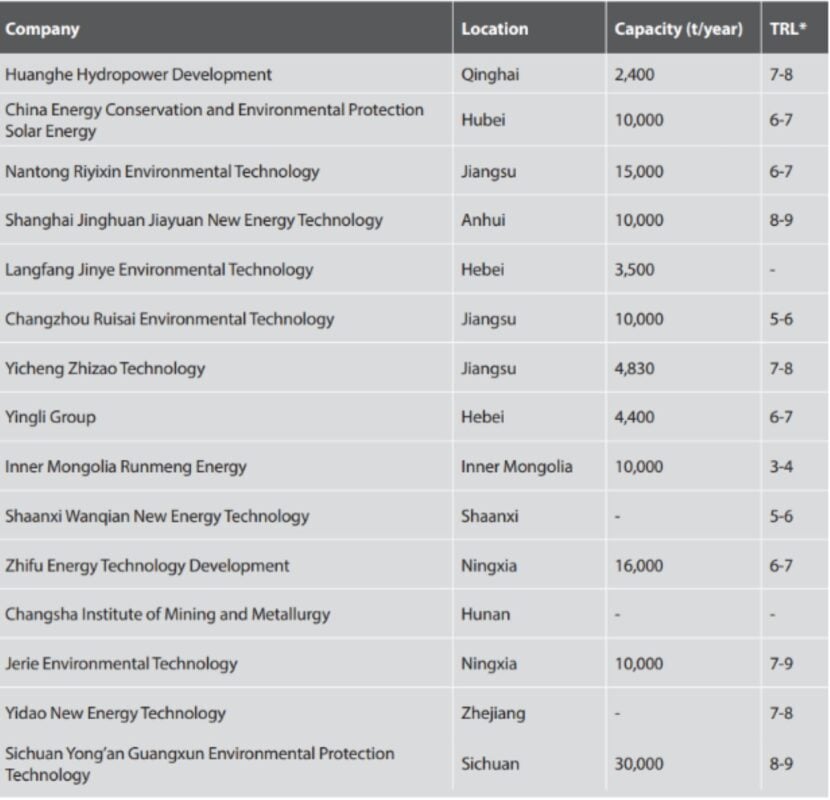
China Energy Conservation and Environmental Protection Solar Energy has established a modular and container-based PV module recycling system centred on physical separation technologies. The platform integrates intelligent recognition and positioning of module components with automated process regulation and operational optimisation, resulting in enhanced dismantling performance and improved material recovery quality.
The pilot facility, deployed in Jianli, Hubei Province, is regarded as China’s first containerised PV module recycling line, with an annual processing capacity of approximately 10,000 tonnes.
Nantong Riyixin Environmental Technology has introduced a combined physical-chemical recycling process for retired PV modules, supported by dedicated processing equipment and integrated recovery technologies. The system can recover major module materials with high efficiency and resource utilisation performance. According to reported data, the company’s first commercial-scale line can process around 15,000 tonnes of PV waste per year, achieving overall recovery rates above 92%.
In addition, a number of major enterprises and research organisations, such as Changzhou Ruisai Environmental Protection Technology, Yicheng Zhizao Technology, Changsha Institute of Mining and Metallurgy, Inner Mongolia Runmeng Energy and Jerie Environmental Technology have also been actively involved in developing PV recycling technologies and establishing pilot or demonstration-scale processing lines.
Overall, mechanical recycling technologies in China have advanced from pilot-scale demonstrations toward near-commercial or commercial deployment (TRL 7-9). In contrast, chemical and hybrid recycling technologies are generally still under development or at intermediate demonstration stages (TRL 4-6). Supported by growing market demand and an increasingly supportive policy environment, China’s PV recycling industry is currently undergoing rapid expansion.
Various technological routes, including physical, chemical and integrated hybrid processes, are being explored simultaneously. The emergence of modular and high-efficiency recycling systems is expected to further promote the large-scale industrialisation of PV recycling in China.
Challenges, opportunities and outlook
Despite the rapid progress in PV recycling technologies and policy development in China, several critical challenges remain before a fully mature, economically sustainable recycling ecosystem can be established.
Challenges
- Technical barriers: Efficient delamination and high-value recovery of silver and solar-grade silicon remain difficult due to the tightly laminated structure of modules
- Economic constraints: transportation and collection costs are significant because PV modules are bulky and geographically dispersed, while the value density of PV waste is relatively low
- Limited industrial scale-up: although many pilot and demonstration projects have been established, most advanced chemical and hybrid recycling technologies are still at the intermediate development stage
- Regulatory and standardisation gaps: current policies and standards are developing rapidly, but stronger enforcement mechanisms, certification systems, and clearer responsibility allocation are still needed
Opportunities
- High resource value: PV modules contain valuable materials such as silver, copper, aluminium and solar grade silicon, providing strong incentives for resource recovery
- Strong policy support: carbon neutrality goals and circular economy strategies are accelerating investment and industrial interest in PV recycling
- Integrated industrial ecosystem: China’s well-established PV manufacturing supply chain provides favourable conditions for closed-loop recycling
- Rapid technological innovation: hybrid recycling systems, green hydrometallurgy and intelligent separation technologies are developing rapidly.
Outlook
China is well positioned to lead global PV recycling development due to its unparalleled installation and retirement scales, integrated industrial ecosystem and strong policy support. The convergence of regulation, technology and market forces is expected to drive the sector towards large-scale industrialisation.
In the future, PV recycling in China is expected to move toward industrial scale, high-value and low-carbon recycling systems, integrating mechanical, thermal and chemical technologies. Distributed recycling networks combined with centralised high-value recovery facilities may become an important industrial model to reduce transportation costs and improve economic feasibility.
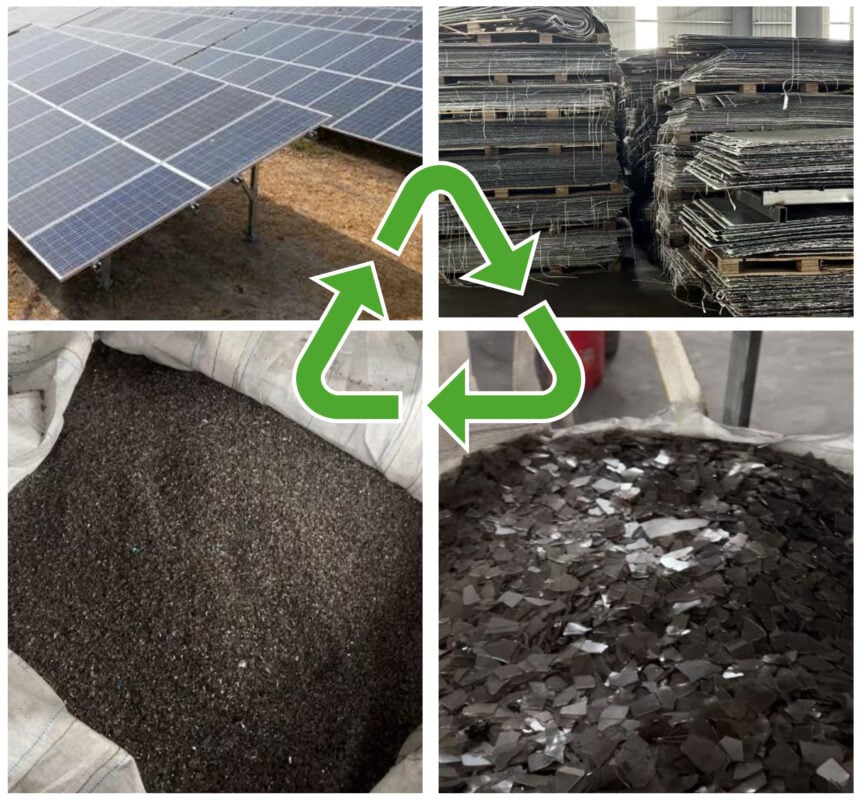
In the long term, the establishment of closed-loop recycling systems, where recovered materials are directly reintroduced into PV manufacturing, will be critical for achieving a circular PV economy. Supported by strong policy incentives, large market demand and continuous technological innovation, China is well placed to emerge as a global leader in sustainable PV recycling and circular manufacturing.
China’s experience in policy and regulatory frameworks, technological development and market pathways can provide valuable references for other regions, particularly for relatively densely populated regions such as the EU. However, local conditions, such as those in Australia, including labour costs, geographic dispersion, environmental regulations and market capacity, may constrain the depth of participation along the PV value chain.
For instance, similar to conventional e-waste management, Australia has been primarily focusing on collection, dismantling and pre-processing, while downstream high value chemical and metallurgical recovery remains limited due to unfavourable capex and opex conditions. Future R&D efforts should therefore be closely aligned with local market structures and industrial conditions.