A company specialising in consultancy for solar installations, CPP Wind Engineering, has launched the first wind certification programme for utility-scale solar projects.
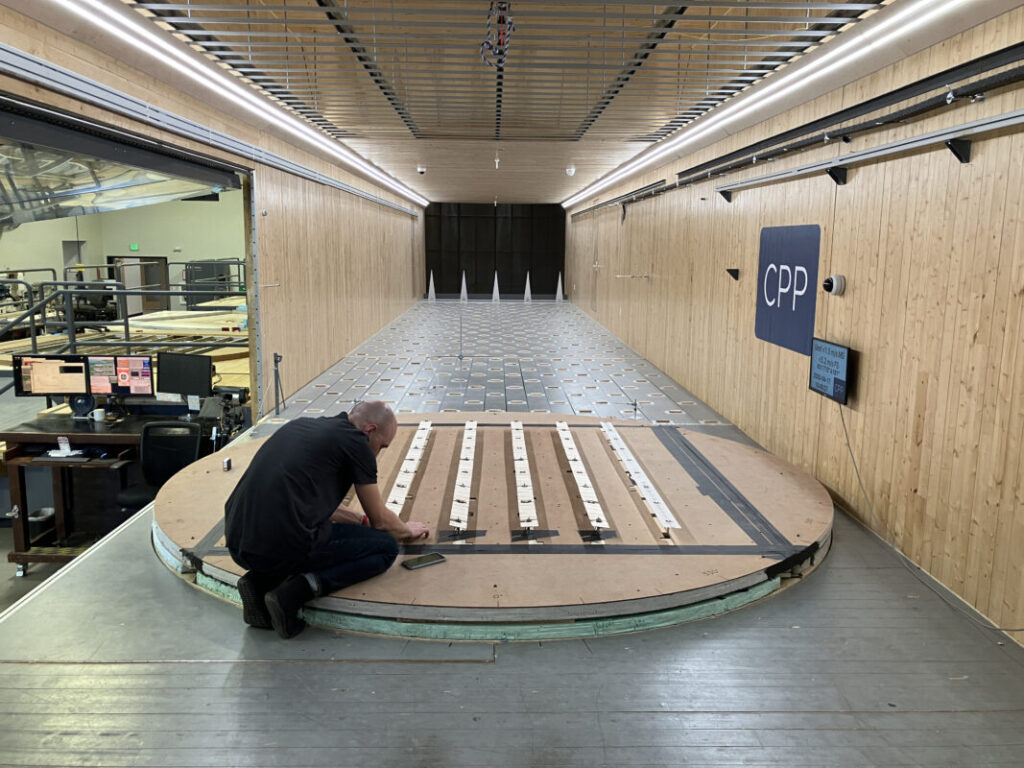
CPP Wind Engineering has 45 years of experience in wind tunnel testing and modelling of solar projects, stow and siting studies, and acts as forensic investigators of wind damage to solar projects.
Try Premium for just $1
- Full premium access for the first month at only $1
- Converts to an annual rate after 30 days unless cancelled
- Cancel anytime during the trial period
Premium Benefits
- Expert industry analysis and interviews
- Digital access to PV Tech Power journal
- Exclusive event discounts
Or get the full Premium subscription right away
Or continue reading this article for free
The new certification programme aims to improve the performance and durability of utility-scale solar in a range of wind conditions. Site Certification is confirmation that a project has assessed climate and site conditions, has effective stow strategies, and has used suitable anemometers and trackers or fixed-tilt systems. The company can provide a comparison of mounting design options specifically created for a project’s owners or developers.
At the manufacturing level, trackers or fixed-tilt product lines passing a one-time review can be awarded a System Qualification if their wind engineering design and methods are deemed of a high enough standard. This gives engineers and designers a better idea of a product’s suitability for a site’s expected wind conditions.
Trackers can sometimes fail at wind speeds within their published specifications, as well as being damaged by extraordinary weather conditions (although tornado risk assessments are carried out separately on a case-by-case basis, the company said). CPP’s two certifications are designed to help manufacturers and site owners alleviate the chances of wind-related failure.
David Banks, president of CPP Wind Engineering, said: “Wind governs how a solar power plant is built, yet there has been no consistent way to show that the wind loads behind a design were derived and applied correctly. Most of the wind damage we investigate occurs at wind speeds sites see every year, and most of it can be engineered out.”
CPP Wind Engineering is based in Windsor, Colorado, and has wind tunnel-based research labs in the US, Australia and Malaysia. Its engineers serve on ASCE and IEC committees.
In 2018, tracker rows at the Oakey 2 solar farm in Queensland, Australia, twisted and collapsed in a storm during construction, although wind speeds were within the manufacturer’s published tolerances.
In May this year, Renew Risk launched a platform that forecasts and assesses the impacts of thunderstorms on utility-scale solar projects. Its US SCS Model was built to simulate the impact of thunderstorms on solar projects, with machine-learning predictions of the effects of storms on a solar business and its insurance values.