Like many other areas with a growing proportion of renewables, India is facing the challenge of managing an increasingly decentralised electricity system. Shantanu Roy and Sheikh Madiha Syed examine the India Energy Stack, a government initiative to provide the digital infrastructure needed to underpin the next phase of the country’s energy transition.
Digital public infrastructure and the future of renewable energy: insights from India Energy Stack
Try Premium for just $1
- Full premium access for the first month at only $1
- Converts to an annual rate after 30 days unless cancelled
- Cancel anytime during the trial period
Premium Benefits
- Expert industry analysis and interviews
- Digital access to PV Tech Power journal
- Exclusive event discounts
Or get the full Premium subscription right away
Or continue reading this article for free
Like many other areas with a growing proportion of renewables, India is facing the challenge of managing an increasingly decentralised electricity system. Shantanu Roy and Sheikh Madiha Syed examine the India Energy Stack, a government initiative to provide the digital infrastructure needed to underpin the next phase of the country’s energy transition.
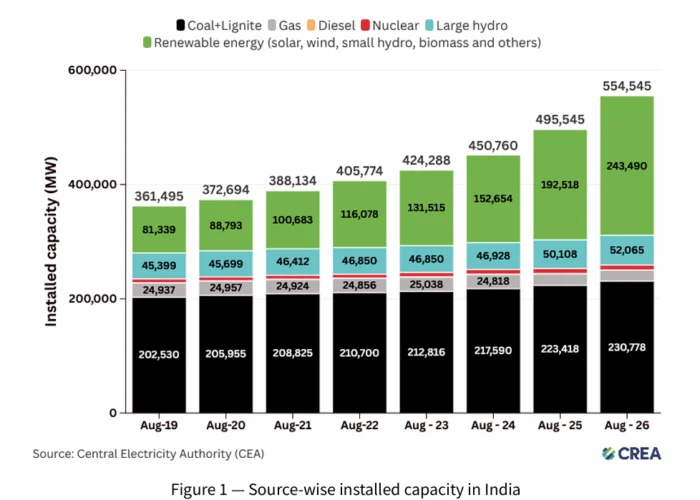
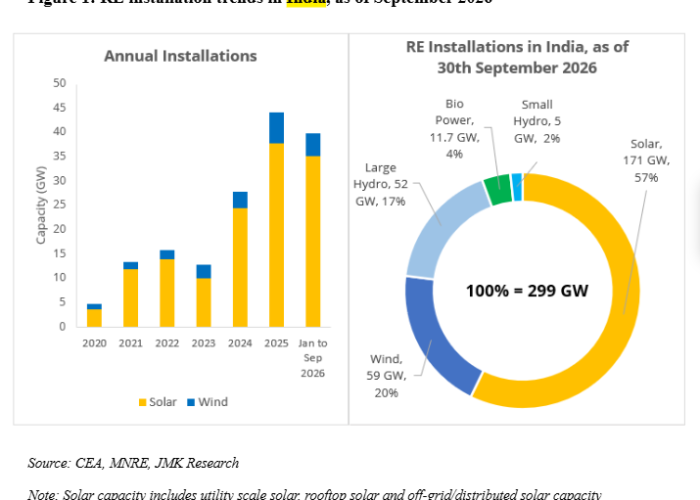
India’s renewable energy (RE) transition is progressing at an unprecedented speed and scale. As one of the world’s leading RE markets, India now ranks third globally in RE installed capacity.
This growth is largely driven by policy support, declining technology costs and rising private sector participation.
Towards a cleaner energy future, the country has committed to achieving 500GW of non-fossil fuel capacity by 2030 and net-zero emissions by 2070. In line with this, the first phase of India’s RE transition has been largely defined by large-scale capacity additions.
India added approximately 45GW of installed solar capacity in the last financial year, showing an increment of over 40% in just one year. Rooftop solar installed capacity also increased over 47%, from approximately 17GW to 25GW, during the same period.
However, the next phase of the RE transition must be shaped by a more complex scenario: how will India integrate and manage an increasingly decentralised, distributed and dynamic electricity system?
This complexity stems from the continuous expansion of India’s distributed RE (DRE) systems. For instance, rooftop solar, with supportive schemes such as Pradhan Mantri Surya Ghar: Muft Bijli Yojana (India’s flagship scheme to solarise 10 million households), has seen significant growth across segments.
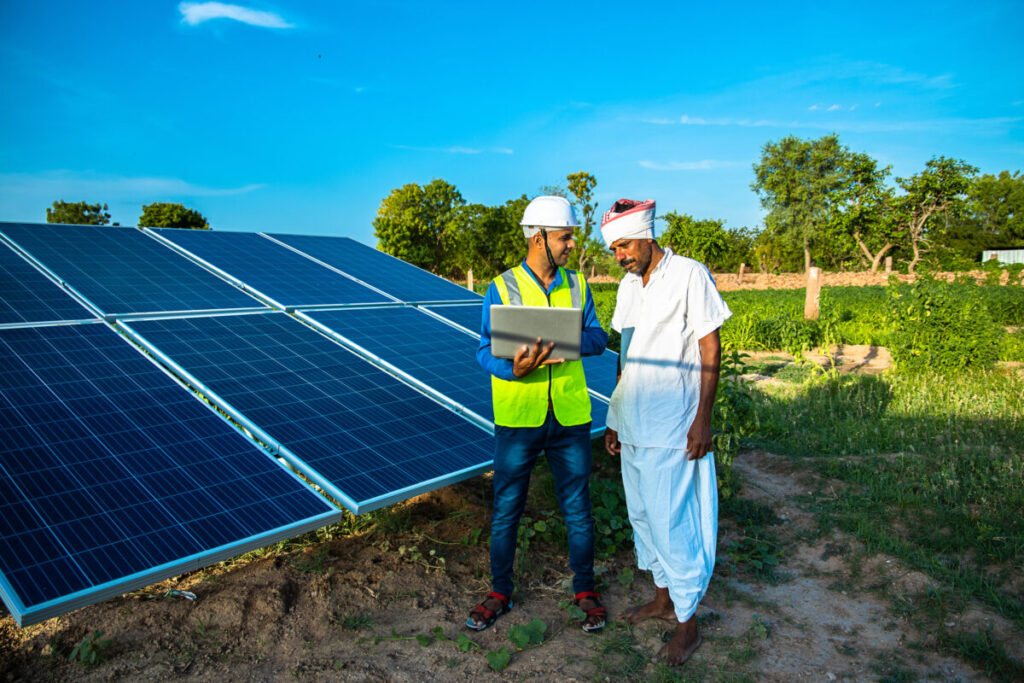
Small-scale solar plants on agricultural lands have also seen a sharp increase under the Pradhan Mantri Kisan Urja Suraksha evam Utthaan Mahabhiyan Yojana (PM-KUSUM; India’s agricultural solarisation scheme). Innovative solar applications, such as building integrated photovoltaic (PV), agrivoltaics and rail- or road-integrated PV, are also gaining interest among prospective developers and consumers.
Further, the rise in electric vehicles (EVs) and battery storage deployment is changing the country’s consumption patterns. More consumers are becoming ‘prosumers’ with the flexibility to generate and store energy and interact with the grid in different ways (e.g., importing or exporting electricity).
Hence, India’s electricity system is now shifting from unidirectional, centralised networks to multi-directional, decentralised and data-intensive systems involving millions of distributed assets across the country. Managing such dynamic systems will need an approach vastly different from how India managed its earlier centralised system. Real-time coordination, seamless interaction among multiple stakeholders and higher visibility are vital.
India has taken some digitalisation initiatives, such as smart metering; however, the overall digital ecosystem remains insufficient to handle the complexities and challenges of managing the upcoming dynamic system. This highlights the need for digital infrastructure that evolves alongside its physical counterpart to enable the next phase of India’s RE growth.
Taking cognisance, the Indian government announced its plans to develop the India Energy Stack (IES) in 2025. IES will act as a digital public infrastructure (DPI), providing a standardised platform that enables secure data exchange, digital identities for energy assets and open interfaces to connect consumers, distribution utilities, markets, technology providers and innovators across the electricity value chain.
IES is not just a technological initiative; it is also a large-scale and systems-level transformation of India’s power sector that will showcase the country’s ability to integrate its DREs into energy markets with high efficiency while enabling new market structures.
Why India’s power sector needs a digital backbone
Currently, India’s power sector works through multiple legacy systems across distribution utilities (commonly referred to as DISCOMs in India), regulators and operators. Most of these systems, such as billing platforms, metering systems and grid operation systems, function largely in isolation. Exchange between stakeholders is constrained by system incompatibilities and data asymmetry.
The absence of standardised digital identifiers for energy assets and consumers is a major limitation. DREs, including rooftop solar systems, EV charging systems and batteries, are generally recorded in distribution utility-specific systems. There is no common and unified framework that can identify and track such assets across platforms. The result is limited traceability and transactional ability involving various stakeholders.
Further, distribution utilities generally lack real-time visibility into DREs, while consumers lack access to granular energy data, which impacts the development of multiple services, including decentralised trading, demand response and energy optimisation. With DRE adoption increasing rapidly, these challenges will translate into operational complexities. For instance,
as rooftop solar and storage penetration increase, bidirectional flows, local congestion and generation variability emerge, all of which require data-driven, coordinated system management.
Under these circumstances, an interoperable and standardised digital framework that enables digital asset identification, smooth data exchange and seamless interaction among stakeholders becomes essential for India.
In the absence of such a framework, India’s power sector will face inefficiencies, such as high integration costs, suboptimal dispatch and innovation constraints. It will also limit DRE integration and participation by prosumers and aggregators.
DPI: concept and Indian use cases
DPI can be explained as the basic digital infrastructure that delivers identity, payment services and data exchanges as public utilities. According to the World Bank, DPI refers to common digital components that deliver sectoral services and enable various stakeholders to engage under standard rules.
India has already used this model successfully for identity and payments. The Aadhaar digital identity system provides every individual in the country with a 12-digit number that serves as identification for biometric data and other demographic characteristics.
With over 1 billion individuals using the platform, it is considered the world’s largest digital identification system. The country also implemented the Unified Payments Interface (UPI) in 2016.
Using UPI, mobile applications enable instant bank-to-bank transfers through common technical protocols. With billions of monthly transactions, UPI is among the world’s leading real-time payment platforms.
These systems share a common design logic. The government builds the core infrastructure while private firms deliver services through open standards. India is now applying this model to the power sector through IES.
IES architecture, data and intelligence layers
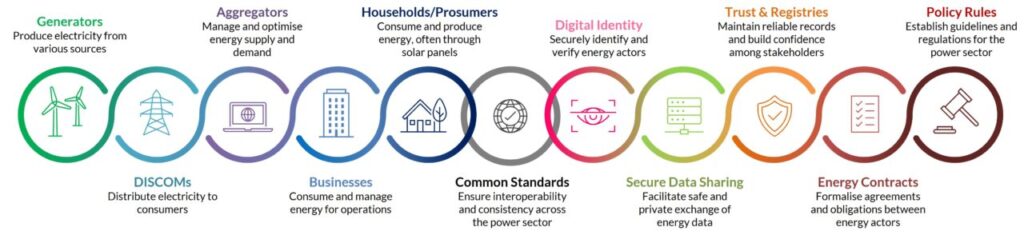
Designed as a federated digital architecture, IES is intended to facilitate cooperation and interoperability among various participants in the electricity supply chain
It defines common interaction standards, protocols and data models that allow all currently operating systems to share information and communicate reliably and consistently. Identity and addressability are central to the architecture of the electricity system, enabling a common framework to identify actors and assets within the ecosystem, including utilities, generation companies, regulators, aggregators, suppliers and consumers.
To implement an identity and addressability model and allow cross-platform identification, IES creates a set of globally unique identifiers to correlate and identify each entity and all physical and virtual grid assets (e.g., electric meters, transformers, DREs and EV charging stations). This will enhance tracking of an asset’s lifecycle and improve its interoperability. Closely connected to this identity framework are registries and trust infrastructure, which serve as authenticated repositories of recorded data.
With IES, participants receive verifiable energy credentials that provide secure digital proof of compliance and eligibility (certification). These machine-readable and cryptographically signed credentials reduce manual verification, lower fraud risks and speed up market access.
Further, IES enables real-time data transfer through established protocols, formats and Application Programming Interfaces (APIs), improving coordination among grid operators, utilities, market platforms and distributed generation assets. As DREs expand, these interoperable data systems also support AI-driven forecasting, demand prediction, and grid optimisation.
The anticipated growth of decentralised participation will increase transaction volumes across the electricity system.
In response, IES envisions AI-powered software to manage high-volume, real-time energy transactions and enable scalable coordination among decentralised energy markets.
The interaction layers enable participants to discover and transact with one another through open, standardised protocols, supporting applications such as peer-to-peer (P2P) energy trading, distributed flexibility market mechanisms, EV charging, and prosumer participation. This architecture follows the Beckn protocol— an open digital network approach showing how decentralised markets can operate on shared discovery and transaction standards rather than through centralised platforms.
IES also incorporates digital twins, simulation environments and privacy preserving observability tools to improve grid planning, renewable integration and data-driven decision-making.
Enabling DREs and energy markets
The digital architecture of IES does not operate in isolation; its value lies in enabling new ways for people to participate and coordinate as the electricity system becomes more decentralised. As DREs increase, the ability to connect these assets becomes essential. Distribution utilities often lack clear insight into behind-the-meter assets, which limits their ability
to predict demand and manage grid conditions. By merging digital identities, asset
registries and real-time data exchange, IES can provide continuous visibility of DREs, help utilities coordinate supply and demand more effectively, and maintain grid stability.
These digital layers can also change consumer behaviour. Using verifiable identities and data related to assets, households, farmers and even companies, they can become prosumers of energy by generating, storing and essentially selling any surplus power.
Instead of just consuming electricity, these stakeholders can help balance the grid by leveraging flexibility in electricity demand, storage capacity, and surplus generation.
All these factors are leading towards the development of P2P electricity trading, allowing producers and consumers to engage directly through digital means. At the India AI Impact Summit 2026, a live demonstration showcased P2P energy trading under IES, where a farmer sold surplus solar power directly to a small commercial consumer through a secure digital platform with real-time matching and settlement.
Further, P2P energy transactions do not always involve straightforward buying and selling. They can include, for example, exchanges and the allocation of energy, depending on certain conditions, within regulated limits.
In addition to individual transactions, this infrastructure enables the creation of virtual power plants (VPPs) and DRE aggregation. Aggregators can consolidate many smaller assets, such as rooftop solar systems, batteries and flexible loads, into a single, coordinated asset. This aggregation of various resources allows participation in grid services, supports system balancing and enhances responsiveness to demand.
From concept to implementation
Although IES presents a comprehensive digital architecture, its impact depends on how effectively it is implemented across diverse and complex power systems.
Acknowledging this, India’s Ministry of Power (MoP) has adopted a phased approach that involves piloting before scaling up to the national level. In this regard, MoP has launched a 12-month proof of concept (PoC), piloting IES with distribution utilities in Delhi, Gujarat, Andhra Pradesh, Uttar Pradesh and Mumbai, with the demonstration timeline set for FY2026-27.
The PoC stage will go beyond an application use-case test, as it involves multiple layers of validation for IES deployment. It will assess interoperability, data governance process and interactions among the various stakeholders through digital platforms.
Equally important for IES implementation will be stakeholder engagement and ecosystem development. Utilities will be at the centre of implementing digital systems across the nation’s grids, whereas regulators will need to create the necessary data
access and consent frameworks. Technology suppliers and system integrators will be responsible for developing interoperable systems that comply with relevant standards. Capacity building is also planned under this initiative to provide utilities with the necessary training to implement IES.
Building an energy innovation ecosystem
The benefits of IES extend beyond enabling a digital energy ecosystem. IES can also help create a large energy innovation ecosystem that could enable new business models, services, technology providers and market participants.
With open APIs, interoperable platforms and standardised frameworks, IES can effectively lower the entry barrier for small-scale entrepreneurs, startups, service providers and innovators to build technology solutions for asset optimisation, trading platforms, energy analytics, consumer applications, transaction management, AI-driven tools, etc.
With the rise in the number of prosumers and decentralised energy markets, IES can create many opportunities for advanced market mechanisms such as P2P energy trading, aggregation platforms and VPPs.
IES can also support the development of consumer-centric energy services that enable consumers to make informed decisions about energy generation, consumption and market participation.
These services can also improve transparency and user experience. These developments under IES mark a transition from a utility-centric model to a consumer-centric model that is open, transparent and operates in real time.
Global implications: a model for the world
India’s power sector transformation with IES mirrors a larger global shift. The growth of DREs, EVs and decentralised storage is increasing the complexity of grid operations in many parts of the world.
In developed countries leading the renewable energy race, high DRE penetration poses multiple challenges linked to market integration and grid management.
In developing countries, the challenge is not just to increase energy access but also to simultaneously integrate RE into their evolving power system. The growing need for interoperable digital infrastructure and real-time coordination, however, is common across all countries.
Most countries rely on utility-specific platforms and systems, resulting in a fragmented digital approach. While these systems worked before, they would not be efficient going forward. As DREs increase, these systems would not enable interoperability or the development of advanced energy services.
In this context, India’s approach of building IES as a DPI framework represents a differentiated and replicable model.
Importantly, India’s DPI approach has already shown relevance internationally. UPI is being integrated in various countries such as the UAE, Sri Lanka, Singapore and France, with cross-border interoperability and real-time transactions.
India’s digital identity initiatives are being deployed in multiple countries across Latin America and Africa, through platforms such as MOSIP. These examples clearly demonstrate India’s expertise in developing globally replicable and adaptable DPI frameworks.
Through the same approach, India aims to create a shared digital backbone for its energy system to support rising RE integration and efficient communication between stakeholders and applications.
This forward-looking approach will enable scalability through standardisation, promote innovation through multi-party participation and reduce entry barriers for prosumers and aggregators.
For developing countries, this approach presents a clear pathway to building a future-ready energy system. For developed countries, it provides a clear blueprint for building digital ecosystems that seamlessly and efficiently support large-scale DRE integration.
While each country will have its own set of implementation strategies and challenges, the main principles of IES, namely digital identification, interoperability and transparency, will work across the world to support countries as they continue to evolve their energy system.
Challenges and considerations
While the potential of IES is undeniable, implementing it on a scale requires addressing critical challenges. Data governance will be key to IES’s success.
Considerations such as data ownership, privacy, access and consent will be complex, as energy systems become more data-driven and involve multiple stakeholders. Thus, it would be important to protect consumer interests while enabling data sharing.
India’s power sector works across multiple actors and ministries at the central and state levels. For IES to work, efficient institutional coordination between these stakeholders would be vital. Strong governance and collaboration will be needed to align these actors with common systems, standards, and protocols.
Ensuring effective cybersecurity is another challenge. As digital systems become part of grid management and energy markets, it is critical to ensure resilience against cyber threats. Such resilience should be built within system designs, monitoring mechanisms and response frameworks.
Further, the use of AI-driven systems and agents to facilitate financial transactions introduces new challenges. Vulnerabilities linked to AI-based decision-making, transactional integrity and the misuse of automated systems can create serious concerns if not addressed systematically.
Ensuring sufficient safeguards, fail-safe mechanisms, auditability, and transparency in every transaction can help maintain trust and system reliability.
Participating distribution utilities face another challenge, i.e., capacity building, not just of systems but also of their personnel. Upgrading legacy systems and providing training to manage advanced digital systems and tools will be key.
From power systems to digital energy ecosystems
India’s next RE transition phase will be one in which digital and physical infrastructure will have equal weight. The country has already demonstrated its ability to scale RE and to build large-scale DPI. The next phase will be India’s buildout of a dedicated DPI for its energy transition.
IES is an ambitious effort by India to build the digital backbone of its power sector. With trusted digital identities, data exchange and open interfaces, IES has the potential to improve grid efficiency, unlock innovative market mechanisms, accelerate DRE adoption and enable greater stakeholder participation. IES also represents the transition of the country’s electricity system from a centralised, static system to a decentralised, dynamic and digitally coordinated one.
With its successful implementation, IES could be a pillar of India’s long-term energy goals while also serving as a replicable, scalable model for multiple countries on similar energy transition journeys. As electricity systems worldwide become data-driven and decentralised, the IES model of DPI integration into the power sector may serve as a much-needed catalyst for the global energy transition.
Shantanu Roy is sector coordinator for renewables and energy conservation at the Center for Study of Science, Technology and Policy (CSTEP), a leading research think tank based in India. With over 17 years of experience spanning renewables, thermal power and oil and gas, he collaborates with government and industry to accelerate renewable energy adoption in India.
Sheikh Madiha Syed is a senior analyst in the Renewables team at CSTEP. With over three years of experience in the renewable energy sector, she contributes to research and policy initiatives aimed at advancing the deployment of clean energy solutions in India.