Abu Dhabi’s utility, Emirates Water and Electricity (EWEC), is targeting more than 35GW of solar capacity by 2035.
The utility has set an interim target of 14GW of PV by 2030, up from an earlier target of 10GW, as it scales its installed capacity to beyond 35GW by the middle of the next decade.
Try Premium for just $1
- Full premium access for the first month at only $1
- Converts to an annual rate after 30 days unless cancelled
- Cancel anytime during the trial period
Premium Benefits
- Expert industry analysis and interviews
- Digital access to PV Tech Power journal
- Exclusive event discounts
Or get the full Premium subscription right away
Or continue reading this article for free
The planned PV deployment will be backed by 15GW of battery storage capacity, enabling ‘round-the-clock’ provision of solar-generated power.
The UAE has set increasingly ambitious renewable energy targets as it capitalises on its abundant solar resources, which make it one of the lowest-cost regions for PV-generated electricity worldwide.
Last month, state-run media reported comments from the Emirati energy minister that the UAE overall was aiming for renewables and nuclear energy generation to account for 35% of its energy mix by 2030-31.
In this latest statement of intent, Mohamed Almarzooqi, chief assets officer of EWEC, said: “We are actively procuring the utility-scale solar photovoltaic, battery storage and reverse osmosis desalination capacity required to deliver this outcome, structurally reducing the reliance of the system on gas-fired generation. Through this transformation, EWEC is enabling the UAE and Abu Dhabi to build a highly diversified, resilient, and low-carbon system that seamlessly meets rising demand while strengthening water and energy security.”
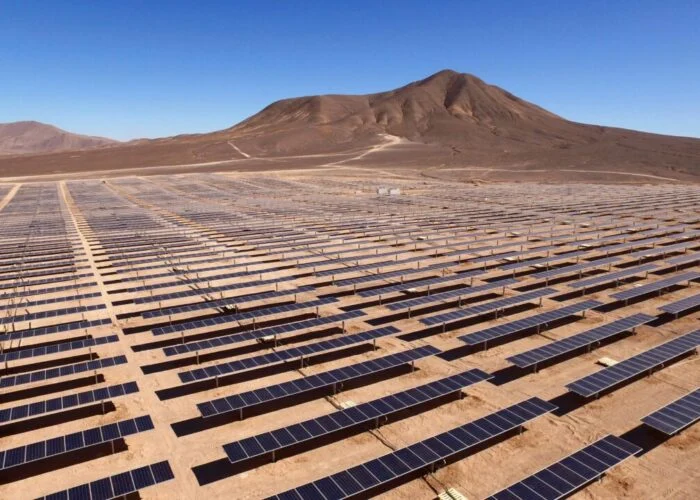
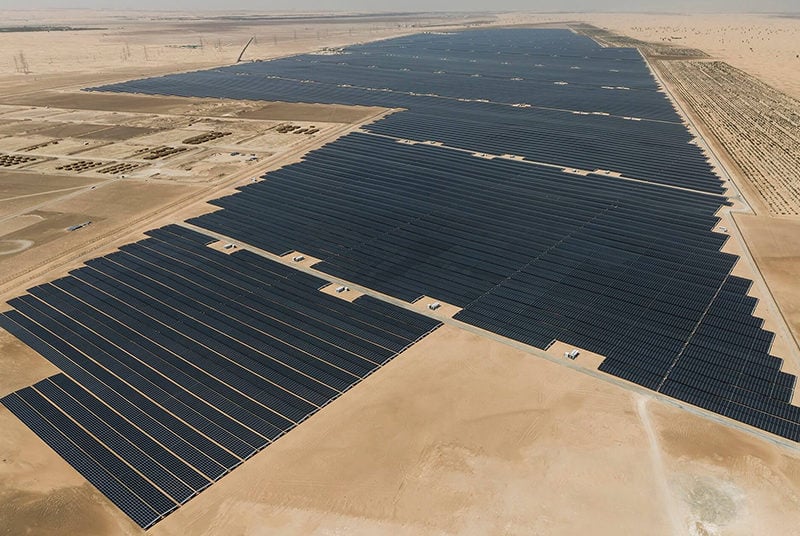
No further details were provided on how the solar targets will be met, but Abu Dhabi is already working on several solar and storage mega projects. These include a 5.2GW/19GWh round-the-clock solar-plus-storage facility that reached financial close in July and the 1.5GW Khazna solar plant, which also completed financing earlier this year. It is already home to the 1.2GW Noor solar power plant (pictured), one of the world’s largest standalone PV power plants.
EWEC said it was forecasting that carbon emissions from its power and water production would fall by over 45% by 2035, even as annual electricity demand is forecast to rise by around 70% 2026 and 2033.