India’s renewable energy expansion is colliding with grid constraints, highlighting the urgent need to modernise transmission and distribution infrastructure as deployment accelerates. Although India is well on its way to reach 500GW of renewable capacity by 2030, grid constraints are emerging as a major bottleneck for the sector.
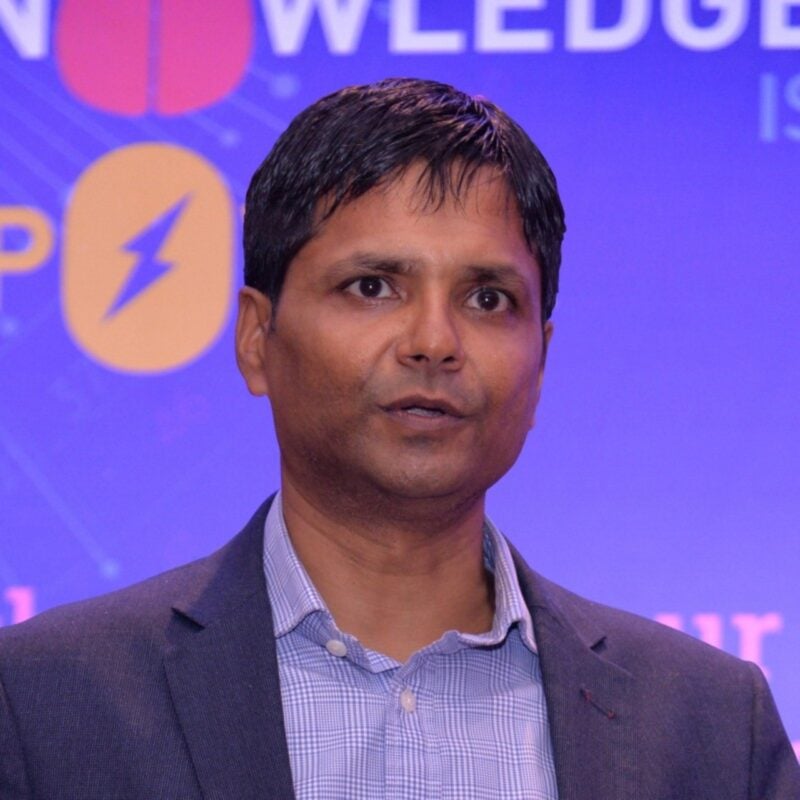
Speaking to PV Tech Premium, Vinay Rustagi, chief business officer at Premier Energies, says of all renewable energy technologies that: “installations are expected to continue growing at 5-10% annually, which underscores the urgency of ensuring that grid infrastructure keeps pace.”
Try Premium for just $1
- Full premium access for the first month at only $1
- Converts to an annual rate after 30 days unless cancelled
- Cancel anytime during the trial period
Premium Benefits
- Expert industry analysis and interviews
- Digital access to PV Tech Power journal
- Exclusive event discounts
Or get the full Premium subscription right away
Or continue reading this article for free
“There is currently a crunch in grid capacity available, particularly on the national grid. Many projects that were to be connected at the national grid level are getting delayed.”
A recent Ember report illustrates the challenge: as non-fossil fuel sources reached around 50% of installed capacity last year, 2.3TWh of solar was curtailed between May and December due to weak daytime demand, forecasting errors and limited coal fleet flexibility, with nearly 0.9TWh lost in October alone.
Furthermore, state-level disparities add further complexity. The third edition of the Indian States’ Electricity Transition (SET) report by Ember and the Institute for Energy Economics and Financial Analysis (IEEFA) highlights that while certain states such as Karnataka, Delhi and Andhra Pradesh lead in decarbonisation, market readiness and ecosystem performance, other regions lag due to differences in infrastructure, fiscal capacity and institutional maturity.
Together, these findings emphasise that grid constraints—both technical and structural—are emerging as the defining challenge for India’s transition, and targeted interventions will be critical to sustaining the country’s renewable growth trajectory towards 2030.
Transmission bottlenecks emerge as key constraint
Transmission infrastructure remains one of the most significant near-term challenges in India.
“The issue is very simple,” Rustagi says. “All these new projects or capacity that is coming up need to be connected to the grid, and the capacity of the grid is finite. The grid is extremely expensive, so capacity must be added at the same time as new renewable projects are created, and that is where the issue lies.”
The issue is structural. Renewable capacity can only be deployed at scale if it is matched by grid expansion, yet transmission projects are capital-intensive and time-consuming.
“The problem is that expanding grid capacity is heavily capital-intensive, and it also requires a lot of time. These large transmission projects cover thousands of kilometres, require right of way and in many cases go over very challenging terrains,” Rustagi explains.
“It is not surprising that many of these projects get delayed. They also need government approvals, as they often pass through sensitive habitats such as forests, industrial areas and densely populated regions.”
This combination of logistical, regulatory and environmental constraints has led to delays, with grid expansion struggling to keep pace with renewable deployment, even beyond India. Rustagi highlights that transmission bottlenecks are a global issue, affecting markets across the US, Europe and Africa.
“This issue of limited transmission capacity and the long timelines required to address it is a global challenge,” he says. “In the Western world, timelines are around five years or more, whereas in India, projects are typically completed in three to four years.”
However, even with relatively faster execution, India faces additional pressures as it balances infrastructure expansion with social considerations.
“This issue has become slightly more challenging in recent times because, alongside the push to expand transmission capacity, there is also a greater emphasis on protecting the rights of farmers and communities located beneath these lines,” Rustagi adds.
“As a result, approval requirements have become more stringent. For example, compensation for farmers and private landowners has increased, leading to higher project costs and extended timelines.”
Despite these hurdles, he views the current constraints as temporary. “Many of these projects are expected to be completed by 2028, which will open the door to substantial expansion.”
Distributed energy can ease grid pressure
As centralised grid infrastructure struggles to keep pace, decentralised energy systems are playing a growing role in absorbing capacity.
“Decentralised ownership models are already helping to absorb the volume of capacity coming into India,” Rustagi says, pointing to rooftop solar as a key example.
Rooftop installations have surged from around 3GW annually until 2024 to approximately 8GW in 2025, with expectations of 12-15GW this year.
“What this is doing is enabling more solar capacity without necessitating expansion at the grid evacuation level,” he explains.
In parallel, policy reforms are enabling peer-to-peer (P2P) power trading and encouraging projects to connect at the state grid level, where capacity remains available.
“In addition, instead of focusing solely on the national grid, there are increasing efforts to promote connections at the state grid level, where there is still significant available capacity depending on location. As a result, more state grid-connected projects are expected to come online over the next few years.”
Manufacturing landscape reshaping grid consolidation
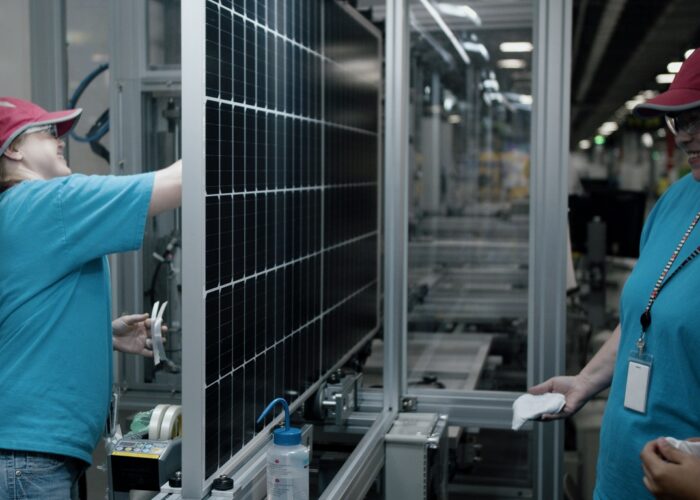
The rapid evolution of India’s solar manufacturing sector is driving consolidation. Rustagi expects smaller manufacturers to struggle as capital intensity and technological requirements increase.
“This is becoming a sector which requires significant capital expenditure and ongoing investment in new technologies,” he says. “The manufacturing business is likely to become more consolidated, with a clearer emergence of tier one, tier two and tier three players.
“Tier one players, for example, would be companies with more than 10GW of capacity and fully backward-integrated operations. The immediate impact will therefore be on the manufacturing value chain, with many smaller players being squeezed out.”
With an estimated 120-150 module manufacturers currently operating in India, the market is likely to consolidate into tiered players, with large, fully integrated companies emerging as dominant suppliers.
While the shift is primarily upstream, it has implications for the broader ecosystem, particularly in improving supply chain reliability, price stability and project execution timelines—factors that are critical for grid project connectivity.
For downstream developers and installers, however, this shift is largely positive. A domestic supply chain is expected to stabilise pricing and improve availability.
“With a fully domestic supply chain, prices should stabilise, availability should become more predictable, and the technology landscape should become clearer going forward. As a result, access to modules and pricing will improve in terms of predictability, which is ultimately positive for these players,” Rustagi adds.
Distribution reforms gain momentum
While transmission remains a bottleneck, significant progress is being made at the distribution level. Government-led reforms—including smart metering and financial incentives for rooftop solar—and stricter financial discipline for distribution companies (DISCOMs) are beginning to yield results.
“DISCOMs have also been given incentives,” Rustagi says. “For instance, in the rooftop solar scheme and the strong growth seen in that segment, distribution companies are financially incentivised to support installations. Every time a rooftop solar system is installed, the DISCOM receives a small financial incentive.”
After years of heavy losses, India’s distribution sector has reportedly returned to profitability at an aggregate level, reflecting the impact of policy interventions and capital injections.
Under the 15th Finance Commission framework, states must limit fiscal deficit to 3% of gross state domestic product, with an additional 0.5% allowance tied to power sector reforms. However, in FY2025 the combined fiscal deficit of states stood at 3.2%, with 11 states exceeding the limit, reflecting DISCOMs’ mounting losses.
Additionally, the Central Electricity Authority (CEA) has set technical standards for grid connectivity, while the Indian Electricity Grid Code (IEGC) mandates frequency control for renewable plants. Transmission expansion, aligned with renewable capacity, is being supported through the Green Energy Corridor scheme, enabling 44GW of intra-state evacuation, with further upgrades under the 2023-2032 National Electricity Plan.
Moreover, Rustagi emphasises that advanced technologies, such as static synchronous compensators (STATCOMs), static VAR compensators (SVCs), synchronous condensers and automatic generation control (AGC) are being deployed, alongside regional energy management centres and automatic weather stations to manage variability.
The proposed Draft Electricity (Amendment) Bill, 2025, could further accelerate this transformation by opening up distribution to competition. Rustagi calls it “a major initiative to reform and open up the entire distribution business.”
India is also investing heavily in storage and market mechanisms to enhance grid flexibility. “With the rapid growth in solar and wind, there is an acute need for more storage capacity to balance the grid,” Rustagi says, pointing to nearly 100GWh of storage auctions spanning pumped hydro and battery systems.
Towards a more balanced grid
Looking ahead, Rustagi expects India’s energy system to become more balanced between centralised and decentralised models. “Historically, the sector has been heavily weighted towards national grid-connected, large-scale projects,” he says. “That balance is now shifting. Rather than moving from centralised to decentralised systems, the two are beginning to develop more evenly, with both playing an important role in the sector’s growth.”
Utility-scale solar will continue to depend on national grid expansion, particularly in resource-rich regions, but distributed renewables are set to play an increasingly important role in capacity addition.
Despite current constraints, Rustagi remains optimistic about India’s long-term trajectory. “When the 500GW target was announced, nobody took it seriously,” he says. “But this time we are actually expecting for the target to be exceeded.”
With strong fundamentals, a maturing domestic supply chain and ongoing grid investments, India appears well positioned to meet its ambitious renewable energy goals.
“If we keep adding capacity at current levels with slight increases year on year, we will be able to easily meet the 500GW target,” Rustagi concludes.