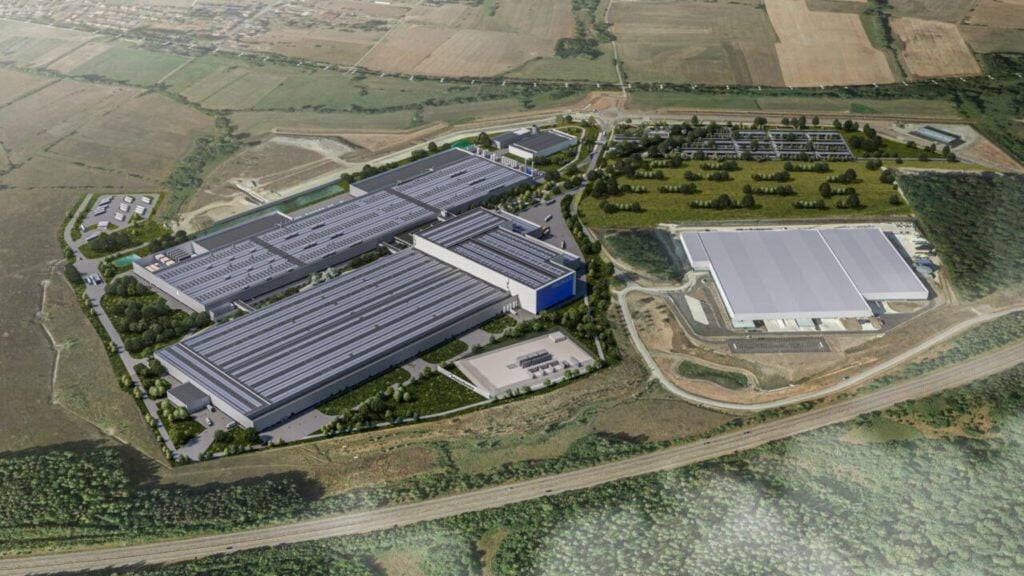
A PV gigafactory in France planned by start-up HoloSolis is to receive a share of a €100 million (US$116 million) investment from water technology company Ecolab.
Ecolab is investing the money in two separate industrial projects designated by the French government as strategically important. The other recipient is GravitHy, which is developing a green iron production plant in southern France.
Try Premium for just $1
- Full premium access for the first month at only $1
- Converts to an annual rate after 30 days unless cancelled
- Cancel anytime during the trial period
Premium Benefits
- Expert industry analysis and interviews
- Digital access to PV Tech Power journal
- Exclusive event discounts
Or get the full Premium subscription right away
Or continue reading this article for free
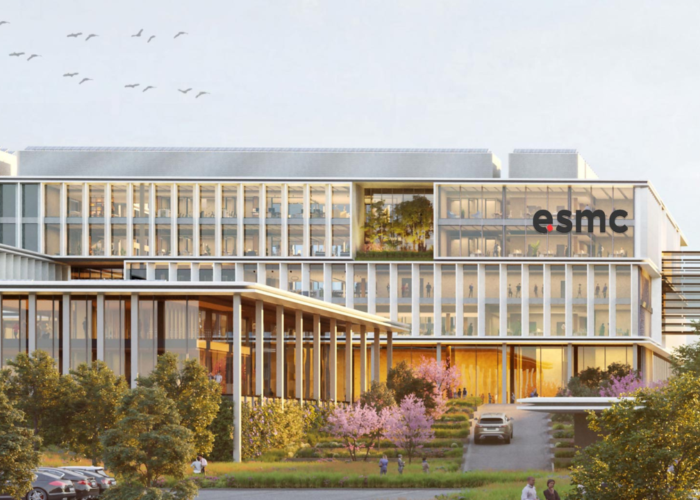
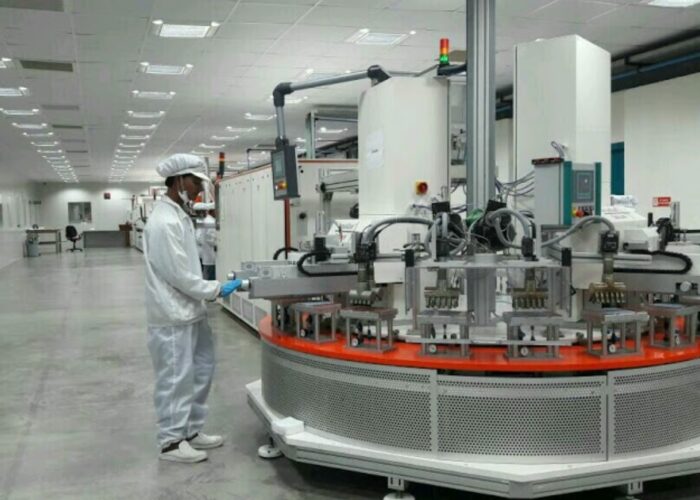
HoloSolis is advancing plans to build a 5GW cell and module facility in north-eastern France. It aims to begin production in 2028 and manufacture up to ten million modules annually at full capacity.
The company already has investment from several public and private sources, and last year announced a licensing agreement with Trinasolar to produce Europe-made modules using the Chinese PV manufacturing giant’s TOPCon cell technology.
“Europe needs an industry that is strong, competitive, and decarbonised. By investing in GravitHy and HoloSolis, we are standing alongside the players who are reinventing Europe’s industrial model. That is precisely our mission: to demonstrate that economic performance and sustainability are not opposing goals, but the twin pillars of a resilient, future-ready industry,” said Christophe Beck, chairman and CEO of Ecolab.
The new investment is a welcome bright spot for Europe’s PV manufacturing industry, which has been struggling to reverse its fortunes in recent years after losing ground to China and, more recently, emerging manufacturing hubs such as India.
Despite various policy-led attempts to support European PV manufacturing, the going remains tough. Late last month, Carbon, another French start-up, announced that it was shelving plans for a vertically integrated PV manufacturing facility due to what it said was a lack of policy clarity at an EU and Member State level over the creation of a “strictly European photovoltaic market”.