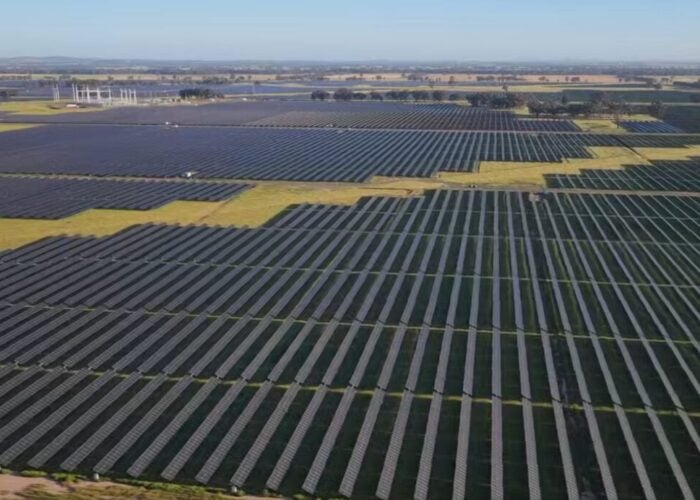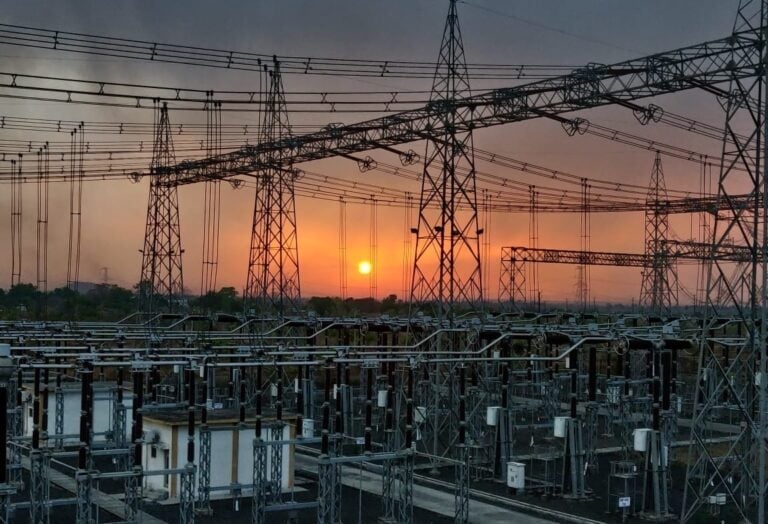
India’s power transmission sector is set for a multi-year investment cycle, with capital expenditure expected to reach IN 5 trillion (US$52 billion) to 6 trillion (US$62 billion) between FY2027 and FY2032, according to Indian credit rating agency ICRA.
The investment is aimed at expanding and strengthening the grid, including new evacuation infrastructure and transmission corridors, to accommodate more than 900GW of non-fossil fuel capacity by 2035-36. Around 548GW of the planned capacity will come from solar and wind.
Try Premium for just $1
- Full premium access for the first month at only $1
- Converts to an annual rate after 30 days unless cancelled
- Cancel anytime during the trial period
Premium Benefits
- Expert industry analysis and interviews
- Digital access to PV Tech Power journal
- Exclusive event discounts
Or get the full Premium subscription right away
Or continue reading this article for free
ICRA estimates the sector will need to add around 20,000 circuit kilometres of transmission lines and 120 gigavolt-amperes (GVA) of substation capacity annually to meet the government’s earlier National Electricity Plan-II targets.
However, the agency warned that execution challenges, including land acquisition and right-of-way (RoW) issues, continue to delay projects. These delays are contributing to renewable energy curtailment, with grid constraints resulting in around 33% curtailment as of May 2026 in regions where transmission infrastructure has yet to catch up with generation capacity.
Commenting on the execution challenges, Ankit Jain, vice president, ICRA Limited, said: “Power transmission projects continue to face significant execution risks owing to challenges in acquiring land, ROW related issues and regulatory approvals, leading to delays in timely implementation. Most transmission projects awarded by the central nodal agencies through the tariff based competitive bidding (TBCB) route have been delayed beyond their scheduled commissioning date (SCOD) due to these challenges.”
“Out of the total projects commissioned by March 2026 under this route, only 12% was done within the scheduled timeline, while the balance was commissioned with a lag of two months to three years, with the median delay of over 10 months. This delay in the transmission capacity addition impacts the risk of power evacuation for the renewable energy players, resulting in curtailment related episodes,” he added.
ICRA also noted that outstanding orders and fresh order inflows for major transmission equipment suppliers more than doubled in FY2026 compared with FY2022, reflecting the expected increase in transmission spending.
While the investment pipeline is expected to support strong order books for equipment manufacturers, ICRA said limited manufacturing capacity and shortages of skilled labour could constrain execution unless suppliers expand capacity.
The agency added that renewable energy curtailment on the interstate transmission system (ISTS) remains largely driven by transmission bottlenecks and insufficient temporary general network access (T-GNA), resulting in non-scheduling of power.
Furthermore, Jain highlighted, “Out of the recently commissioned total RE capacity of 54.8 GW, 33% is being evacuated under T-GNA route at an all-India level as of May 2026. Further, the curtailment under TGNA is the highest during solar hours and has remained in the range of 50-60% during the same period. These instances are more prominent in Rajasthan and Gujarat, while curtailments in the southern region remain limited even in the solar hours.”
“A large pipeline of projects of 107GW across solar, wind, hybrid, hydro, pumped storage and thermal segments, which already have been granted connectivity, are planned to be integrated into the ISTS network between 2026-27 and 2030-31. As seen in the past, slippages in achieving timely commissioning of the upcoming transmission infrastructure cannot be ruled out, which could impact RE capacity additions or result in continued grid curtailment episodes for the RE players, materially impacting the return metrics of the RE projects,” concluded Jain.