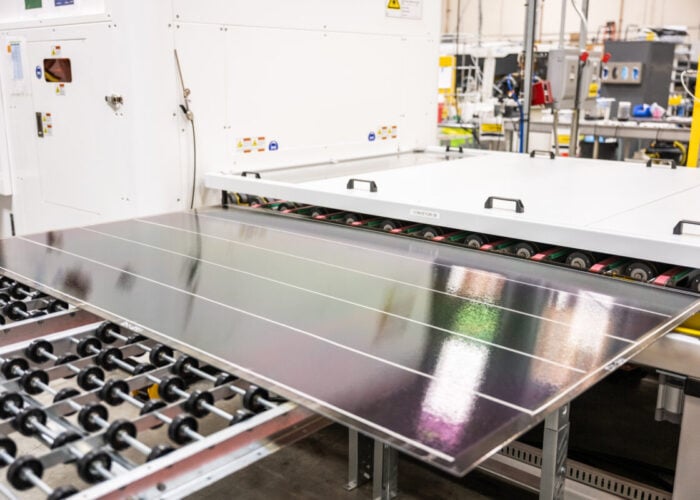
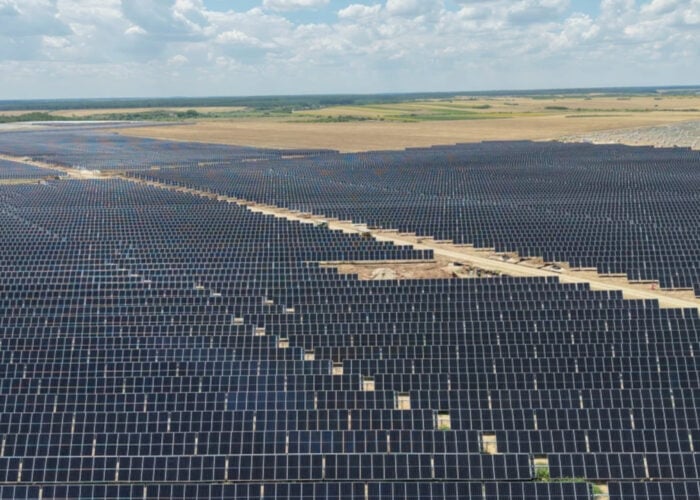
India’s Ministry of New and Renewable Energy (MNRE) will subsidise 15% of the benchmark cost for residential, institutional, government and social sector rooftop solar installations, but will not cover private, commercial and industrial rooftop solar.
With 40GW of solar rooftop allocated as part of India's overall 100GW by 2022 solar target, MNRE has begun implementing its ‘Grid-Connected Rooftop and Small Solar Power Plants Programme’ for projects ranging between 1-500kW in capacity.
Try Premium for just $1
- Full premium access for the first month at only $1
- Converts to an annual rate after 30 days unless cancelled
- Cancel anytime during the trial period
Premium Benefits
- Expert industry analysis and interviews
- Digital access to PV Tech Power journal
- Exclusive event discounts
Or get the full Premium subscription right away
Or continue reading this article for free
The ministry said that due to the large rooftop target, it would not be able to provide central financial assistance (CFA) to all rooftop solar plants.
The 15% CFA for eligible plants (residential, institutional, government and social sector) will be provided through State Nodal Agencies, State departments, the Solar Energy Corporation of India (SECI), the Indian Renewable Energy Agency (IREDA), empanelled government agencies, PSUs of central and state governments and banks.
Plants provided with the 15% CFA will be subject to the ‘Domestic content Requirement’ for modules made in India.
The MNRE also listed various benefits available to all plants in the 1-500kW sector:
- Accelerated depreciation benefits for industrial and commercial buildings
- Custom duty concessions and Excise Duty Exemptions
- 10-year tax holiday
- Provision of bank loans as part of home loan/home improvement loan
- Loans for system aggregators from IREDA at concessional interest rate of 9.9-10.75%
- Loans up to INR150 million (US$2.35 million) for renewable energy projects and up to INR1 million for individual loans under priority sector lending
- Bank loans as part of home loan/home improvement loan for rooftop solar systems
In related news, the MNRE has also put out a request for proposals for entrepreneurs and NGOs to implement pilot renewable energy projects including several solar technologies for lighting, heating, pumping and drying in rural districts within the states of Assam, Madhya Pradesh and Odisha. This is part of the ministry’s ‘Scale Up of Access to Clean Energy for Rural Productive Uses’ programme.
This week the Indian state of Telangana held a solar auction for which SkyPower Southeast Asia Holdings put in the lowest qualified bid at INR5.17/kWh (US$0.0807/kWh).
Various other winners in the bid have been reported, but without a full list.
Jasmeet Khurana, senior consulting manager at analyst firm Bridge to India, told PV Tech that it is not yet completely clear which companies will take home what capacity because the bids were based on a substation basis and there is still negotiation about locations and capacities of these projects. This is unique to the Telangana tender.