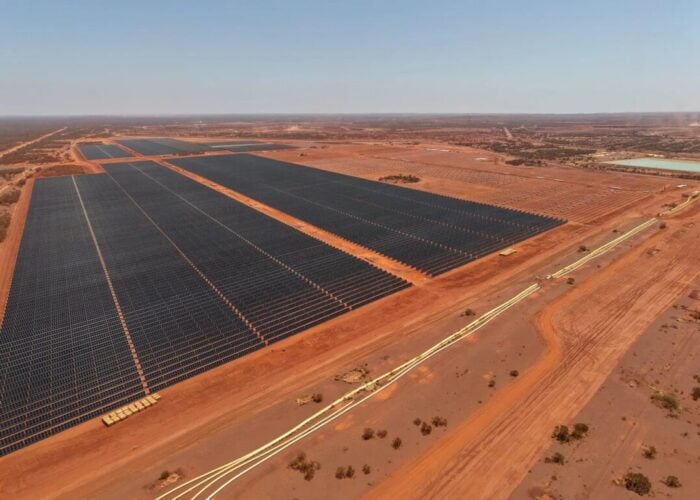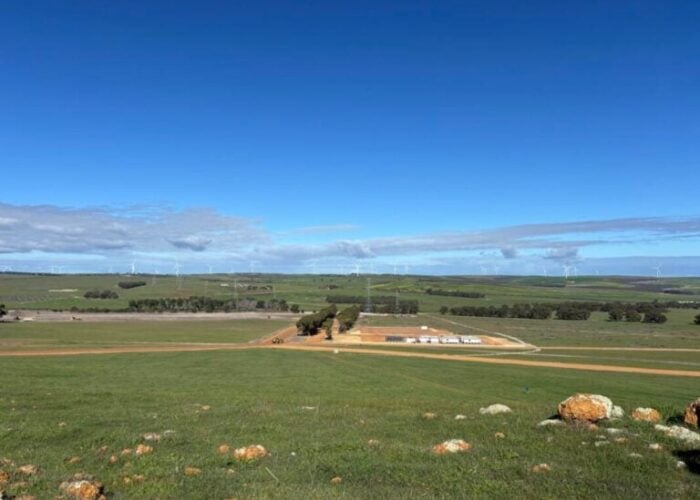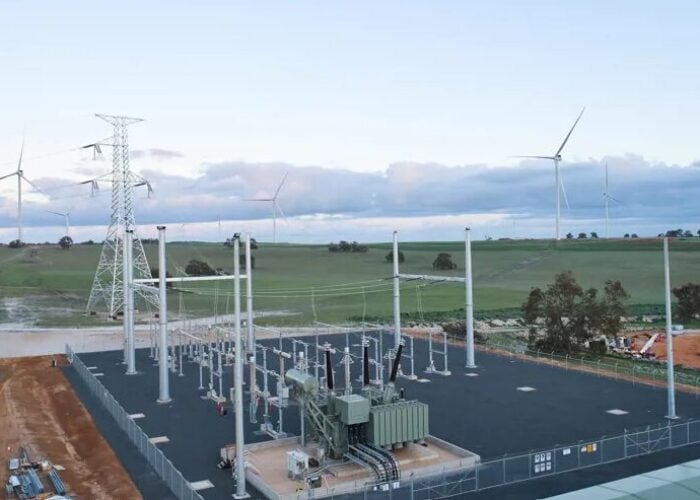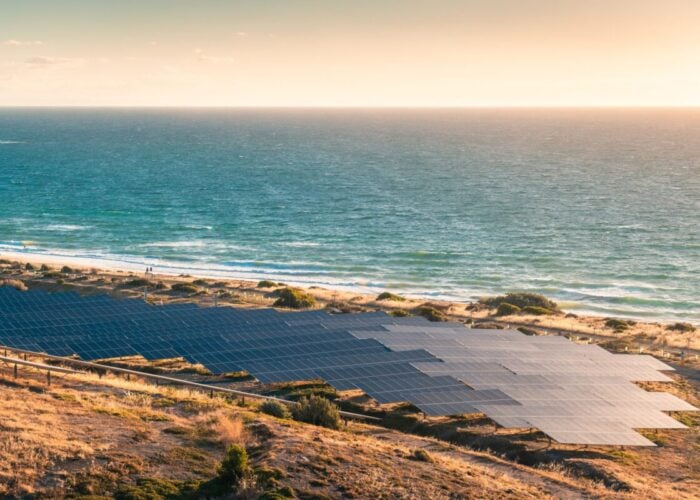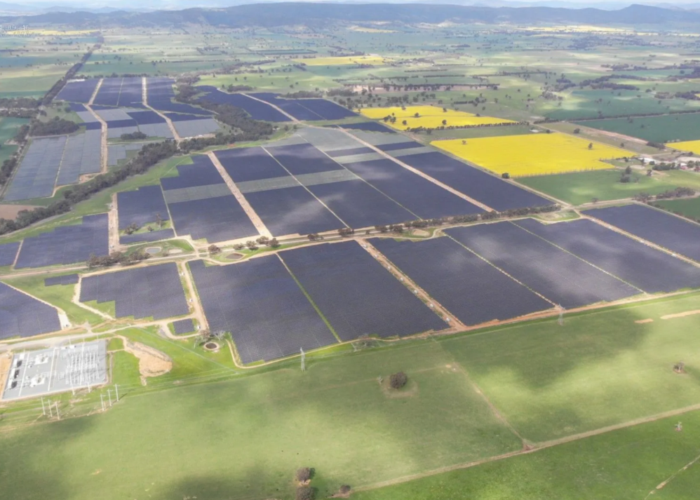
The Australian government of Victoria has released an amended version of the Victorian Transmission Plan, adding 200,000 hectares of area to develop renewable energy to the existing 230,000 hectares proposed in the first draft.
Part of the Victorian Transmission Investment Framework, the guidelines outline the state’s transition away from fossil fuel power towards renewable energy generation and energy storage over the next 15 years.
Try Premium for just $1
- Full premium access for the first month at only $1
- Converts to an annual rate after 30 days unless cancelled
- Cancel anytime during the trial period
Premium Benefits
- Expert industry analysis and interviews
- Digital access to PV Tech Power journal
- Exclusive event discounts
Or get the full Premium subscription right away
Or continue reading this article for free
In May 2025, the government of Victoria introduced the first draft of the guideline with seven renewable energy zones (REZ) for the state to help achieve its target of 2.7GW of utility-scale solar PV generation by 2040.
However, the latest version of the plan has added a new area around Coleraine to the southwest zone. The seven proposed REZs in the original document included Central Highlands, the Central North, Gippsland, the Northwest, the Southwest, Grampians Wimmera, and Wimmera Southern Mallee.
The amended document also expands the footprint of these areas to 7.9% of the state, from 7.0% stated in the original proposal. The number of distinct zones has been increased to nine from seven and the area designated to build wind, solar, and battery projects has been increased from 1.66m hectares to 1.88m hectares across all energy zones.
The announcement comes as the state reached 50GW of proposed or committed renewable energy.
Renewables accounted for 42% of electricity generation in FY25
Moreover, Lily D’Ambrosio, Minister for Energy and Resources, state government of Victoria, highlighted that over the last financial year (which ended on 30 June 2025), the state has produced 42% of its electricity through cheap renewable resources. According to the state government, this has put Victoria on track to meet its legislated renewable energy target of 40% by the end of the year.
Additionally, 11% of the state’s electricity in the last financial year was contributed through rooftop solar installations in offices, warehouses and houses. In 2024, the Victoria government detailed a new decarbonisation plan aiming to add around 7.6GW of rooftop solar PV generation by 2035.
The state aims to reach 65% renewable energy generation in the next five years and 95% by 2035. Currently, Victoria hosts over 90 large-scale projects which represent a combined 7GW of renewable energy capacity.
Moreover, the government is fast-tracking renewable energy projects through its Development Facilitation Program, with an investment of AU$5 billion (US$3.2 billion) across 18 projects. These projects, featuring battery energy storage systems (BESS) to meet evening peak demands, have created around 1,900 jobs locally.