Duke Energy Renewables has granted turnkey engineering, procurement and construction (EPC) services to Swinerton Renewable Energy for its Pumpjack and Wildwood PV projects located in Bakersfield, California.
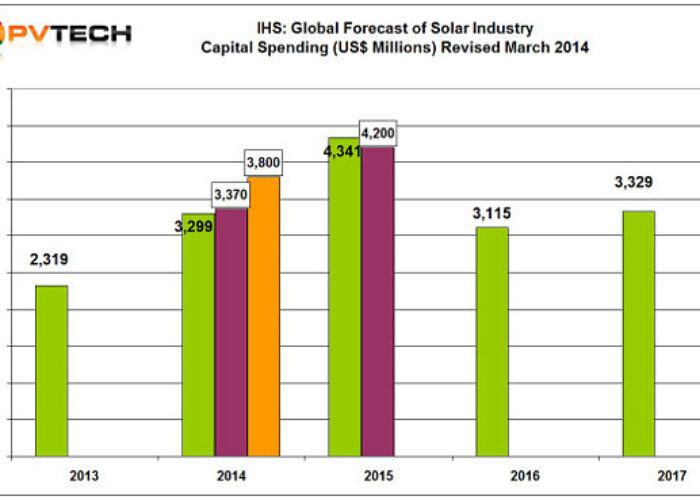
Market research firm, IHS has made further tweaks to its PV manufacturing capital expenditure forecast, highlighting another US$430 million is expected to be spent in 2014 with the total reaching US$3.8 billion by year-end.
As part of the expected IPO of SunEdison’s semiconductor wafer and polysilicon operations into SunEdison Semiconductor Limited (SSL), Samsung Fine Chemicals is planning to purchase US$100 million in shares in the spin-off company in private placement.
Shunfeng Photovoltaics is expected to need US$1.26 billion in working capital requirements for the next 12 months once its takeover of Wuxi Suntech is finalised, financial filings reveal.
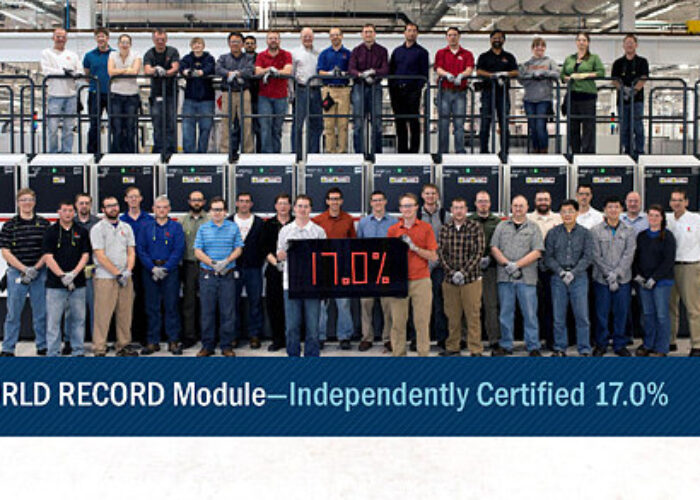
First Solar has revealed a new total area module efficiency record for its CdTe thin-film technology of 17%, a significant increase from 16.1%, set in April 2013.
First Solar is planning its next major CdTe thin-film production capacity expansion phase to occur in 2015 with an additional 1GW of nameplate capacity. The company revealed the plans during its 2014 Analyst Day event.
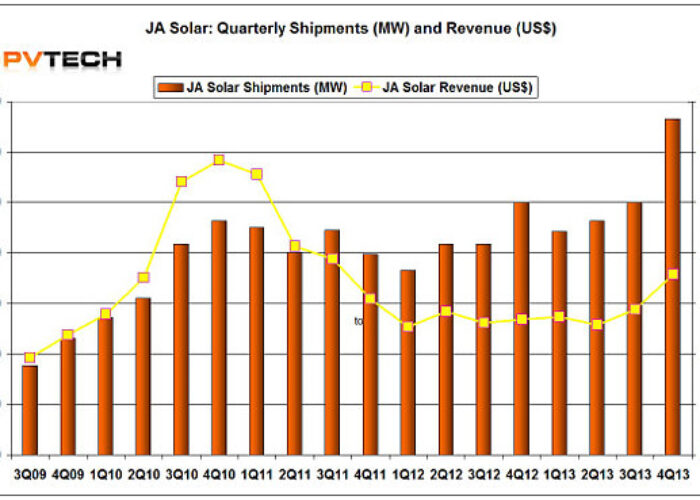
Major tier one PV manufacturer JA Solar reported better than guided shipments for the fourth quarter of 2013, while ending two years of quarterly losses on revenue of US$357.3 million.
Dubbed ‘Merlin,’ GT Advanced Technologies has launched a c-Si solar cell metallisation and interconnect technology that it claims will boost conversion efficiencies while lowering production costs via significantly reduced silver paste consumption.
Tracking system engineering firm Exosun has signed a deal with renewable energy company Fonroche Energie to provide 12MW of trackers and related services to the 'Le Betout' solar plant located in south-west France.