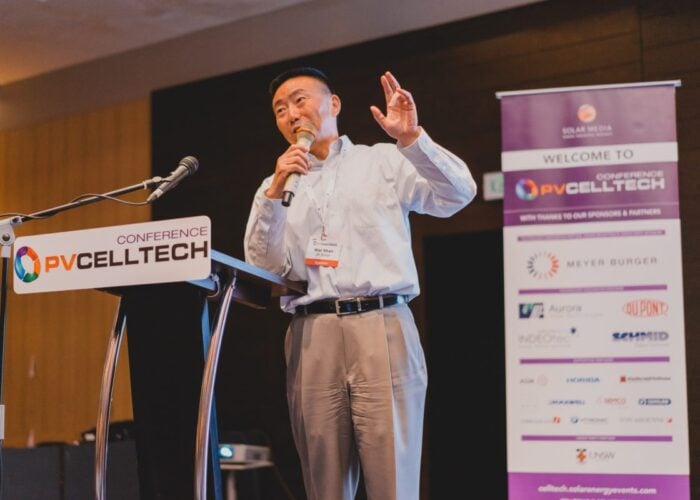
PV CellTech 2020 is taking place online this year, with 27 invited keynote presentations from the leading PV technology stakeholders, during 27-29 October 2020. The scope of the 9 sessions across the 3 days of the online event have been configured to allow the global PV community to assess fully the plethora of new-capacity and new-technology announcements from the past 12-18 months.
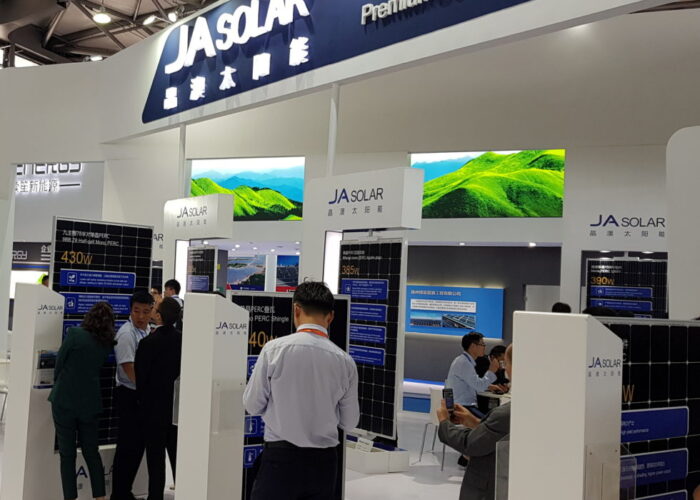
‘Solar Module Super League’ (SMSL) member JA Solar has started the volume production ramp at its 10GW Yiwu Information Optoelectronic High-tech Industrial Park manufacturing hub that was officially announced at the start of 2020.
BayWa r.e., Enel Green Power and Solarcentury are among the 20 participants in a new European Union-funded project that aims to increase the performance and reliability of solar PV components and systems.
Italian headquartered FuturaSun has officially opened its second PV module assembly plant with a capacity of 500MW in collaboration with manufacturing partner, State Power Investment Corporation Limited (SPIC) in Taizhou, China.
State-owned companies in India could be tasked with establishing polysilicon manufacturing facilities to help make domestic solar manufacturing more competitive, reports have claimed.
The cost-effectiveness of solar panels as well as new technology that allows households to sell surplus power to the grid will both be explored under two separate initiatives announced by the Australian Renewable Energy Agency (ARENA).
China-based PV power plant developer and PV manufacturer CECEP Solar Energy Co is planning a major move into the rapidly developing merchant high-efficiency PERC large-area solar cell market with the construction of a 20GW hub in the Gaoyou Economic Development Zone, Gaoyou City, Jiangsu province.
Major materials science company, Royal DSM has sold its Resins & Functional Materials (RFM) businesses including the coatings activities of DSM Advanced Solar, known for its anti-reflective (AR) resin coatings for solar glass and on-field PV power plant upgrading, to rival Covestro AG for a cash sum of around €1.4 billion.
A new company, EnCORE PV has been established to build own and operate a 1GW heterojunction (HJ) plant in the region of Kaliningrad, located along the Baltic coast between Poland and Lithuania.