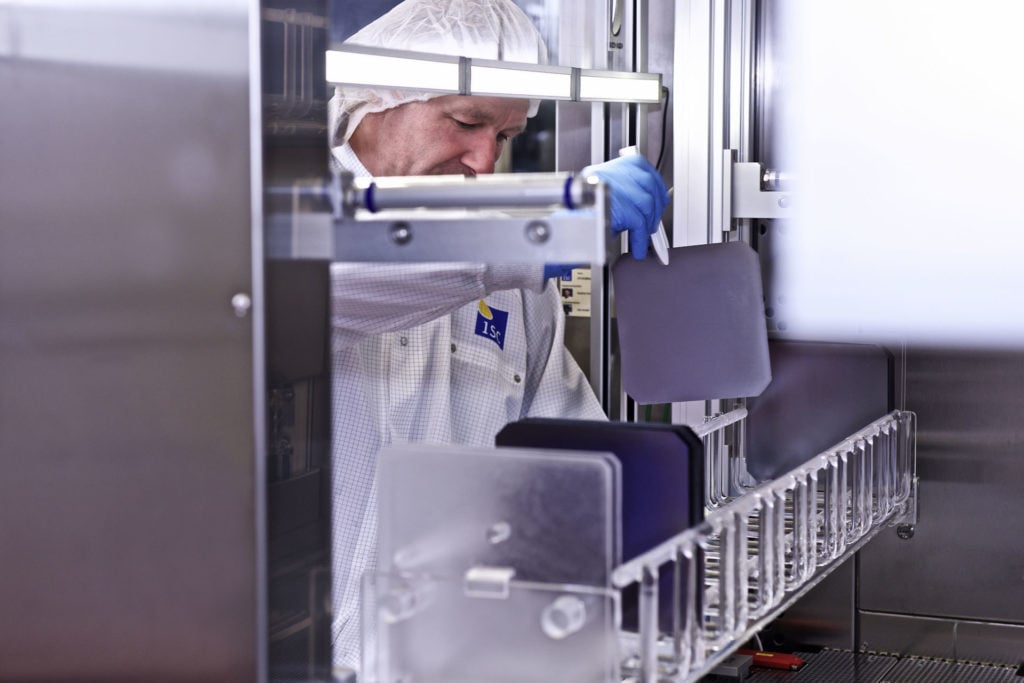
German solar energy research institute ISC Konstanz has launched five new publicly funded research projects covering the full PV value chain.
The organisation said that together, the five projects would strengthen Europe’s technological sovereignty in PV and support the development of “competitive, sustainable and resilient” solar manufacturing value chains.
Try Premium for just $1
- Full premium access for the first month at only $1
- Converts to an annual rate after 30 days unless cancelled
- Cancel anytime during the trial period
Premium Benefits
- Expert industry analysis and interviews
- Digital access to PV Tech Power journal
- Exclusive event discounts
Or get the full Premium subscription right away
Or continue reading this article for free
The projects, which all kicked off in June, are being supported with a mix of German federal and European funding and range from next-generation silicon wafers and cells to intelligent manufacturing facilities.
SUNRISE is a Horizon Europe-funded project to develop lightweight, glass-free photovoltaic products based on fibre-reinforced composites. The technology aims to open new application fields for PV, including automotive, marine and transport infrastructure.
ALLEGRO, also a Horizon Europe project, focuses on kerfless silicon wafer technologies. By growing silicon wafers directly from the gas phase, the project aims to establish a competitive and resilient European wafer manufacturing ecosystem while significantly reducing material and energy consumption.
SmartFab, funded by the German Federal Ministry for Economic Affairs and Energy (BMWE), aims to develop a virtual, AI-supported solar cell factory based on digital twins. The project will enable realistic simulation, optimisation and ramp-up of future PV production lines without requiring physical infrastructure.
LAPIS will develop laser-structured passivated contacts for innovative tunnel oxide passivated contact (TOPCon) solar cells. The project aims to further improve cell efficiency while maintaining compatibility with industrial high-throughput production.
SPRINT addresses further innovations for next-generation PV technologies and contributes to accelerating their industrial implementation.
Radovan Kopecek, managing director of ISC Konstanz, said: “We are particularly pleased that five major projects have started simultaneously. They demonstrate the confidence that national and European funding agencies place in our research and underline the importance of publicly funded innovation for strengthening Europe’s photovoltaic industry.”
Last week, ISC Konstanz was part of a European industrial consortium that announced a major equipment supply deal for a 6GW TOPCon production line for Indian PV manufacturer Emmvee.