The Italian Ministry of the Environment and Energy Security (MASE) has issued a decree to pave the way to deploy €1.7 billion (US$1.8 billion) towards developing over 1GW of agrivoltaics (agriPV) projects.
The funding was approved by the European Commission last November and is issued predominantly through its Recovery and Resilience Facility (RRF), which was introduced to aid economic recovery after the COVID-19 pandemic.
Try Premium for just $1
- Full premium access for the first month at only $1
- Converts to an annual rate after 30 days unless cancelled
- Cancel anytime during the trial period
Premium Benefits
- Expert industry analysis and interviews
- Digital access to PV Tech Power journal
- Exclusive event discounts
Or get the full Premium subscription right away
Or continue reading this article for free
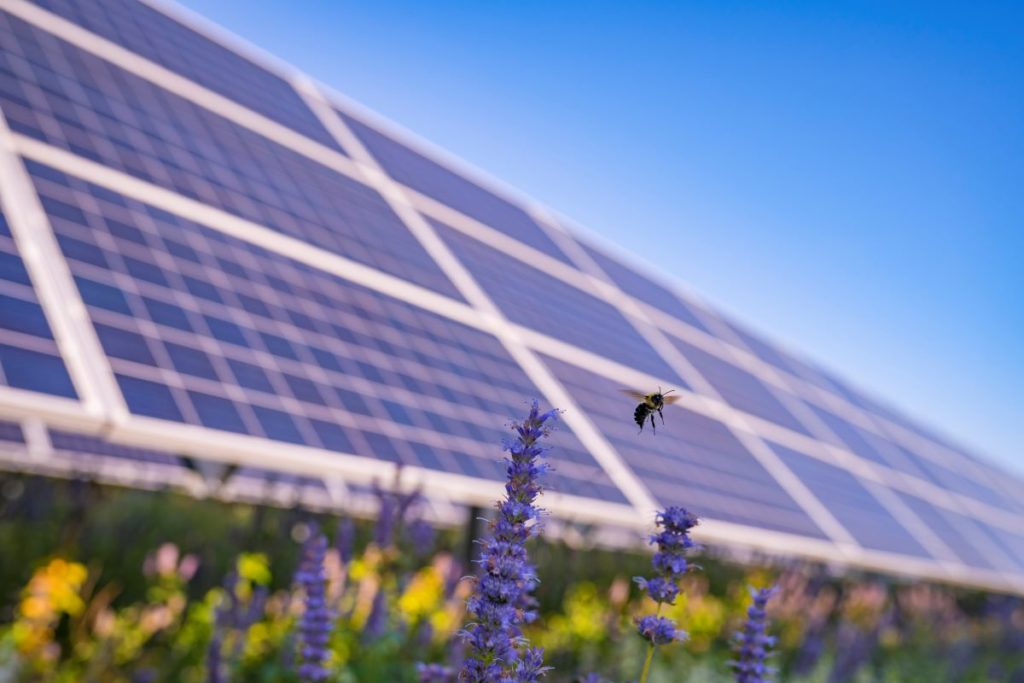
MASE said that the facility would seek to finance at least 1.04GW of agrivoltaics projects across Italy, sites where solar PV generation and agricultural practice take place on the same piece of land. The planned capacity will be online by 2026.
Of the available capacity covered by the scheme, 300MW is reserved for projects of up to 1MW in size submitted by “agricultural entrepreneurs” and the remaining 740MW for projects of any size.
The RRF funding will cover up to 40% of the eligible investment costs for the planned projects, as well as offering tariffs based on the share of electricity delivered to the grid by the PV arrays.
The Italian government has leant into agrivoltaics before; in August 2022 it launched a €1.5 billion scheme to support the technology, aiming at 375MW of capacity.
Agrivoltaics has numerous benefits for both PV installations and agricultural practices. For the former, it can open up land that may otherwise have been unavailable for solar development and, in some cases, make solar projects more attractive to local communities which may otherwise have opposed them. Modules positioned above plants or crops have also been shown to operate more efficiently due to the cooling effect that evaporating water has on the underside of panels.
For the latter, it can make farmland more profitable and provide extra income for farmers and landowners. Some studies have shown that partial shading and shelter from solar modules can improve growth conditions for some plants. PV Tech Premium spoke with Jennifer Bousellot of the University of Colorado last year about these benefits as an argument for urban or rooftop agrivoltaics.
The technology is gaining momentum and attention in the industry, particularly in Europe. The EU published research via its Joint Research Centre (JRC) in October 2023 which found that almost 1TW of agrivoltaics capacity would be possible through deployments on just 1% of current EU farmland. Previous independent research had explored agrivoltaics’ potential across the EU, but the JRC report marked the first officially backed acknowledgement of this potential.