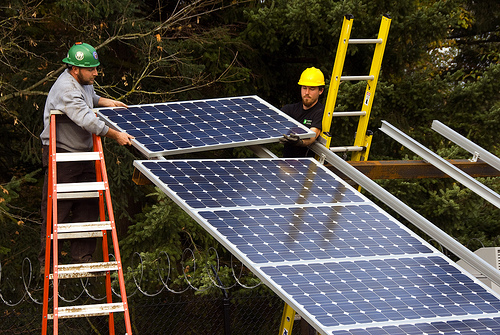
Three months of marginal job creation means nearly 500,000 clean energy workers in the US remain unemployed as the sector struggles to recover from the impact of COVID-19.
Just 24,000 positions were added in July and August, leaving 14% of the clean energy sector’s pre-coronavirus workforce unemployed as the industry nears the traditionally slow winter months.
Try Premium for just $1
- Full premium access for the first month at only $1
- Converts to an annual rate after 30 days unless cancelled
- Cancel anytime during the trial period
Premium Benefits
- Expert industry analysis and interviews
- Digital access to PV Tech Power journal
- Exclusive event discounts
Or get the full Premium subscription right away
Or continue reading this article for free
The sector, therefore, faces a long road to recovery, according to the latest analysis of federal unemployment filings prepared for E2 (Environmental Entrepreneurs), E4TheFuture and the American Council on Renewable Energy (ACORE) by BW Research Partnership.
The report notes that with federal ‘Paycheck Protection Program’ (PPP) funds “all but exhausted”, more layoffs could be imminent without congressional action.
“Renewable energy workers have been suffering double-digit unemployment due to COVID-19 since March, negatively impacting every single state’s economy,” Gregory Wetstone, CEO of ACORE, said.
“Our ask to Congress is a simple one: we need temporary refundability of renewable energy tax credits and a delay in their scheduled phasedown. Enacting these commonsense emergency relief measures into law would get these hard-working Americans back on the job and help power our nation’s economic recovery.”
States with most clean energy job losses since pre-COVID
| State | Clean energy job losses | Percentage of clean energy workforce |
|---|---|---|
| California | 84,439 | 15.30% |
| Georgia | 27,058 | 31.30% |
| Florida | 25,650 | 15.30% |
| Michigan | 23,871 | 18.00% |
| Texas | 23,406 | 9.50% |
Source: E2, ACORE, E4TheFuture and BW Research Partnership.
Before COVID-19 hit, nearly 3.4 million Americans worked in clean energy occupations, including renewable energy, energy efficiency, grid modernisation, clean vehicles and fuels. According to the report, that figure is three times the number of Americans working in fossil fuels.
More than 40 states continue to suffer double-digit unemployment in clean energy, with seven states seeing clean energy unemployment at 20% or more. Georgia continues to suffer more than 31% unemployment in clean energy, followed by Kentucky at nearly 29%. In August, Massachusetts led all states with the highest percentage growth in its workforce at 0.9%, while California had the largest total increase in jobs with 3,100 positions added (0.7%). Just two states (New York and California) gained over 1,000 jobs, while ten states added fewer than 50 jobs.
Phil Jordan, principal at BW Research Partnership, warned that despite the widespread economic reopening across the US, most of the nearly 500,000 job losses “are at serious risk of becoming permanent”.