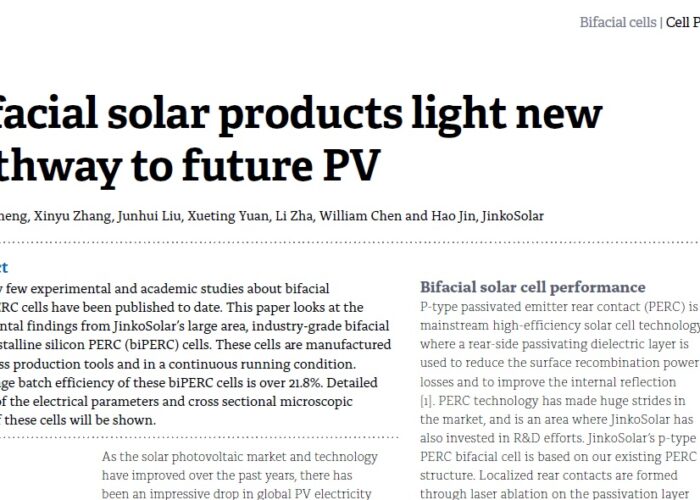
Relatively few experimental and academic studies about bifacial p-type PERC cells have been published to date. This paper looks at the experimental findings from JinkoSolar’s large area, industry-grade bifacial
monocrystalline silicon PERC (biPERC) cells.
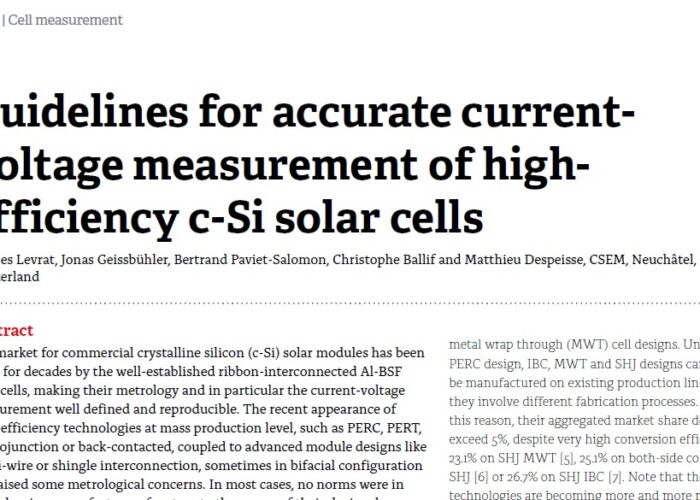
The market for commercial crystalline silicon (c-Si) solar modules has been ruled for decades by the well-established ribbon-interconnected Al-BSF solar cells, making their metrology and in particular the current-voltage measurement well defined and reproducible.
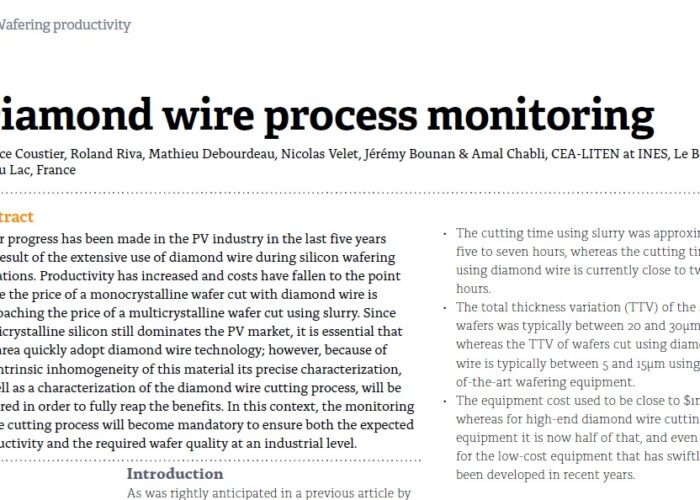
Major progress has been made in the PV industry in the last five years as a result of the extensive use of diamond wire during silicon wafering operations. Productivity has increased and costs have fallen to the point where the price of a monocrystalline wafer cut with diamond wire is approaching the price of a multicrystalline wafer cut using slurry.
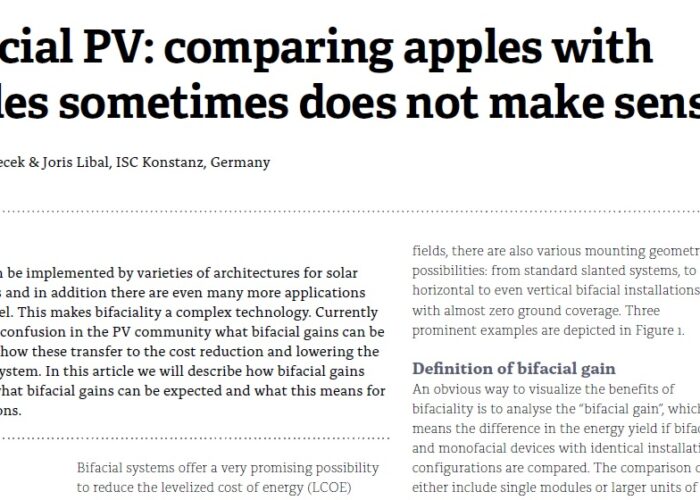
Bifaciality can be implemented by varieties of architectures for solar cells, modules and in addition there are even many more applications on system level. This makes bifaciality a complex technology. Currently there is some confusion in the PV community what bifacial gains can be expected and how these transfer to the cost reduction and lowering the LCOE of the system. In this article we will describe how bifacial gains are defined, what bifacial gains can be expected and what this means for real applications.
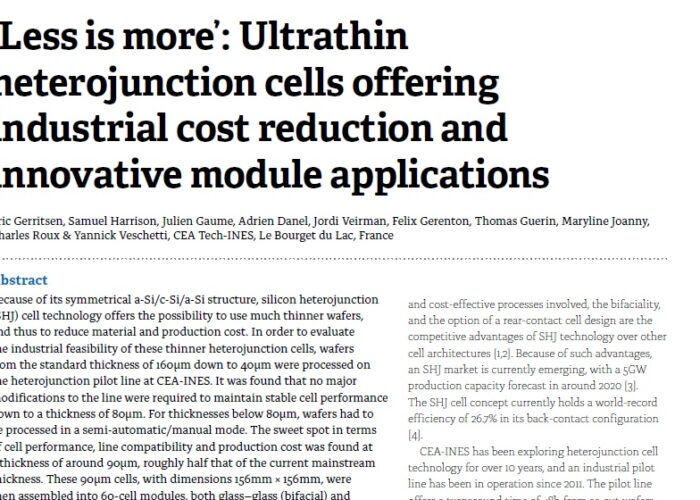
Because of its symmetrical a-Si/c-Si/a-Si structure, silicon heterojunction (SHJ) cell technology offers the possibility to use much thinner wafers, and thus to reduce material and production cost. In order to evaluate the industrial feasibility of these thinner heterojunction cells, wafers from the standard thickness of 160μm down to 40μm were processed on the heterojunction pilot line at CEA-INES.
Welcome to the thirty-ninth edition of Photovoltaics International. We go to press just a few days after the conclusion of our PV CellTech conference in Penang. The focus for all the PV CTOs, chief scientists, materials providers, equipment manufacturers and others gathered for the summit was how to keep pushing the industry towards a standard 20% efficiency while also expanding in scale. That expansion ought to be 100GW in three years if demand is to be met, according to one speaker.
CEA-INES researchers look at the benefits of exploiting the symmetrical a-Si/c-Si/a- Si structure of silicon heterojunction cells to use ultrathin wafers.
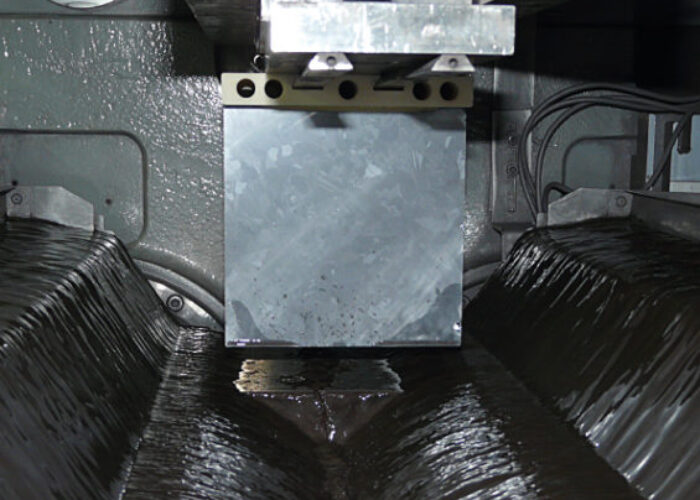
Another innovation that delivers materials savings is of course diamond wire sawing and, again, scale and efficiency are dual drivers. Here, CEA demonstrates the need for, and processes involved in, closely monitoring the cutting process to ensure wafer quality is consistent and productivity can remain at the desired level.
We look at different sides of bifacial technology (pun intended) starting with JinkoSolar’s appraisal of its mono PERC bifacial cells built using standard production technology and racking up average efficiencies of 21.8%.
Away from the crystalline silicon world, German research firm OPVIUS explores how a combination of printing methods could open the door to freeform PV modules, unleashing an entirely new suite of product options and applications.
ECN Solar reveals the results of an industrial-scale trial process to develop an n-type bifacial IBC solar cell that is based on tube diffusion and a simultaneous single-step screen-print of contacts at both polarities.
Last but not least, CSEM looks at the impact the emerging diversity in cell technology and module architecture is having on metrology.
2017 was tet another record-breaking year for energy storage. Riding high on
expectation, the industry is braced for challenges and successes in equal measure this year too.
We canvassed opinions from some of the world’s leading trade associations and representative
bodies on the year just gone and what 2018 could bring
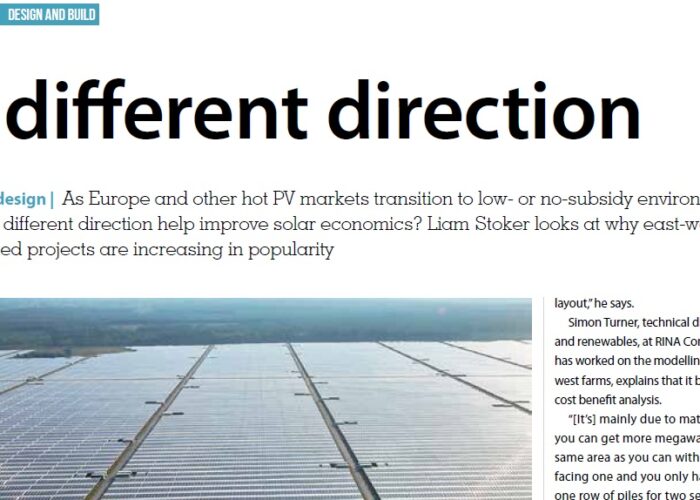
As Europe and other hot PV markets transition to low- or no-subsidy environments,
could a different direction help improve solar economics? Liam Stoker looks at why east-west
orientated projects are increasing in popularity
Ben Willis looks at the latest trends from some of the world’s most promising emerging PV markets.
This issue features Oman, Saudi Arabia, Kazakhstan and South Korea
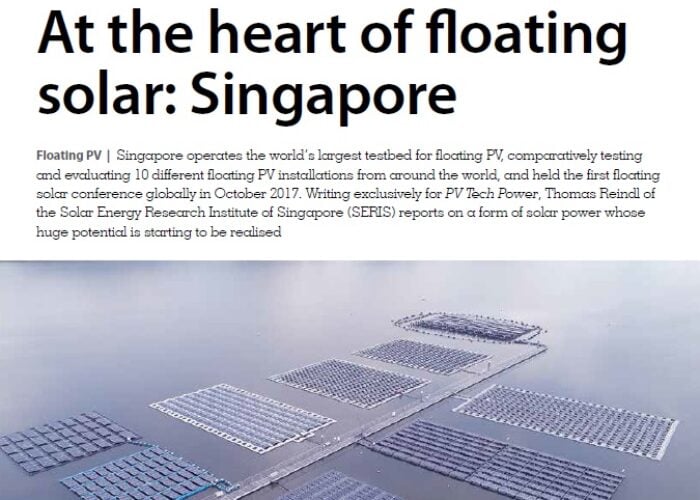
Singapore operates the world’s largest testbed for floating PV, comparatively testing
and evaluating 10 different floating PV installations from around the world, and held the first floating
solar conference globally in October 2017. Writing exclusively for PV Tech Power, Thomas Reindl of
the Solar Energy Research Institute of Singapore (SERIS) reports on a form of solar power whose
huge potential is starting to be realised