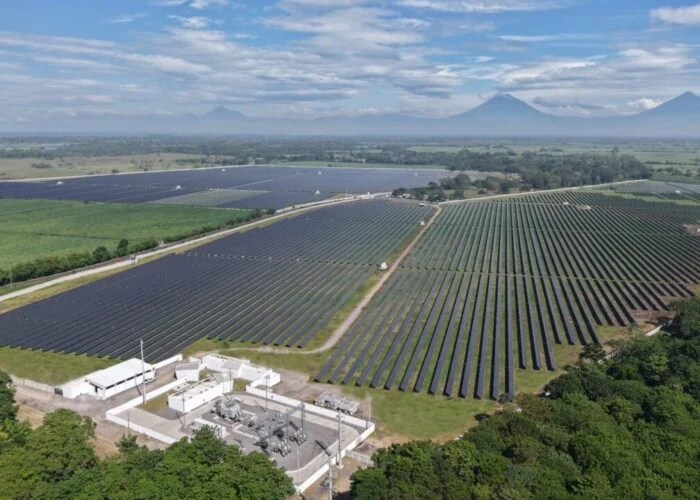
The Philippines government has announced that large-scale renewable energy installations will have to integrate energy storage into their projects.
The Southeast Asian country’s Department of Energy (DOE) issued a Department Circular (DC) earlier this week, mandating all variable renewable energy (VRE) facilities with an installed capacity of 10MW and above to integrate energy storage systems (ESS).
Try Premium for just $1
- Full premium access for the first month at only $1
- Converts to an annual rate after 30 days unless cancelled
- Cancel anytime during the trial period
Premium Benefits
- Expert industry analysis and interviews
- Digital access to PV Tech Power journal
- Exclusive event discounts
Or get the full Premium subscription right away
Or continue reading this article for free
Department Circular (DC) No. DC2026-02-0008 is a ‘supplemental and amendatory framework’ to ESS Policy (DC No. DC2023-04-0008), the government department said this morning (26 February).
However, according to the DOE press announcement, the amendatory Circular requires all prospective VRE plants to integrate energy storage with at least 20% of the renewable energy plant’s capacity. The ESS capacity should be incorporated into project development and grid integration and be consistent with system studies and technical requirements.
The Department said the new framework “advances the government’s commitment to a just energy transition by supporting ESS deployment and ensuring its systematic integration in both grid-connected and off-grid areas, enabling higher renewable energy penetration while preserving power quality and system reliability.”
ESS installations are encouraged to also add further capabilities to directly support the grid and mitigate the variability of solar PV and wind, such as grid-forming (GFM) inverters. The new framework recognises that GFM technologies, which can deliver system stability services like inertia—typically provided to the grid by the spinning mass of thermal generation or hydroelectric turbines—can improve the power quality of transmission and distribution (T&D) networks.
“Energy storage is not only about storing surplus energy, it is about strengthening the grid’s capability to absorb more renewables while maintaining reliability,” Philippines Energy Secretary Sharon S. Garin said.
The full version of this story first appeared on our sister site, Energy-storage.news. Read it here.