Queensland and the Northern Territory have refused to back a national framework requiring large data centres to underwrite new renewable energy.
In doing so, the jurisdictions have broken ranks with the rest of Australia’s state and territory governments at a meeting of the Energy and Climate Change Ministerial Council (ECMC) held virtually on 28 July.
Try Premium for just $1
- Full premium access for the first month at only $1
- Converts to an annual rate after 30 days unless cancelled
- Cancel anytime during the trial period
Premium Benefits
- Expert industry analysis and interviews
- Digital access to PV Tech Power journal
- Exclusive event discounts
Or get the full Premium subscription right away
Or continue reading this article for free
The ECMC, comprising federal and state energy ministers, agreed to progress a nationally consistent set of rules that would require the next generation of large-scale data centres to invest in additional renewable energy generation to offset their electricity demand, with consumers facing no price impacts from data centre connections.
Queensland and the Northern Territory opposed the agreement at every substantive vote, a position the Climate Council described as out of step with community sentiment.
The meeting was convened to discuss fuel security in the context of the ongoing Middle East conflict, the energy implications of a developing El Niño, and steps to manage the growing pipeline of data centre connections to Australia’s electricity grids.
AEMO has forecast that data centre electricity demand could reach around 10% of total NEM demand by 2050.
The ECMC outcome is a direct response to Prime Minister Anthony Albanese’s announcement on 15 July at the University of Sydney, where he said large-scale data centres would be legally required to put at least as much energy into the grid as they draw from it, and that this supply must be renewable energy.
Albanese confirmed the government would establish Australian Standards covering the siting, energy obligations and water use of the next generation of large-scale data centres.
“We will create a legal obligation for the next generation of large-scale data centres to underwrite new power supply,” he said.
“To build new renewable energy generation and firming to strengthen our national energy resilience. To be net-generators, not net-users.”
Albanese had indicated he would seek agreement from state and territory leaders at a National Cabinet meeting in August, with legislation targeted for introduction to Parliament early next year. Tuesday’s ECMC outcome represents the energy ministers’ response ahead of that National Cabinet discussion.
The communiqué confirmed that the Commonwealth will legislate nationally consistent standards, with states and territories to have the opportunity to build in more stringent local requirements.
Regulatory arrangements will mandate that data centres offset their electricity demand by investing in additional renewable energy generation located in the jurisdiction where the data centre is located, with an opt-out available for jurisdictions too small to host their own renewables.
A guarantee-of-origin scheme will be used to support transparent compliance. National Electricity Rule change requests will be developed for ECMC’s consideration in September, to treat data centres in the NEM as market participants required to demonstrate that they can offset their demand through new renewable energy generation, adequate firming, and demand flexibility.
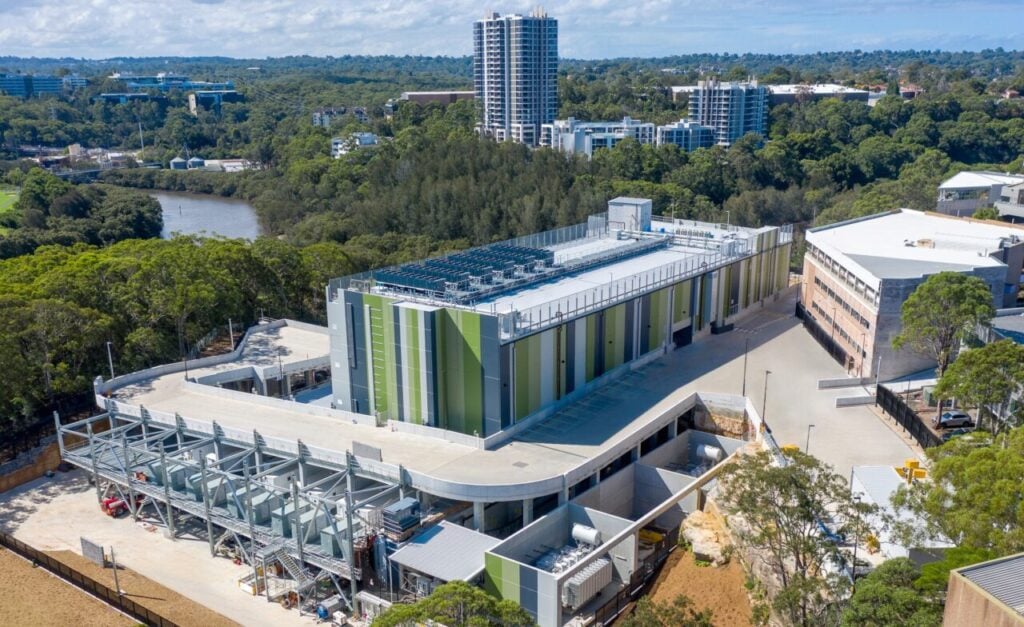
Australia is becoming one of the biggest markets for data centre development across the globe with many facilities already operational. You can find a breakdown by state and territory below:
Queensland’s opposition draws public rebuke
The Climate Council, an independent community-funded climate research organisation, had published polling ahead of the ECMC meeting showing that 82% of Australians agreed that governments should require new data centres to pay for additional renewable energy and storage infrastructure to match their electricity consumption.
A YouGov survey of 1,624 Australians, conducted between 7 and 14 July 2026, also found that 69% supported strict, mandatory energy and water standards for new data centres, and 67% believed data centres risked driving up power bills and straining the grid.
Climate Council CEO Amanda McKenzie said Queensland’s opposition was out of step with the community.
“This polling should be a wake-up call for the Queensland government. Its opposition to clean energy rules is out of step with Queenslanders, who overwhelmingly want data centres required to pay for their own renewable energy,” she said.
“Each state and territory must come to the table and put the interests of their communities ahead of the profits of tech giants and fossil fuel corporations.”
The push for mandatory rules had been building for some months. In February 2026, a coalition of Australian climate groups, unions and renewable energy organisations, coordinated by the Carbon Zero Initiative, warned that a social backlash was inevitable if data centres were permitted to draw from Australia’s existing renewable energy supply rather than funding new generation, with demand forecast to grow from 3TWh to 30TWh by 2035.
Signatories included the Australian Conservation Foundation, WWF-Australia, the Electrical Trades Union and the Clean Energy Council.
The AEMC had separately proposed new technical standards earlier in 2026, requiring large data centres to remain connected to the grid during faults rather than disconnecting, following international incidents in which simultaneous disconnections during disturbances caused cascading blackouts.
The draft standards apply to facilities with loads of 30MW or more.
Industry position and commercial context
The scale of investment already in Australia’s data centre pipeline lends immediate commercial weight to the policy design choices.
Amazon has committed AU$20 billion (US$14 billion) to expand its Australian data centre infrastructure, with utility-scale solar already contracted to supply those facilities. AI company Anthropic has also reportedly been considering an investment of up to AU$21.6 billion in Australia, contingent on the regulatory environment.
At the Australian Clean Energy Summit 2026 in Sydney last Tuesday, Sabooh Whitelaw, associate vice-president, energy and utilities at AirTrunk, a data centre operator with 11 facilities across the Asia Pacific region, argued that data centres should be treated as anchor tenants for new renewable energy infrastructure, providing the long-term demand certainty needed to bring energy investment forward.
AirTrunk said it already matches 86% of its Australian energy use with renewables and supported the underlying principle that new energy-intensive infrastructure should contribute to the new energy required for its growth.
Jeff Monday, SVP and chief growth officer at energy storage system integrator Fluence, argued along similar lines, contending that battery storage co-located with data centres could allow operators to absorb surplus renewable energy generation during periods of oversupply and discharge during demand peaks, turning what could otherwise be a grid constraint into a grid asset.
The net-generator obligation, if enforced on an annual energy accounting basis, creates a commercial incentive for exactly that configuration.
The Commonwealth has confirmed it will also introduce legislative amendments to strengthen reporting requirements under the National Greenhouse and Energy Reporting scheme, enhancing transparency of data centre energy use.
Ministers also noted concurrent work from market bodies, including the Australian Energy Regulator’s review of distribution connection charge guidelines and AEMC’s progress on improving NEM access standards, alongside the Commercial Buildings Disclosure Program and jurisdictional reforms to manage data centre energy implications at the state level.