Solar PV will play a major role in global demand for critical minerals in the coming decades, according to a report from the International Energy Agency Photovoltaics Power Systems Programme (IEA PVPS).
The report – Primary and Secondary Material Flows for the Future Global Deployment of Silicon-based Photovoltaic Systems – found that PV deployment growth will play a major part in future demand for critical materials, but technological advances and material recycling methods could lessen its impacts.
Try Premium for just $1
- Full premium access for the first month at only $1
- Converts to an annual rate after 30 days unless cancelled
- Cancel anytime during the trial period
Premium Benefits
- Expert industry analysis and interviews
- Digital access to PV Tech Power journal
- Exclusive event discounts
Or get the full Premium subscription right away
Or continue reading this article for free
The report modelled the consumption of aluminium, copper, indium, lead, silicon, silver, gold, tin and zinc in scenarios ranging between 29TWp and 75TWp of global solar deployments by 2050.
Dr Malte Vogt, from the Photovoltaic Materials and Devices group at the Delft University of Technology in the Netherlands, who co-authored the report, told PV Tech: “We expect solar PV to be the main electricity source of the 21st century. While PV uses a lower material volume than the existing fossil-based electricity system, it requires different kinds of materials – so for materials like silicon, indium, silver, copper or tin, we expect it to be a key demand factor.”
Copper and silver demand
The report estimates that the demand for copper for solar deployments and manufacturing could reach 7-15 million tonnes in the mid-2040s, equivalent to between 30% and 65% of current global annual production. Given the rate of copper mine expansion, the report estimates a potential supply gap of 10.5-11.5 million metric tonnes by 2035.
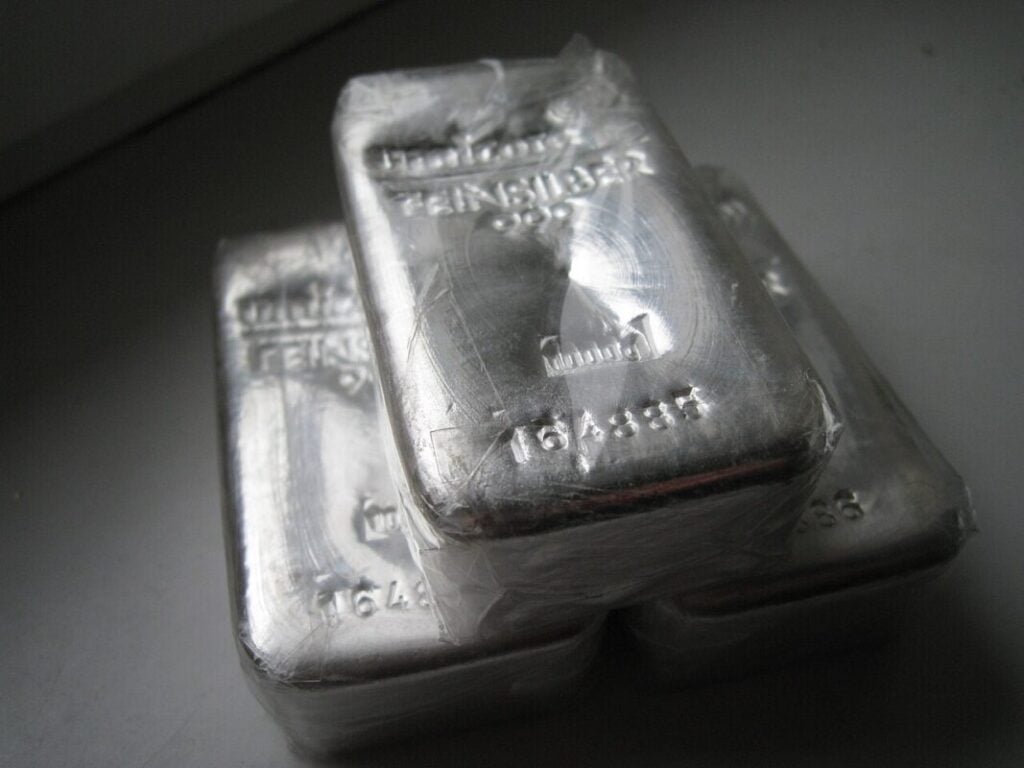
For silver, demand is expected to reach 15-30% of current global reserves between 2025-2050, and annual use for solar PV cells is expected to peak at 9,000 metric tonnes. This figure is not much higher than the current consumption rate of 8,600 metric tonnes for solar cells.
The report suggested that efforts in the industry to replace silver with copper in cell production, due to cost and abundance, could “substantially reduce demand” over the period. In April, for example, scientists at Germany’s Fraunhofer Institute for Solar Energy Systems (ISE) claimed they had found a way to reduce the silver usage in TOPCon solar cells “tenfold”, from 10-12 milligrams per watt peak to 1.1 milligrams per watt peak.
However, mainstream mass-produced products are still using a lot of silver. In an interview with PV Tech Premium in May, Yansong Shen from the University of New South Wales warned that the solar industry would exhaust current global silver reserves within five years at current production rates. Speaking from one of the leading global universities for PV research, Shen said that expanded PV recycling was key to sustaining the industry’s silver demand.
The IEA PVPS report said that retired PV plants could be an “important secondary source of silver” for the industry. Vogt told us: “One of the key findings of our report is that recycling of end-of-life PV could contribute about 30-45% of all silver required for PV till 2050. On longer time frames beyond 2050, this should be even higher.”

He continued: “By 2050 we expect to be recycling to be about 50-80 times today’s volume.”
Indium tin oxide
The report said that the rare metal indium will be a significant supply problem for solar PV cell production. The IEA PVPS said that indium demand is expected to outstrip global reserves by the mid-2040s under all of its deployment scenarios.
The metal is used as a conductive material in solar cells due to its high conductivity and the fact it can be made transparent.
While it acknowledges that mining outputs are hard to predict and reserve levels of indium may change over time, the report said it will be “necessary” to replace the use of indium in transparent conductive oxides (TCOs) in order to achieve terawatt-level annual PV deployments.
The report said that the global expansion of PV manufacturing capacity will need to consider material replacements and recycling practices to sustainably meet end demand. Both within China – where supply outstrips annual demand – and as countries such as the US, India and the EU look to establish their own solar supply chains, “material efficiency improvements and material substitution strategies should be considered alongside incentives for domestic production and processing when designing policies to support PV deployment,” the IEA PVPS recommended.
You can find access to the full IEA PVPS report here.