The Australian Energy Market Operator (AEMO) revealed yesterday (12 August) that mild winter temperatures and sunny skies across the country resulted in new winter lows for electricity demand in Victoria and South Australia, at 2,810MW and 264MW, respectively, on 11 August.
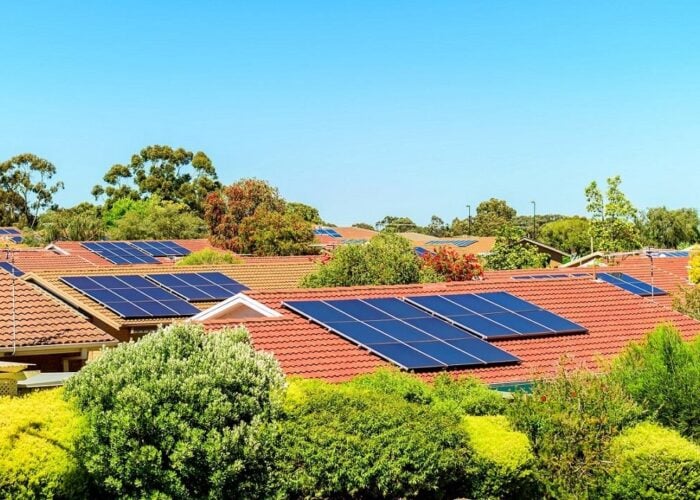
The lows witnessed on the National Electricity Market (NEM), which covers Australia’s south and eastern coasts, saw solar PV contribute higher quantities to the electricity mix. For Victoria, rooftop solar PV contributed 37.9% of the electricity mix at 13:00pm AEST. In South Australia, at 14:00pm AEST, rooftop solar PV provided around 56.7% of the state’s demand.
Try Premium for just $1
- Full premium access for the first month at only $1
- Converts to an annual rate after 30 days unless cancelled
- Cancel anytime during the trial period
Premium Benefits
- Expert industry analysis and interviews
- Digital access to PV Tech Power journal
- Exclusive event discounts
Or get the full Premium subscription right away
Or continue reading this article for free
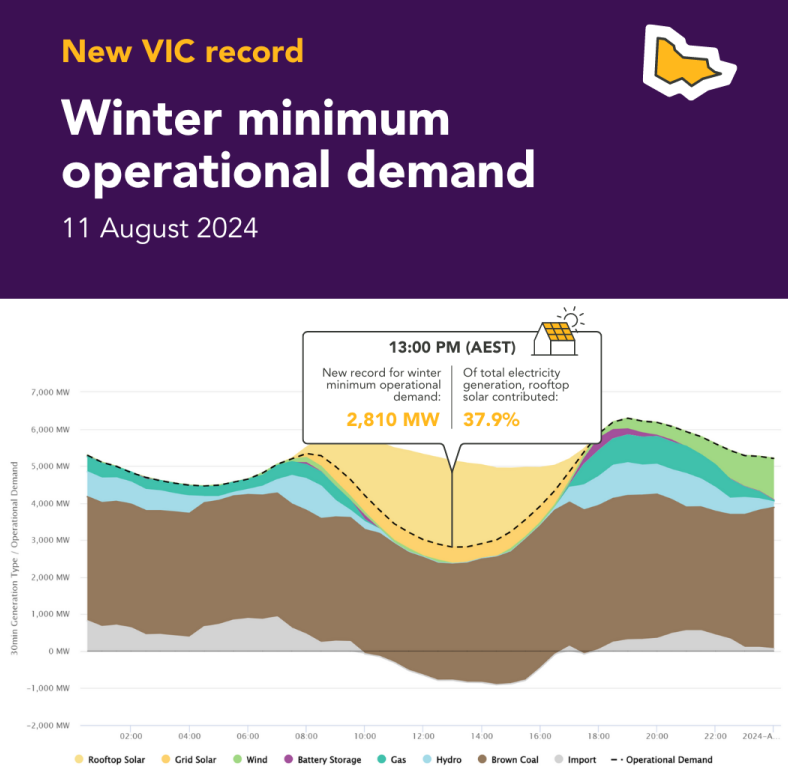
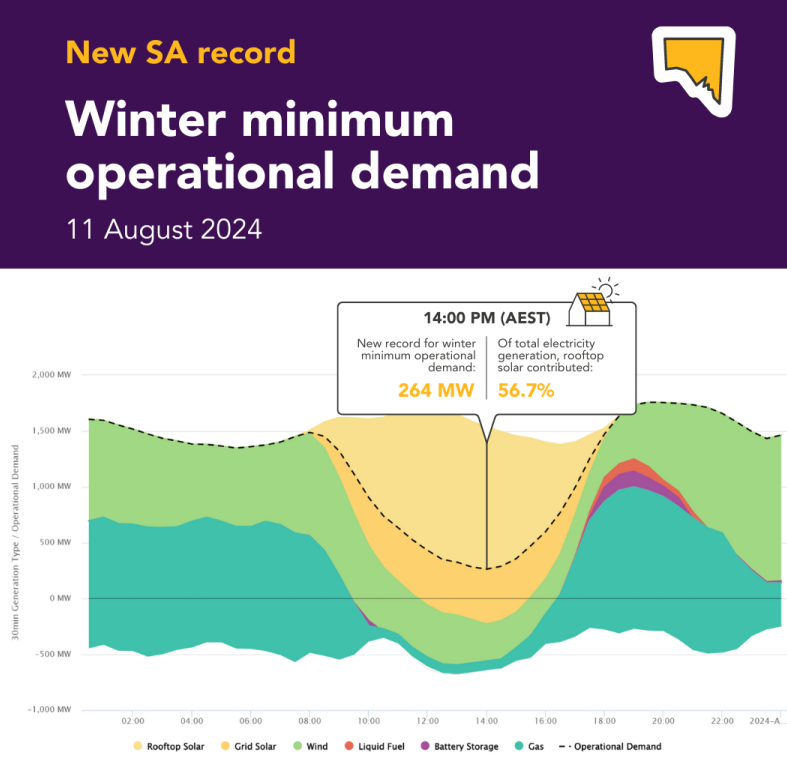
AEMO noted that the high contribution from renewables at the time had a notable effect on wholesale electricity prices, dropping to -A$45/MWh (US$29.72/MWh) in South Australia and A$46/MWh (US$30.38/MWh) in Victoria.
Record winter rooftop and utility-scale peaks
Elsewhere on the NEM, between 29 July and 4 August, rooftop and utility-scale solar saw their highest combined peak of winter 2024 thus far, contributing 15.9% to the electricity mix. Of this figure, 9.2% came from rooftop, whereas 6.7% came from utility-scale.
Throughout this week, around 417GWh of green energy was produced from rooftop solar at an average price of A$60.55/MWh (US$39.99/MWh). Utility-scale solar projects provided 301GWh at an average price of A$71.62/MWh (US$47.30/MWh).
This momentum continued the following week, with rooftop solar providing 9% of the electricity mix, around 386GWh, at an average price of A$106.04/MWh (US$70.03/MWh). Utility-scale solar provided 5.8%, around 249GWh, at an average price of A$140.51/MWh (US$92.79/MWh).
These two weeks represented the highest amount of solar that has been provided to the NEM across this winter period.
Meanwhile, in Western Australia, the South West Interconnected System (SWIS) also saw favourable conditions for its solar sector. Between 5 and 11 August, rooftop and utility-scale solar provided 15.3% to the electricity mix. The majority (15.3%) of this came from rooftop PV.
Due to this abundance, rooftop solar PV traded at -A$2.43/MWh (US$1.60/MWh), with around 61GWh generated throughout the week. On the other hand, utility-scale solar generated 4.1GWh at an average value of A$47.91/MWh (US$31.64/MWh).
The previous highest amount of rooftop and utility-scale solar in the SWIS occurred between 29 July and 4 August, where rooftop solar provided 12.4%, and utility-scale solar provided 1.2%.