Indian PV companies are in the crosshairs of a fresh antidumping and countervailing (AD/CVD) petition lodged by a group of US-based solar manufacturers alleging illegal trade practices by overseas producers.
The Alliance for American Solar Manufacturing and Trade has filed antidumping and countervailing duty (AD/CVD) petitions with the US International Trade Commission (ITC) and US Department of Commerce against Chinese-owned manufacturers operating in Indonesia and Laos and Indian-headquartered companies.
Try Premium for just $1
- Full premium access for the first month at only $1
- Converts to an annual rate after 30 days unless cancelled
- Cancel anytime during the trial period
Premium Benefits
- Expert industry analysis and interviews
- Digital access to PV Tech Power journal
- Exclusive event discounts
Or get the full Premium subscription right away
Or continue reading this article for free
The petitioners, which include First Solar, Mission Solar Energy, Qcells and Talon PV Solar Solutions, allege that Chinese companies that have relocated manufacturing capacity to Indonesia and Laos and companies based in India are harming the US manufacturing industry by violating trade laws on products bound for the US.
The group cited a number of alleged illegal subsidies that enable producers in the identified markets to undercut producers based in the US. Additionally, it identified dumping margins – the difference between the price of goods in the exporting market and the artificially lowered price in the importing country – of 89.65% for products coming from Indonesia, 213.96% for Indian products and 245.79-249.09% for products from Laos.
It said the presence of products with such artificially lowered prices posed a threat to the US solar manufacturing sector, which has seen significant advances since the passage of the Inflation Reduction Act (IRA). Although the US solar market has been in a state of turmoil since the passing of the tax reconciliation bill earlier this month, the tax credits for manufacturers have been left largely intact for the time being.
The petition will trigger a process where the Department of Commerce and ITC must determine whether imports are unfairly priced and if this has affected the domestic industry. If both are found to have happened, duties will be imposed on products sold into the US, as happened over the last year for imports from Southeast Asia. These were introduced following a similar petition and resulted in anti-subsidy duties as high as 3,403.96% on cells imported from Cambodia.
“The last petition filed on behalf of American solar manufacturers successfully enforced the rule of law and addressed illegally dumped and subsidised solar panels surging into the US from Southeast Asia,” said Tim Brightbill, co-chair of Wiley’s International Trade Practice, and lead attorney for both US-based alliances.
“But the same Chinese-backed companies wasted no time shifting operations to Laos and Indonesia, and companies in India joined in to continue undercutting American producers. We have always said, vigorous enforcement of our trade laws is critical to the success of this industry.”
Targeting India for the first time
The inclusion of Indian-headquartered companies marks a significant development in US companies’ attempts to protect their domestic market.
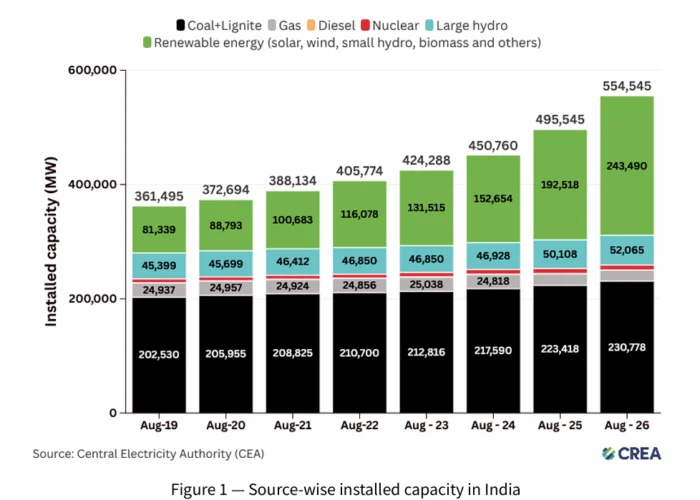
Indian manufacturers have significantly expanded both cell and module manufacturing capacity. Earlier this year, the Indian government reported that the country had nearly tripled its total cell manufacturing capacity in a year, and there has been a plethora of new manufacturing announcements in recent weeks; this week, SAEL announced plans to build a new 10GW cell and module plant.
Last week, Mike Hall, CEO at solar and storage supply chain platform Anza, spoke to PV Tech about industry uncertainty following many of the policies implemented by US president Donald Trump, which have rolled back much of the federal support previously available for solar. He also predicted that AD/CVD duties could be imposed on countries such as India and Indonesia, which could create further disruption in the US solar industry.
“There is concern around another AD/CVD petition that would affect many of the countries that are currently supplying modules and don’t have AD/CVD duties, like Indonesia [and] potentially India,” said Hall. “We see customers trying to get out ahead of that threat.
“So far, those petitions have been successful every single time; manufacturers haven’t lost one yet. I think the general assumption is that if a petition is filed and duties are imposed, and they’ve been imposed on allies and trading partners in the past, I don’t know why India would get a different ruling. Indonesia is another place that a lot of developers right now are going to for cells and modules.”
The targeting of India is also significant because a number of Indian manufacturers have explicitly sought to position themselves as suppliers for the US market, and present themselves as an alternative to China and Southeast Asia, which have long been linked to antidumping practices. Recently, Premier Energies chief business officer Vinay Rustagi told PV Tech Premium that his company has sought to establish itself as an “alternative” to Chinese manufacturers for US buyers.
“We have good visibility in terms of demand at Premier as well as global wafers export, and we are in discussions with the US cell manufacturers,” Rustagi explained.
The earlier round of petitions against the Southeast Asian countries took around one year to complete, from the initial launch of the petitions to the imposition of tariffs, so it is unlikely the Department of Commerce and ITC will reach a conclusion shortly.
Additional material from Jonathan Touriño Jacobo