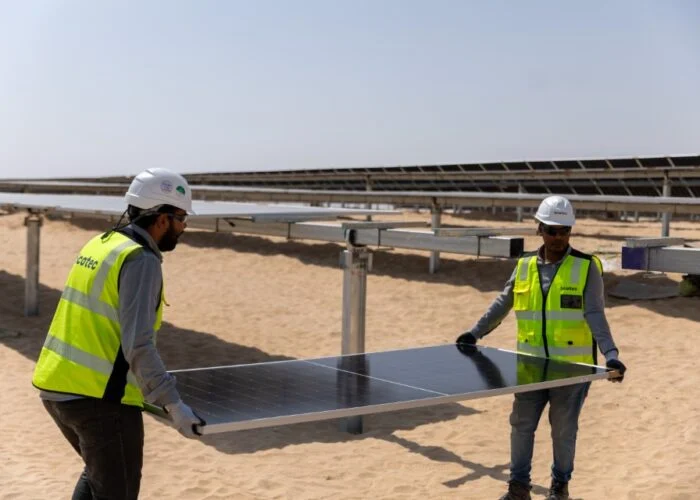
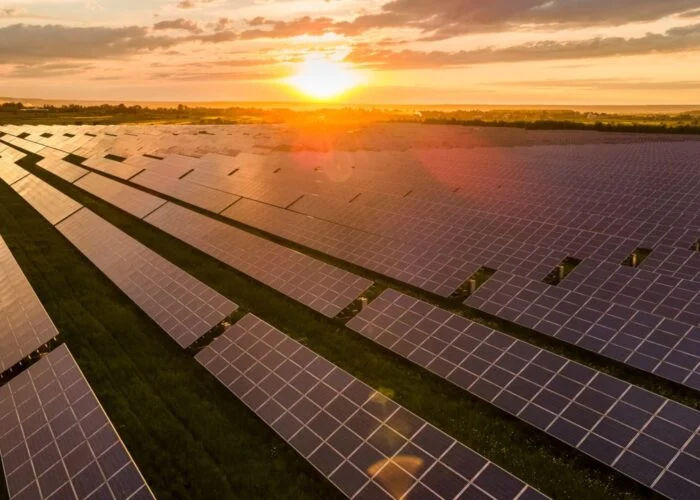
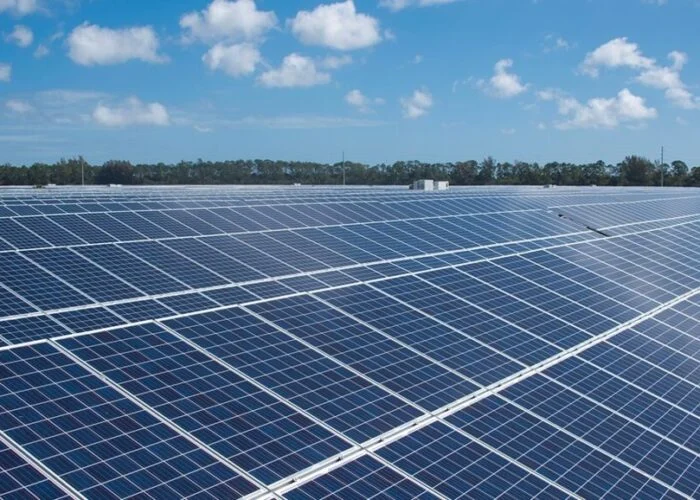
Solar power systems serving an oilfield in Qatar will be fitted with utility-scale energy storage batteries, helping to ensure the continuity of operations at 775 oil wells.
French industrial energy storage maker SAFT said it had been awarded a contract worth around US$10 million for the project by engineering contractor Kentz, at Dukhan oilfield, in the sovereign Arab state.
Try Premium for just $1
- Full premium access for the first month at only $1
- Converts to an annual rate after 30 days unless cancelled
- Cancel anytime during the trial period
Premium Benefits
- Expert industry analysis and interviews
- Digital access to PV Tech Power journal
- Exclusive event discounts
Or get the full Premium subscription right away
Or continue reading this article for free
The energy storage component complements a much bigger contract undertaken by Kentz, worth around US$190 million, to provide sophisticated data acquisition and supervisory controls, which will be powered by PV, to Dukhan’s wellheads. SAFT will supply 40,000 of its ‘Sunica.plus’ nickel batteries to provide backup and other storage applications to the control systems, which are used in the field’s wellheads and corrosion protection systems.
Dukhan is around 80km by 8km in area, owned and operated by state-owned Qatar Petroleum. It was the first site where oil was drilled for in the country, in 1937.
SAFT says the Sunica.plus was designed with high cycling capability and robust construction with this kind of off-grid installation in mind, claiming the Sunica.plus can operate at temperatures between -20 centigrade and 50 centigrade, which is likely to be required in the subtropical hot desert climate of Qatar.
In other regions including Australia and Latin America, various off-grid applications, including in the mining sector, are being provided by solar in combination with storage. Often due to the high cost of diesel fuel, which was the previous energy source of choice at many remote locations, solar is starting to be seen as an economical replacement.
The Middle East as a whole has not seen as much progress in solar as might have been hoped, with Saudi Arabia in particular the subject of numerous instances of false starts for the region’s PV industry. In a recent piece for PV Tech's sister publication PV Tech Power on how the Middle East is slowly beginning to realise its solar potential, the CEO of an Abu Dhabi-based EPC firm said that rather than government targets and schemes, solar in the region is driven primarily by the market.
“We’re a lot more competitive with today’s cost of solar than the delivered cost of electricity from oil power plants and diesel, which is what we’re displacing a lot of the time,” Sami Khoreibi of Enviromena said.
“Solar projects are being driven and led by private sector players outside of the framework of government programmes. We’re simply displacing higher cost energy. The underlying economics of any source of energy are what is going to drive growth in an industry and, for solar, they are quite compelling.”
Khoreibi mentioned countries including Egypt and Jordan, where the delivered costs of electricity are high, as examples where this has already occurred. The PV Tech Power article selected these two and a number of other notable countries including the UAE and Turkey where PV deployment is starting to gain momentum. Qatar was not one of the regions chosen, but the latest announcement from SAFT appears to imply that this may not remain the case for long.