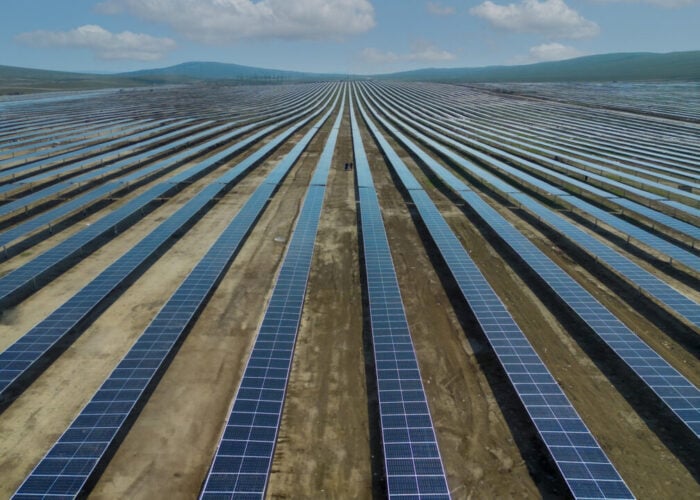
China underlined its position as the new world solar superpower last year by raising more in PV financing than the whole of Europe, according to the Global Renewable Energy Report 2014.
Published by the China New Energy Chamber of Commerce and thin-film manufacturer, Hanergy, the report highlighted China’s rise to the top of the global solar rankings in 2013 with 12GW of new installations fuelled by US$23.5 billion in PV spending.
Try Premium for just $1
- Full premium access for the first month at only $1
- Converts to an annual rate after 30 days unless cancelled
- Cancel anytime during the trial period
Premium Benefits
- Expert industry analysis and interviews
- Digital access to PV Tech Power journal
- Exclusive event discounts
Or get the full Premium subscription right away
Or continue reading this article for free
This outstripped Europe’s US$23.3 billion, while China’s 12GW was around double its nearest rival, Japan, and almost quadruple what was achieved in the US and Germany.
Germany was the biggest cumulative market in 2013 and is likely to remain so this year.
However, with 13GW now expected in 2014, in a recently revised target, and with Germany only expected to put on around 2.5GW this year, the gap between the two will shrink significantly this year.
“Our research shows that China has already become the world's biggest solar market. Now the country is moving to a more green and sustainable model of development which will drive future global growth in renewable energy,” said Li Hejun, chairman and CEO of Hanergy and President of the China New Energy Chamber of Commerce.
Thin-film renaissance
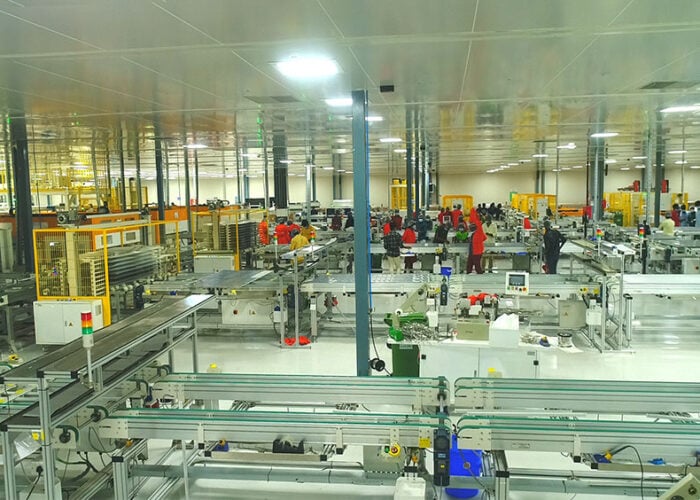
Among the report’s other key findings – figures that should be music to Hanergy’s ears – thin-film PV manufacturing saw a surge in 2013.
In 2013, the report said thin-film manufacturers responded to growing end-market demand by increasing production capacity by around 20% to 8.4GW and production volume by around the same proportion to 20%.
Without giving figures, the report said thin-film technology would gain market share on crystalline silicon technology in the coming years as the increase in production capacity last year begins to translate into greater production volumes.
Underlining this, the report said the spot prices of both multi- and mono- crystalline modules had gone up in the past year by 7.5% and 19% respectively, whereas comparable prices for silicon-based thin-film modules had gone down by 7.7% and slightly up – 2.7% – for CdTe modules.
This year, the report predicts the average price for crystalline silicon modules will be US$0.0.8/W and US$0.6-0.85/W for thin-film modules.