Residential solar and energy storage provider Sunrun has signed an agreement with distributed energy resource platform Voltus to support its Bring Your Own Capacity (BYOC) programmes for AI hyperscalers.
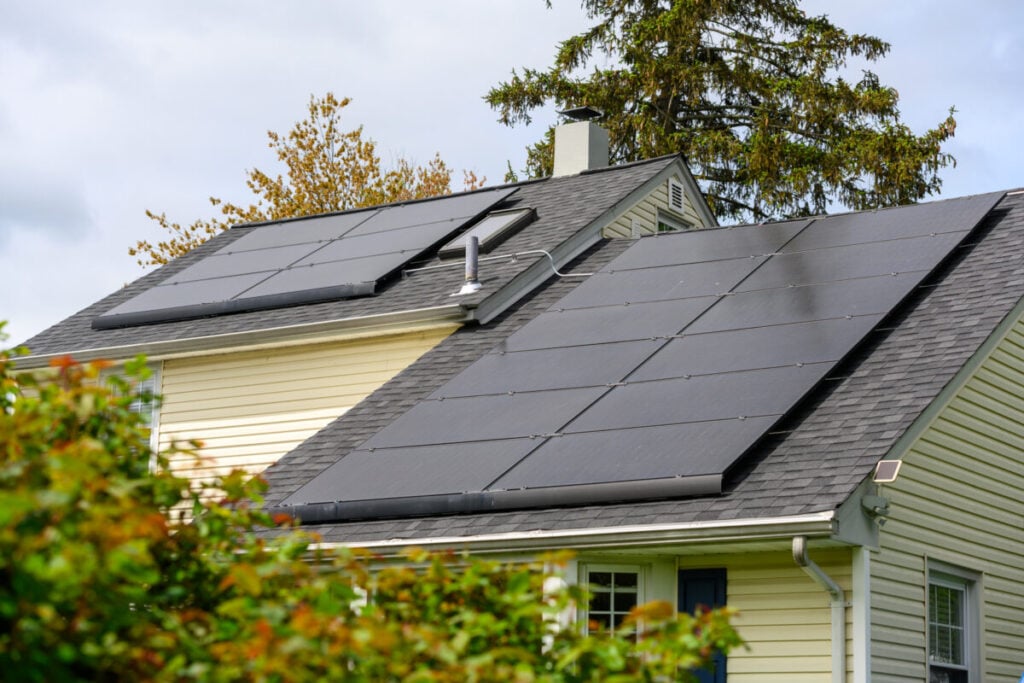
Under the agreement, Sunrun will provide energy capacity from a portion of its thousands of residential solar-plus-storage systems to help deliver reliable, flexible power to support the growing electricity demand. This will cover the PJM (spanning 13 US states and Washington, D.C.) and MISO (spanning 15 states and Canada’s Manitoba province) grid regions.
Try Premium for just $1
- Full premium access for the first month at only $1
- Converts to an annual rate after 30 days unless cancelled
- Cancel anytime during the trial period
Premium Benefits
- Expert industry analysis and interviews
- Digital access to PV Tech Power journal
- Exclusive event discounts
Or get the full Premium subscription right away
Or continue reading this article for free
Voltus unveiled its BYOC programme last year, which enables hyperscalers to bring firm, flexible capacity to facilitate data centre interconnection and support the grid. Recently the company signed a three-year BYOC agreement with tech giant Google in PJM. Under that deal, Voltus would provide 100MW of distributed energy resources from local businesses and homes into a Google-funded virtual power plant (VPP).
As part of the BYOC programme, Voltus’ flexible distributed resources are used to reduce energy demand when the grid needs it, while businesses and homes that participate in the programme get paid for it.
According to Dana Guernsey, CEO of Voltus, the BYOC programme is about turning distributed resources into capacity that the grid can really on, while maximising the value for the end user.
“This partnership brings together Sunrun’s residential scale with Voltus’s market-integrated flexibility platform so distributed capacity can support reliability, affordability, and growth as electricity demand increases,” added Guernsey.
“Meeting growing energy demand requires us to maximise every single electron available across the country,” said Sunrun CEO Mary Powell, adding: “In collaboration with Voltus, we are providing critical capacity from home batteries supported by funding from hyperscalers. This is just the beginning of what distributed energy assets can achieve.”
Moreover, Sunrun’s involvement in powering hyperscalers through VPPs is not the company’s first. Recently, the company partnered with energy management platform Renew Home and Tesla to deliver over 16GW of flexible energy capacity to US hyperscalers and utilities, as covered by our sister site Energy-storage.news. That partnership would create the country’s largest VPP.
The residential solar and energy storage provider had already highlighted the benefits of distributed VPPs for powering data centres in 2024. Its rapid deployment was touted as a key advantage over other technologies that would take longer to build, while also opening new markets for residential installers in the US (subscription required).