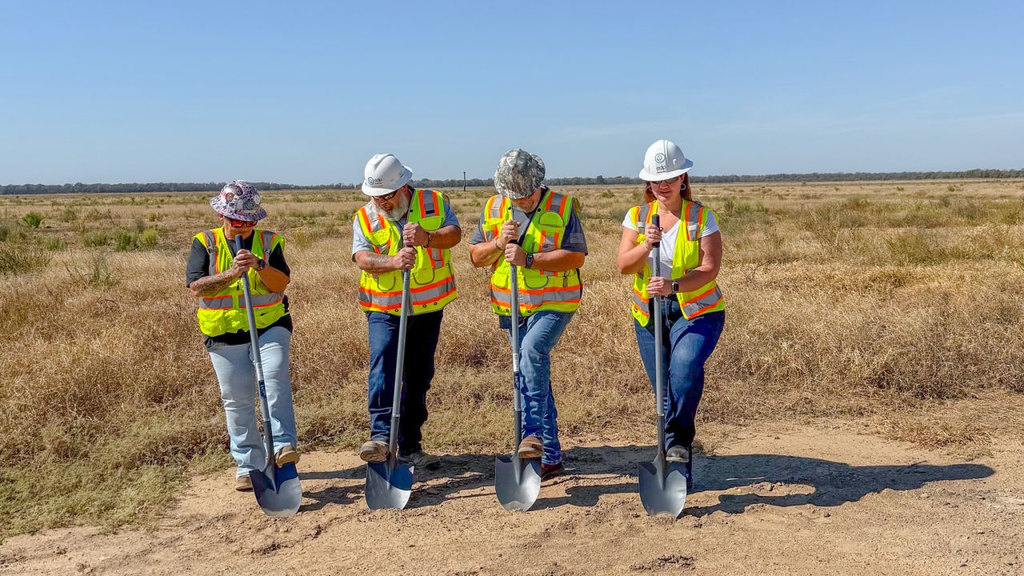
Developer EDP Renewables (EDPR) North America has begun work on the 250MW Cypress Knee Solar project in Arkansas.
When complete, the project will supply power to tech giant Meta under a long-term power purchase agreement.
Try Premium for just $1
- Full premium access for the first month at only $1
- Converts to an annual rate after 30 days unless cancelled
- Cancel anytime during the trial period
Premium Benefits
- Expert industry analysis and interviews
- Digital access to PV Tech Power journal
- Exclusive event discounts
Or get the full Premium subscription right away
Or continue reading this article for free
Cypress Knee is slated for completion in 2028, after which it will deliver new power to the grid as well as supporting Meta’s stated aim of 100% of its annual electricity use with clean and renewable energy generation.
The PPA between EDPR and Meta inked in May was the third such deal the companies had struck in the US, with 545MW of PV renewable energy capacity now contracted between them across the country.
At peak construction, the project is expected to support several hundred jobs, providing opportunities for local workers, contractors and suppliers.
“Breaking ground at Cypress Knee Solar marks an important milestone for the project and for Arkansas’ growing role in America’s energy future,” said EDPR’s chief executive Sandhya Ganapathy.
“As energy demand continues to rise, projects like Cypress Knee Solar help strengthen grid reliability while creating jobs, generating meaningful local revenue, and delivering long-term benefits to the communities that host them. We are proud to partner with Meta and local stakeholders to advance new energy infrastructure that supports economic growth and American energy independence
In a 2024 interview with PV Tech, Ganapathy discussed the growing role of corporate demand for power in driving the US solar market.
In addition to Meta, EDPR also has offtake agreements with Microsoft and Google, including a framework deal with the latter for 650MW of solar across 80 projects in six US states.
“Effectively, corporates are saying, ‘We only want green electrons. We know that our consumption is increasing, we know that manufacturing and electrification are growing and that AI-driven demand is propelling everything, and we are opting to use green electrons’,” Ganapathy explained to us.