Independent power producer (IPP) Swift Current Energy has filed a lawsuit against thin-film cadmium telluride (CdTe) solar module manufacturer First Solar in the New York County Supreme Court.
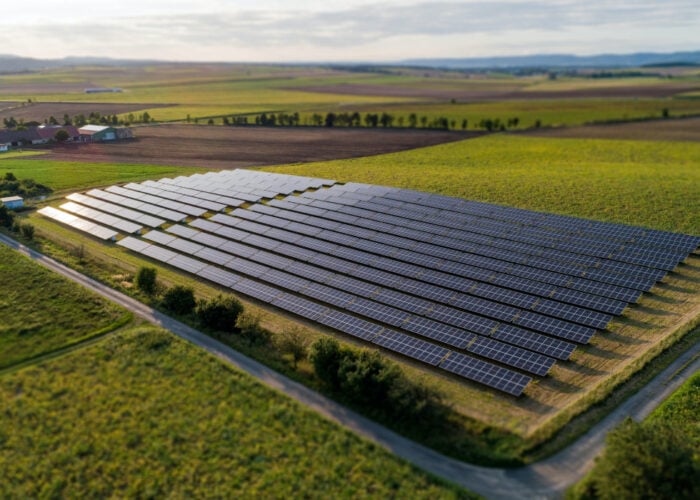
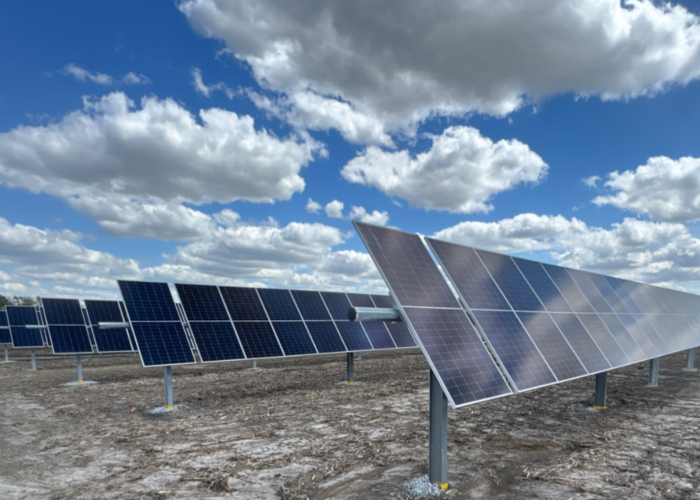
The lawsuit is over alleged module defects purchased between 2021 and 2024, for a supply agreement of over 2.4 million solar panels from First Solar’s Series 6 Plus and Series 7, or 1.2GW of power capacity once operational. These solar panels have been installed at three projects owned by the IPP. The companies had signed several supply agreements between 2022 and 2023, with supplies of 1.2GW in January 2022, 2GW in October 2022 and 500MW in November 2023.
Try Premium for just $1
- Full premium access for the first month at only $1
- Converts to an annual rate after 30 days unless cancelled
- Cancel anytime during the trial period
Premium Benefits
- Expert industry analysis and interviews
- Digital access to PV Tech Power journal
- Exclusive event discounts
Or get the full Premium subscription right away
Or continue reading this article for free
One of the projects impacted by the supply agreement is the 800MW ‘Double Black Diamond’ solar PV project in central Illinois. The modules were installed at the PV project in 2023 and 2024 and according to Swift Current were “immediately plagued by performance issues”.
“Buyers’ construction contractors identified deficiencies in the power output of First Solar’s modules during initial capacity testing—that is, the preliminary validation process after installation to ensure the project performs as expected,” reads the complaint document filed last month.
Also in 2024, First Solar disclosed manufacturing process errors for its Series 7 modules to investors during an earnings call in late October 2024. However, these manufacturing process errors were not disclosed to Swift Current until the IPP reached out about module performance concerns a month before the public disclosure, according to the IPP.
According to First Solar, more than 1.6 million modules it supplied to Swift Current’s projects were subject to these manufacturing errors that resulted in defects observed in modules installed at the projects.
The two manufacturing process errors identified by First Solar for its Series 7 were called “Edge Grind” and “Substrate Defects”. In the case of the edge grind step, this can result in glass slurry residue splashing on the glass prior to deposition of the CdTe layer. Delaying the washing of this residue can result in calcification in impacted modules and prevent the absorber layer from forming as designed.
“Both of these errors caused physical defects that result in non-recoverable capacity losses and increased degradation in buyers’ modules,” reads the complaint.
Module manufacturing underperformance
The complaint also outlined an alleged metastability loss performance from First Solar thin-film CdTe modules that causes the solar panels to lose efficacy during cold periods or when the modules are in the dark for longer periods—including in winter time or periods of dark storage—and to “hibernate” after exposure to cold temperatures and low irradiance.
“Also, as part of its quality control procedures, First Solar uses proprietary processes to “precondition” modules before pre-shipment performance testing. The nameplate power output that First Solar indicates each module can achieve is based on the results of this preconditioning process.
“On information and belief, First Solar’s preconditioning process departs from contractually required international standards. It instead consists of exposing each module to at least eight hours of extreme irradiance, voltage, and heat immediately before conducting a flash test to determine the module’s power output. This process puts the modules in a state that does not exist at any solar project on Earth and artificially inflates their performance,” reads the complaint filed by Swift Current.
Two months after First Solar disclosed the manufacturing process errors in an earnings call, Swift Current served the thin-film CdTe module manufacturer with a formal warranty claim on 23 December 2024, which First Solar responded to on 2 May 2025, claiming that “it did not have enough information to honour its warranties”.
According to the complaint document, First Solar’s only proposed solution was to ship back each individual module to be tested prior to validation of the warranty claims. Earlier this year, on 5 June, the IPP sent additional correspondence concerning the formal notices of warranty claims that were not answered by the manufacturer.
For Swift Current, the alleged failure from First Solar to honour the buyer’s warranty claims is “unjustified and a breach of the parties’ contracts”.
“Many of First Solar’s modules have degraded more in a year and a half than they were projected to degrade over their entire thirty-year lifespan,” reads the complaint from Swift Current. The company added that this level of degradation, based on physical defects, breaches First Solar’s promises in the parties’ contracts.
Exponential module degradation
Furthermore, First Solar had hired engineering and technology solutions company Leidos Engineering to investigate the Series 7 module defects and to provide a report, which concluded that the modules in that series “experienced initial power loss higher than expected.”
The report mentions that the module degradations were exponential, rather than linear. The average power loss of modules tested by Leidos was around 8% after nearly one year of field deployment, while some modules were reported to have under-performed by more than 14% after a year of field deployment. These figures are much higher than First Solar warrants and datasheets, for both its Series 6 Plus and Series 7 modules, show, which include a linear annual degradation of 0.3%.
The case is currently ongoing with several exhibits added last week and with both parties scheduled to appear before the court on 16 November 2026.
Swift Current Energy declined to comment on a pending legal matter, while First Solar has not replied, at the time of publishing, to PV Tech’s request for comment.