Photovoltaics International Papers

Premium
Materials, Photovoltaics International Papers
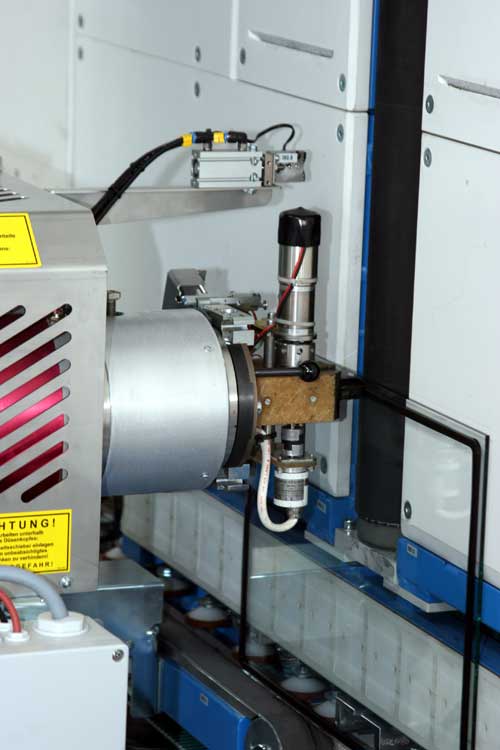
Glass has been playing an ever more important role in photovoltaics, and with the increasing demand for solar modules, the glass industry will be pushed even more to the fore. As a result, the photovoltaics industry is fast becoming a field of business of increasing importance for some of the glass industry’s sectors. Mechanical engineering companies around the world are working to meet the demands of the solar industry, with the tremendous potential of glass, especially in the thin-film sector, at the epicentre of this effort. This paper presents the beneficial properties of glass for use in the photovoltaics industry, and the material’s potential for future applications.
Premium
Photovoltaics International Papers, Power Generation
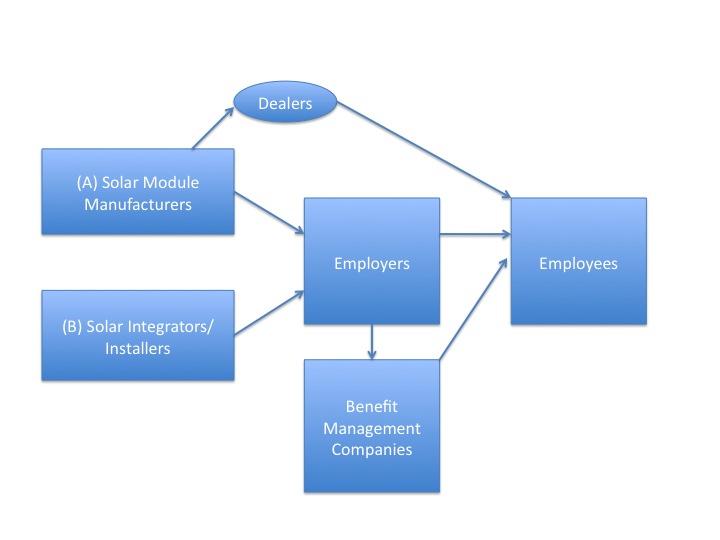
The U.S. residential solar market is poised for growth. For solar companies seeking to capitalize on the growth potential of this market, the keys to success will be sales volume and operating efficiency. Solar employee purchase programs (solar EPPs), which have been initiated by companies as diverse as SunPower, REC Solar, and SolarCity, represent a new and potentially important channel for increasing sales and improving sales efficiency. Driving these programs are increasing corporate sustainability initiatives and growth in voluntary employee benefit offerings, especially employee purchase programs and green benefits. This article provides an introduction to solar employee purchase programs, analysis of the business ecosystem, and discussion of an example program. It is based on the industry’s first report to identify and analyze this emerging trend, which was published by AltaTerra Research in November 2008 [1].

Premium
Materials, Photovoltaics International Papers
In the perpetual struggle to reduce the costs associated with PV energy generation, one aspect of the manufacturing process has potential to shine. To date, the PV sector is dominated by crystalline silicon wafers (90%), which largely use silver as the conducting medium for the front side grid, and to a lesser extent the backside contact. The conducting media are crucial to the overall efficiency of the cell by providing the means for current to flow when sunlight strikes the doped silicon wafer. This paper presents silver as a vital factor in the PV process, and discusses the future industry requirements as well as a projection for the overall silver market for the next eight years.
Premium
Photovoltaics International Papers, Power Generation
This paper presents a detailed assessment of the value of photovoltaic energy within the German energy supply structure, taking into account the correlation between actual consumption and local power generation. Contrary to previous statistical approaches, this paper takes a new dynamic approach, modelling the dynamic behaviour of the PV power generation as a one-year time series. A comparison with the time series of the power demand allows assessment of the value of PV energy. The value of PV energy mainly results from its ability to substitute conventional power generation and the benefit of this kind of decentralized power generation for network stability and quality. An evaluation of these aspects is carried out for the year 2005 and a likely scenario in 2015.
Premium
Photovoltaics International Papers, PV Modules
Back-sheet materials for photovoltaic modules serve several purposes such as providing electrical insulation, environmental protection and structural support. These functions are essential for modules to be safe for people working near them and for the structures to which they are attached. To ensure that all modules meet a minimum set of requirement, they must pass qualifications tests such as IEC 61646, 61215, 61730, and 62108. This paper puts forward the design and composition requirements of back- and front-sheet materials for achieving the highest possible quality performance from PV modules.
Premium
Photovoltaics International Papers, Power Generation
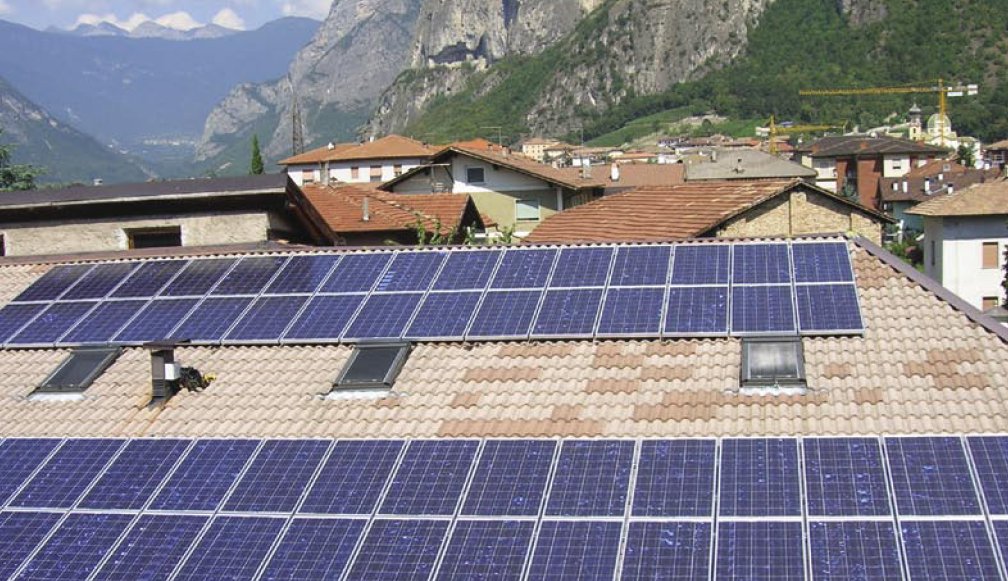
Apart from some obstacles and bureaucratic hindrances, the Italian PV market has recently joined the upper echelons of the solar industry. Along with small and medium-sized systems, the commercial and large-scale segment in particular has a great deal of promise. Even though the local industry is still trying to block the domestic market from international competitors, increasing numbers of foreign investors are entering the market. In this close-up of the Italian PV market, the country’s participation in the solar energy industry is reviewed and a projection to 2010 is given, with particular emphasis on the country’s potential to be a major player in the large-scale installation sector.
Premium
Photovoltaics International Papers, PV Modules
The reliability of United Solar Ovonic (Uni-Solar) triple-junction amorphous-silicon thin-film photovoltaic modules is critical to their success in an increasingly competitive PV market. Modules must show useful operating lifetimes of 20 to 30 years, and although module efficiency is very important, the total energy that a module will produce largely depends on its operating lifetime. Thus, module reliability must be evaluated to estimate lifetime and establish customer warranty periods. While real-world outdoor exposure testing is necessary and important, accelerated environmental test methods must also be utilized to provide more rapid feedback regarding failure modes, design flaws and degradation mechanisms. The following paper gives an overview of the methodology used to ensure long-term reliability of Uni-Solar flexible thin-film modules.
Premium
Photovoltaics International Papers, Power Generation
Anyone familiar with the PV industry can attest to the remarkably accelerated pace of innovation aimed towards generating solar power more cost effectively relative to conventional means of producing electricity. Many of high-technology’s best minds are bringing expertise in materials, manufacturing process, and electronics to tackle the challenge. The resultant gains in cost effective manufacturing, silicon availability and greater irradiance conversion efficiency will make continuous and sustainable impact to cost per kW generated akin to the predicable improvements in transistors per mm2 which has fuelled the semiconductor industry for the past 25 years (although we are not yet so bold as to devise the PV version on Moore’s Law). As less than 0.01% of electricity generated comes from PV installations [1], demand will materialize and the need for public subsidies will decline as the economics improve. This paper will investigate the steps required to make every solar project a “perfect” project by putting forth parameters for evaluating solutions for the problem areas.
Premium
Photovoltaics International Papers, PV Modules
Solar enterprises will each be faced with the occasional surplus or lack of solar modules in their lifetimes. In these instances, it is useful to adjust these stock levels at short notice, thus creating a spot market. Spot markets serve the short-term trade of different products, where the seller is able to permanently or temporarily offset surplus, while buyers are able to access attractive offers on surplus stocks and supplement existing supply arrangements as a last resort.
Premium
Cell Processing, Photovoltaics International Papers
The use of perfluorinated gases such as NF3, CF4 or SF6 for PECVD (plasma enhanced chemical vapor deposition) chamber cleaning has a much higher impact on global warming than does the use of onsite-generated F2. This holds true even when supposing that in the future much more effort is paid for the correct abatement and a leak-free supply and take-back chain. This paper will discuss the steps available to the PV industry for control and reduction of carbon emissions in the chamber cleaning process.

Upcoming Events

Solar Media Events
February 3, 2026
London, UK
Solar Media Events
March 24, 2026
Dallas, Texas
Solar Media Events
April 15, 2026
Milan, Italy
Solar Media Events
June 16, 2026
Napa, USA