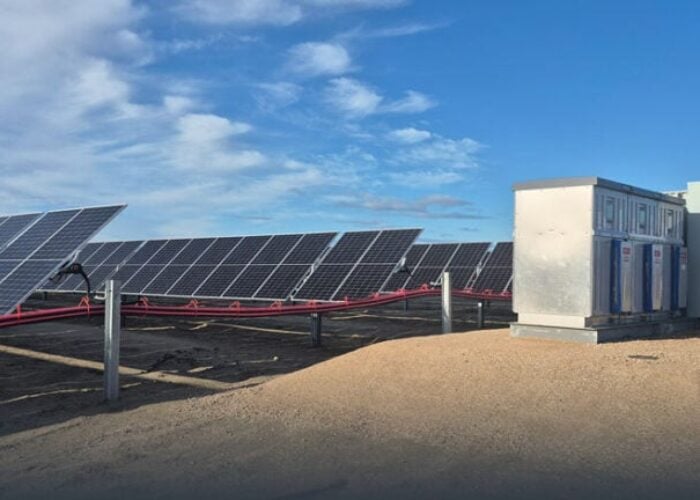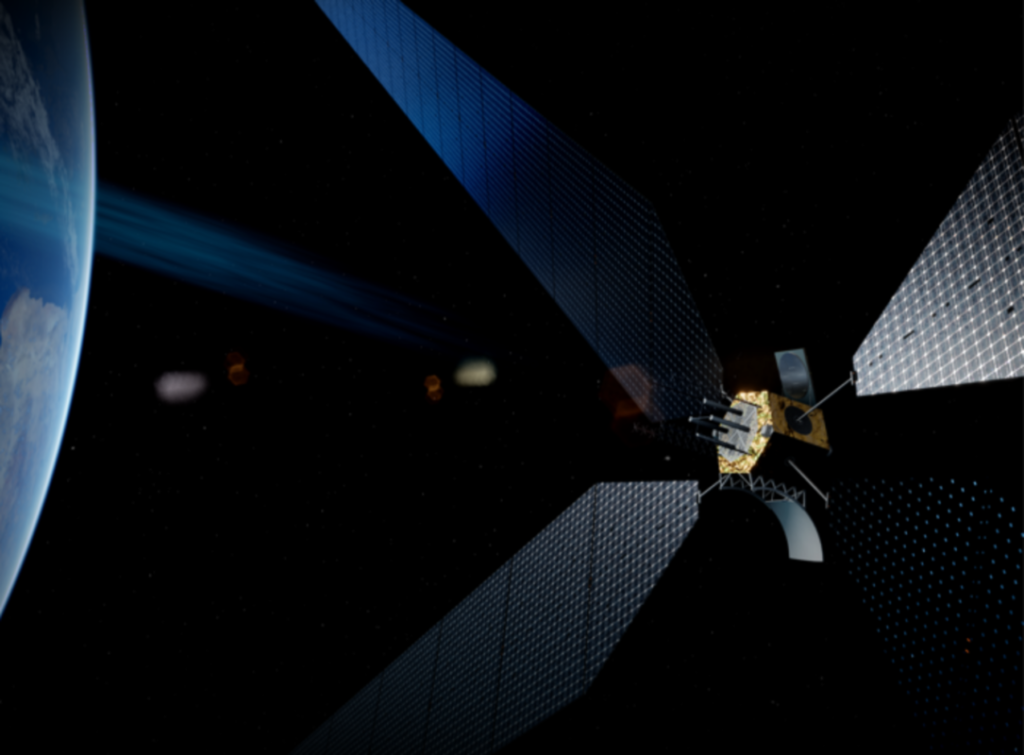
The US Department of Energy (DOE) has launched a US$12 million research and development (R&D) fund that will support projects that will lower the cost, and expand domestic manufacturing, of solar panels for use in space.
Led by the DOE’s Integrated Energy Systems Office (IESO), the Space Photovoltaics Research and Development Partnership Intermediary Agreement (PIA) is open to university and industry research laboratories developing “advanced” space-based solar PV projects, initiatives that focus on “PV characterisation and stress testing” or “near-commercial pilot-scale space PV solutions”.
Try Premium for just $1
- Full premium access for the first month at only $1
- Converts to an annual rate after 30 days unless cancelled
- Cancel anytime during the trial period
Premium Benefits
- Expert industry analysis and interviews
- Digital access to PV Tech Power journal
- Exclusive event discounts
Or get the full Premium subscription right away
Or continue reading this article for free
The PIA is split into two “topic areas”. The first, dubbed ‘Next-generation Cell Innovation’, will focus on the advancement of manufacturing methods and improvements in performance of durability of solar cells, while ‘Rapid Production and Demonstration’ will focus on manufacturing processes capable of scaling to “high-volume production” of module prototypes for space or near-space environments. Individual applicants can win up to US$1.5 million for projects in the first area and up to US$2 million for projects in the second area.
Applications are open immediately, and will close on 8 October. The DOE will also host a webinar in collaboration with TECHWERX, a hub that aims to connect researchers, industry and energy leaders, on 15 September to provide more information about the fund. The organisers expect to select winning applicants in December, and complete negotiations for fund awards between January and February next year.
While direct federal support for a relatively early stage clean energy sector like space-based solar power might be something of a surprise from the second Trump administration, the government has made it clear that investing in energy security, regardless of the generation technology used, has been a key priority. Assistant secretary of energy Audrey Robertson said, upon the launch of the funding, that “bolstering our national security” was a goal of the funding.
“The next frontier for solar PV power generation is in space,” said Robertson. “As demand for space-grade PV skyrockets, this investment will establish American leadership in next-generation, space-based PV, bolster our national security and enhance our economic competitiveness.”
Last month, PV Tech Premium heard from Hasan Nazar, head of policy at Crux, about how many of the current policy initiatives align under the priority of improving US energy security, and reducing reliance on parts and components made overseas.
Indeed, a report from Clean Tomorrow, published last year, found that the DOE would need to invest US$25 billion across a number of energy sectors in order to deliver greater energy security for the US, and while the US$12 million for the PIA is a small part of this total, it is nonetheless part of the government’s spending to strengthen energy security.
Space-based solar power has also attracted interest from the private sector this year. In April, tech giant Meta signed an agreement with space-based solar power startup Overview Energy to gain “early access” to a 1GW fleet of space-based solar panels that Overview plans to launch in 2030.
Space-based solar power will be a topic of conversation at this year’s PV CellTech USA conference. Hosted by PV Tech publisher Solar Media in San Francisco, US, on 13-14 October, the final day of the conference will include a presentation from Timothy Siegler, technology manager at the IESO, about how space-based solar power is driving the next generation of PV innovation. Read the full event agenda on the official website.