As the 4 July “safe harbour” deadline for US solar projects approaches, the industry is entering what Lisa Casey, director of technical advisory at VDE Americas, describes as a decisive but not disruptive turning point for financing, procurement and execution.
Speaking to PV Tech Premium, Casey says the conversation has been dominated by urgency around start-of-construction rules, but the reality is more layered.
Try Premium for just $1
- Full premium access for the first month at only $1
- Converts to an annual rate after 30 days unless cancelled
- Cancel anytime during the trial period
Premium Benefits
- Expert industry analysis and interviews
- Digital access to PV Tech Power journal
- Exclusive event discounts
Or get the full Premium subscription right away
Or continue reading this article for free
“As we are days away from this 4 July deadline,” she says, “there’s been a lot of talk about the start of construction deadline.” But she stresses there are “really three different deadlines coming up for the solar investment tax credit (ITC),” reshaping how developers think about risk and timing.
At the heart of the rush is the definition of “start of construction,” and how best to meet these criteria. Casey explains that developers have increasingly shifted toward procurement-led compliance. “Specific pieces of equipment can count as start of construction,” she says, though she acknowledged the process is documentation heavy.
That nuance has driven a clear behavioural shift across the US market. “The focus has really been on the design and procurement side in the first half of 2026,” she says, while warning that “it’s going to flip very quickly to execution after that.”
Casey expects a visible reshaping of timelines rather than a uniform slowdown. “What you’ll see is a shift to procurement,” she says, followed by a shift to execution. This front-loading effect has already been observed in market data, with activity concentrated in early quarters of the year.
Multiple deadlines shape developer strategy
A key development this week has been the reinstatement of the 5% safe harbour route, which can help projects demonstrate that they have met “start of construction” criteria and secure access to the 30% 48E investment and 45Y production tax credits (PTCs).
However, Casey cautions that its impacts would be limited. “I think it’s only for projects under 1.5MW,” she says, meaning it primarily benefits smaller distributed systems rather than utility-scale pipelines.
Last month, PV Tech Premium spoke to Anne Loomis, partner at US law firm Troutman Pepper Locke, about this environment for US solar developers, and she said that a lot of developers are looking at what can they possibly do to get more projects started by that deadline, which is now very, very soon.”
Despite regulatory uncertainty, Casey argues that project viability does not rest solely on tax incentives. “There are still ways to do financeable things,” she says, highlighting long-term power purchase agreements (PPAs) as central to maintaining bankability. “Making sure you have a long-term PPA is a great way to make sure the project is still financeable,” she adds.
Storage is also becoming increasingly important. “We’re seeing a lot of solar paired with storage,” Casey says, noting its role in mitigating curtailment and capturing peak pricing opportunities.
Indeed, even if projects miss the immediate cutoff, Casey points out that “if you can be placed in service by 31 December 2027, you could still be eligible for that tax credit,” a pathway she said is viable with strong execution. That means working with “a reputable engineering, procurement and construction (EPC) contractor to make sure that you’re on time, on budget and you have a good delivery schedule,” alongside third-party advisory support to keep construction aligned.
A longer runway also exists for projects that qualify earlier. Casey notes a final deadline extending to 2030 for projects that meet start-of-construction criteria by 4 July 2026, meaning “there’s a lot of execution work that’s going to happen in the next two to four years.”
Financing and execution discipline
On market geography, she downplays concerns about regional risk concentration. “I don’t think there’s a specific market or a specific part of the country that’s more at risk,” she says, pointing instead to equipment lead times as the dominant constraint.
Financing conditions, she adds, will evolve but not deteriorate. “The strategy will certainly change after 4 July,” Casey says, “but these projects are still going to be financeable.” Strong underlying demand remains a stabilising force: “There’s so much demand for energy right now.”
Looking ahead, she expects a surge in activity as developers rush to convert procurement into construction. “There’s going to be a huge glut of projects coming on,” she says, adding that “the solar industry is going to continue to grow” over the next 12 to 24 months.
Casey emphasises that operational discipline will become the defining factor in project success. “Quality control is probably a big part of it,” she says, stressing the importance of documentation, structured execution and clear accountability.
“Making sure everything is being documented appropriately is absolutely critical,” she adds, highlighting the role of EPCs and advisory firms in maintaining project momentum once procurement transitions into field execution.
Ultimately, she says, success will depend on planning discipline: projects must “have a good plan, are executing the plan, and are documenting the plan well.”
Tariffs, supply chains and long-term outlook
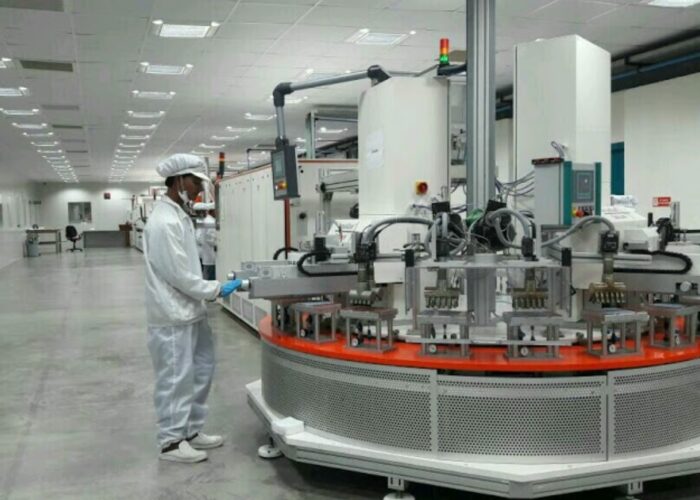
On tariffs and global supply chains, Casey is pragmatic. “The industry proved over the last year that they can navigate the challenges of tariffs and continue to move forward,” she says, pointing to growing domestic manufacturing capacity, including new facilities coming online in the US.
“There’s a plant coming online in Georgia,” she notes, calling domestic supply chains “a good option to have,” while emphasising that global procurement remains manageable.
“It’s a testament to how strong and robust the demand is,” she says, framing resilience as a defining feature of the sector rather than a temporary advantage. Looking beyond the deadline, Casey suggests the market will not contract but reconfigure. “I think there will still be growth it’s just going to look different.”
She concludes that the next phase of US solar deployment will not be defined by policy shock alone, but by execution at scale. Developers, she says, are now entering “execution work over the next two to four years,” translating today’s procurement rush into tomorrow’s grid capacity.