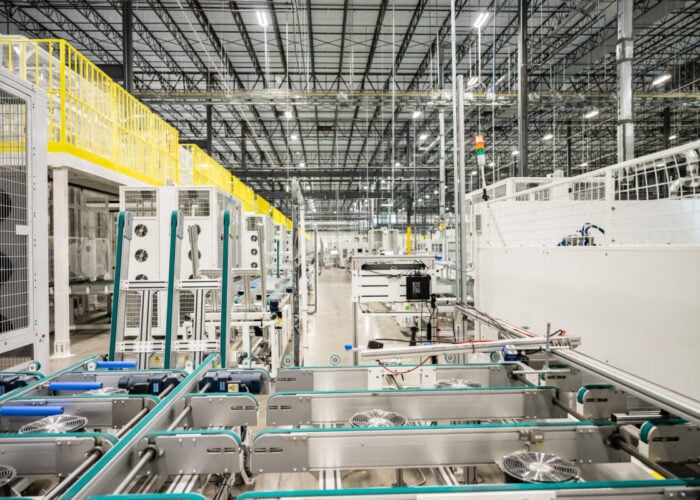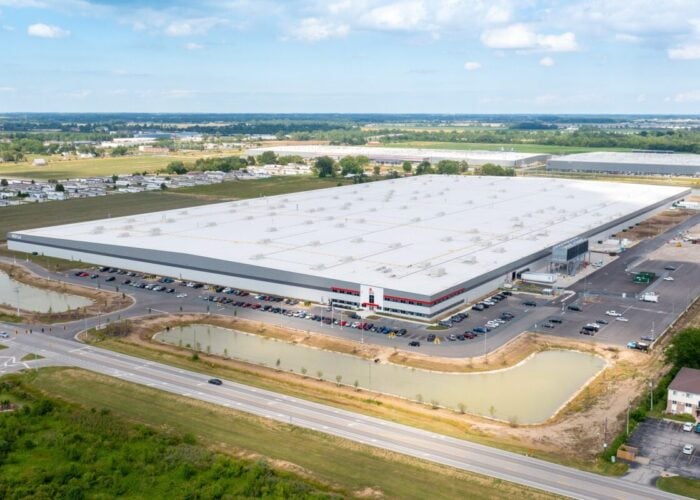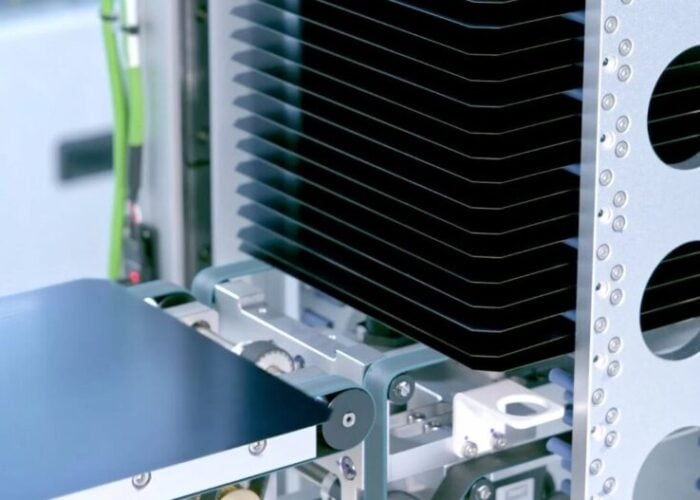
Chinese PV manufacturer Yingfa Ruineng has unveiled details of its first overseas plant, a 7.5GW facility in Indonesia that will produce tunnel oxide passivated contact (TOPCon) cells.
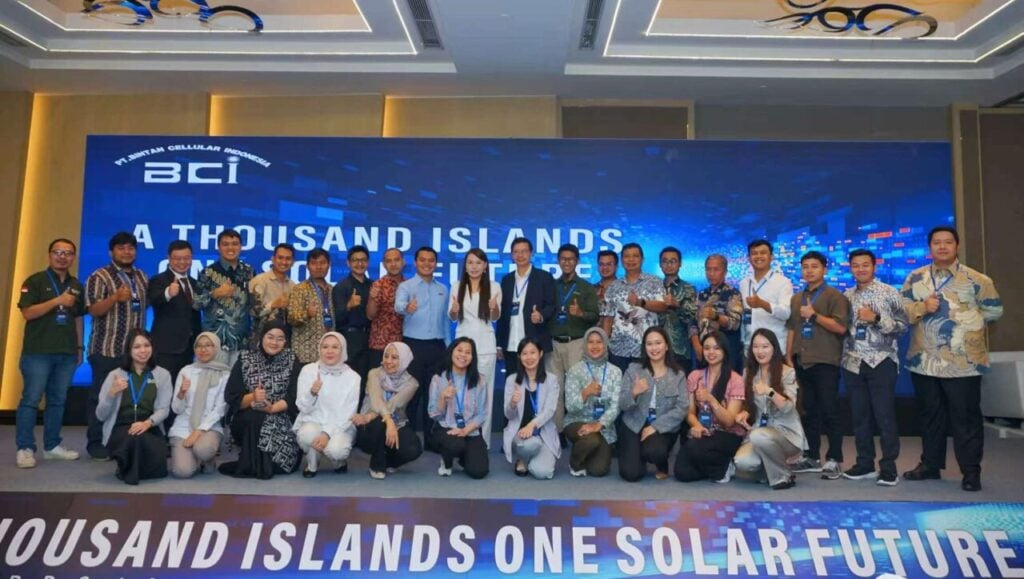
The facility, operated by its subsidiary BCI, was unveiled at a technology launch event in Jakarta. The company said the plant would serve as a regional supply hub for Southeast Asia, the Middle East and other international markets.
Try Premium for just $1
- Full premium access for the first month at only $1
- Converts to an annual rate after 30 days unless cancelled
- Cancel anytime during the trial period
Premium Benefits
- Expert industry analysis and interviews
- Digital access to PV Tech Power journal
- Exclusive event discounts
Or get the full Premium subscription right away
Or continue reading this article for free
Yingfa Ruineng said the investment supports Indonesia’s 100GW solar power programme and its efforts to expand domestic manufacturing through its TKDN framework, which sets minimum local-content requirements for PV projects.
The company operates four manufacturing bases in Tianchang, Yibin, Mianyang, China, and a new one in Indonesia, with a combined effective capacity of 51.5GW, including 45.5GW of n-type TOPCon capacity. Overseas markets accounted for 40% of its revenue in 2025, with products exported to more than 20 countries and regions.
At the launch event, Yingfa Ruineng also outlined its technology roadmap, covering half-cell passivation, multi-cut cell designs and back-contact (BC) solar cells. The company reported TOPCon cell efficiency of 27.3% and BC cell efficiency of 28%, although the testing conditions and specific cell configurations were not disclosed in the supplied information.
BC technology moves electrical contacts to the rear of the cell, leaving the front surface free of front-side contacts. Yingfa Ruineng said the technology could support applications including rooftop solar, off-grid systems and microgrids.
The company has also completed an initial end-to-end fabrication process for perovskite/BC tandem solar modules as part of its next-generation photovoltaic technology development.
Indonesia is stepping up efforts to expand its renewable energy capacity, with installed solar PV capacity reaching approximately 1.5GW in 2025, according to the country’s Ministry of Energy and Mineral Resources (MEMR). The country has set a target of developing 100GWp of solar capacity by 2029 under a programme launched by President Prabowo Subianto in Bali.
The programme’s initial 5.3GWp project portfolio spans 15 locations and includes ground-mounted, rooftop and floating solar installations.
However, Indonesia’s solar manufacturing ambitions face trade headwinds in the US market. The US Department of Commerce (DoC) finalised anti-dumping (AD) and countervailing duty (CVD) rates on crystalline silicon PV cells imported from Indonesia, India and Laos, in September 2026.
For Indonesian producers, DoC set a final dumping margin of 94.36% for PT Blue Sky Solar Indonesia, PT REC Solar Energy Indonesia and all other producers. Final CVD rates range from 73.20% for PT REC Solar Energy Indonesia and all other producers to 173.70% for PT Blue Sky Solar Indonesia.