At Intersolar Europe 2010, a powerhouse of the semiconductor industry exhibited for the first time but based on their manufacturing strategy will be attending this and many other major events for years to come. As is typical of the Korean-based memory manufacturer, little has actually been revealed about their solar manufacturing strategy, especially capacity and capital spending plans. However, PV-Tech was granted an exclusive video interview with the head of its new Solar Energy division, Changsik Choi, Executive Vice President, Samsung Electronics.
Although it may be early days for Samsung Electronics foray into the solar industry, it becomes clear instantly that the company is taking its entry into the market seriously and is targeting to become a major player.
Try Premium for just $1
- Full premium access for the first month at only $1
- Converts to an annual rate after 30 days unless cancelled
- Cancel anytime during the trial period
Premium Benefits
- Expert industry analysis and interviews
- Digital access to PV Tech Power journal
- Exclusive event discounts
Or get the full Premium subscription right away
Or continue reading this article for free
“Currently we are focusing on the crystalline silicon business, especially on the monocrystalline silicon,” noted Changsik Choi Executive Vice President, Samsung Electronics, Solar Energy Business Team.
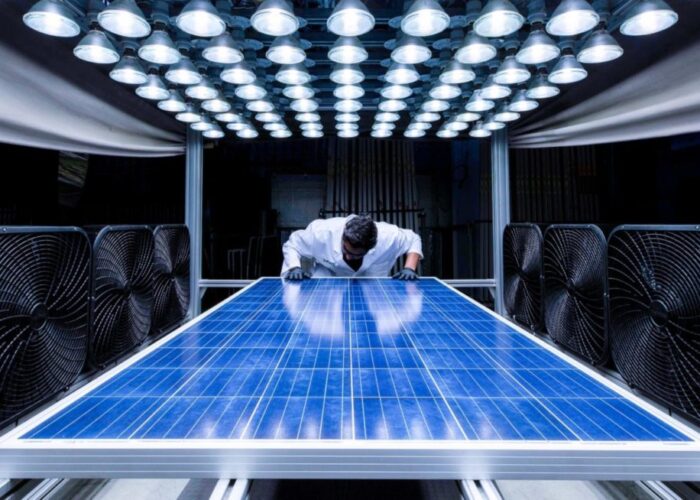
Choi said that Samsung was targeting the high-efficiency cell space but instead of offering a premium priced product, it has focused on tapping into its LCD and semiconductor processing knowhow to produce high-efficiency cells at low cost.
The Samsung Electronics executive made it clear that its focus for 2010 would be to gain acceptance from key customers for its cell technology.
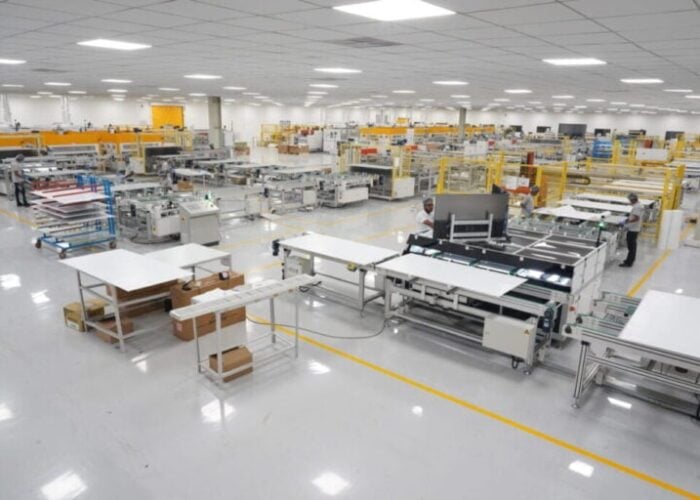
Choi said that it planned to spend US$6 billion over the next 10-years to build and expand manufacturing capacity to “several gigawatt in the near future,” though declined to be more specific.
Currently, pilot production of mono-c-Si cells is at the low megawatt level as it gains customer acceptance but Choi made it clear that the gigawatt ramp was a priority.
Despite Samsung’s expertise as the largest TFT-LCD producer, Choi noted that the company was still evaluating its thin-film solar options and that definite plans would made in the “near future.”
Samsung Electronics may not be in a rush to enter the thin-film market just yet, but its move to produce high-efficiency cells at low cost is a major disruptive move. Samsung is noted in the semiconductor industry as an aggressive driver in manufacturing cost reduction and invests heavily in new process technologies and manufacturing capacity to be the lowest cost provider.
In solar it has seen weaknesses in manufacturers supplying the high-end efficiency market, primarily due to the ‘premium’ price tag attached. It is well known that SunPower has the highest cell efficiencies but has struggled to cut manufacturing costs and is now partnering with AUO to drive down cell production costs, while expanding capacity to gain the economies of scale.
JA Solar is also targeting high-efficiency cells and modules via its OEM module business, cutting the cost and ‘premium’ price advantage held by the likes of Sanyo and SunPower.
The battleground is rapidly forming to establish the future dominant high-efficiency low-cost cell producer, and Samsung’s entry only raises the stakes for more established players.