| Main markets | Germany | Spain | Japan | USA | China | Italy |
| Roof-Top Tariff | Ground-Based Systems | BIPV Tariff | Term (years) | Updated |
|---|---|---|---|---|
| <30kW - 0.4301 <100kW - 0.4091 <1MW - 0.3958 >1MW - 0.33 |
0.3194 |
20 | 9 December 2009 |
Germany was one of the first countries to impliment FiT systems, its structure has become a template for many other countrys since. Germany has been noted for the amount of PV systems installed, its percentage of solar electricty compared to conventional electricty and is often named as the most important solar country worldwide. At the end of 2008 the solar hot water in Germany had set record growth with over 200,000 systems installed.
The German Renewable Energy Sources Act (EEG) came into effect in 2000 and was amended in 2004 and 2008. By the end of 2008 a total of 500,000 solar power systems had been installed on German roofs. Both private and institutional investors in photovoltaic systems now receive a guaranteed feed-in tariff for solar electricity fed into the grid.
The German PV market seems to be on a continued rise as more and more solar installations occur.
The amount of PV companies in the country has risen to 10,000, a figure which is ever increasing. Over the last 10 years the costs of installing a PV system have fallen by 35% while the reduction of these costs from 1990-2010 is an expected 85%. While this is the case, the table opposite shows that the market has slowed down in the last couple of years and is expected to up untill 2011, this is due to market growth figures. If the growth of the PV market (new installations) in a year is stronger or weaker than the defined growth corridor, the degression in the following year will increase or decrease a percentage point respectively.
The tariff and bonus reduction rates will decrease by 10% in 2010, and 9% from 2011 onwards for freestanding facilities as well as roof systems over 100kW. For roof systems up to 100kW, the reduction will be 8% in 2010 and 9% from 2011. (http://en.solarwirtschaft.de)
Sources
- http://en.solarwirtschaft.de/fileadmin/content_files/EEG revision_EN_consol.pdf
German photovoltaic industry overview (as of 2008 onwards).
|
Number of photovoltaic companies |
Approx. 10,000 |
|
Of which producers of cells, modules and other components |
> 130 |
|
New capacities installed in Germany in 2008 |
Approx. 1,500 MWp |
|
Sales to final customers 2008 |
Approx. 7b Euro |
|
Value added in Germany |
> 65 percent |
|
Reduction of costs of photovoltaic installations over the last 10 years |
35 percent |
|
Reduction of costs for photovoltaic installations from 1990 to 2020* |
85 percent |
|
Development of production capacities for photovoltaic technology since 1999 |
Increased more than 10-fold |
|
Number of jobs in 2004 / 2008 / 2020* |
Approx. 17,000 / 48,000 / > 100,000 |
|
Export quota in 2004/ 2008/ 2020* |
14 percent / 46 percent / > 70 percent |
|
Export earnings in 2004/ 2008/ 2010*/ 2020* |
Approx 0.2b / 3.7b / 6b / 18b Euro |
|
*) BSW-Solar projection |
|
In June 2008 the German Parliament adopted an amendment of the Renewable Energy Sources Act (EEG). Tariffs under the new law decreased for all capacity sizes. The law also removes bonuses for building integrated facilities, however a new tariff of €0.25/kWh has been introduced for systems up to 30kW when electricity produced is used within the building or facility.

Since 2009 the EEG has made some changes to the PV support system. These changes include a lower FiT rate for solar producers who choose not to feed into the grid and a bonus for self-consumers, which will rise as the price of conventional electricity does.
As of January 2009 all installation operators must register with the German Federal Network Agency by declaring the location and capacity of the PV installation before they can gain network access. The federal government establishes a universal register of all installations which produce electricity from renewable sources.

Future Plans
Several sources, including Bloomberg and Reuters, have now confirmed that Chancellor Angela Merkel's Cabinet has backed plans to cut solar-power subsidies in Germany. New rooftop solar systems' FiT rate will be chopped by 16% while solar parks built after July 1 will receive cuts of 15%, less than the 25% the Environment Ministry originally proposed for parks.
Adding weight to the German solar industry’s attempts to prevent severe cuts to the feed-in tariff, the International Photovoltaic Equipment Association (IPVEA) has publically supported their efforts. The IPVEA noted that it recommended ‘measured and predictable steps relating to changes in the EEG.’
According to the German Solar Industry Federation (BSW-Solar), thousands of workers at over 35 solar based companies in the country will attend the nationwide demonstrations being held today, to oppose plans by Norbert Röttgen, Germany’s Federal Environment Minister to cut feed-in tariffs for solar energy. The federation wants the proposed cuts to be dropped.
It has been rumored on the wires that there will be yet another change to the German FiT plans. Reuters has now reported that the German Environment Minister Norbert Roettgen wants to delay his proposed 15% cuts in solar subsidies by one month. This means that the proposed cuts will not go ahead until May 1 instead of April 1. Reuters claims that its government sources say that there are plans for further cuts after 2011 that could be steeper than Roettgen is now planning. This new proposal would include 3.5% additional subsidy cuts (on top of planned ~9% subsidy reduction) if the overall installations exceed 3.5GW. The current proposal calls for 2.5% additional subsidy cuts.
The possibility of heavy cuts to the German solar feed-in tariffs could not only reduce demand for solar installations in what should become the largest market in the world in 2009, it could also see reduced investments and job losses in the sector, according to Masdar PV CEO, Dr. Rainer Gegewart. Speaking at the World Future Energy Summit currently being held in Abu Dhabi, Gegewart warned that should muted FiT cuts be made, the a-Si thin-film manufacturer would revise its investment plans in Germany and look for new opportunities abroad as those markets would grow, compared to a possible contraction in Germany.
Having recently had their organic solar cells verified by Fraunhofer ISE with a power conversion efficiency of 6.07% for a tandem solar cell (active area of 2cm²), Dresden-based Heliatek has received a new round of funding to the tune of US$27 million to build its first production facility in Dresden. The start up had previously noted that it planned to increase the conversation efficiencies to 10%. Heliatek is targeting in particular mobile market and architectural (BIPV) applications.
Business is back and booming at major PV systems integrator Phoenix Solar. The German residential market is overheating as the race to complete installations by year-end intensifies. According to Phoenix Solar, there will not be enough inverters and solar modules available through to the end of the year to achieve its original revenue guidance.
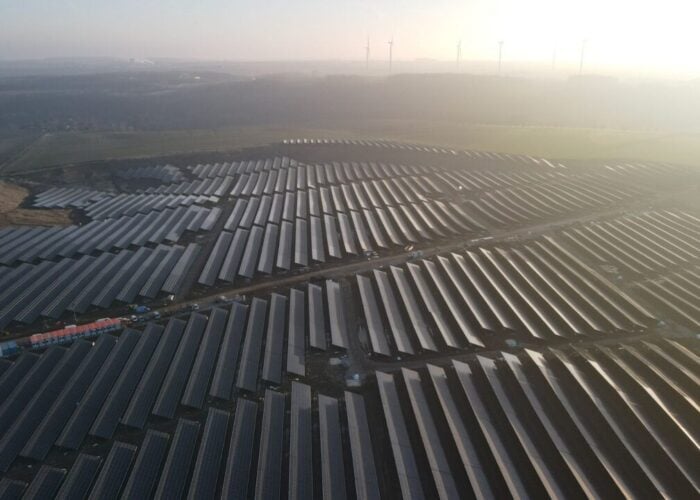
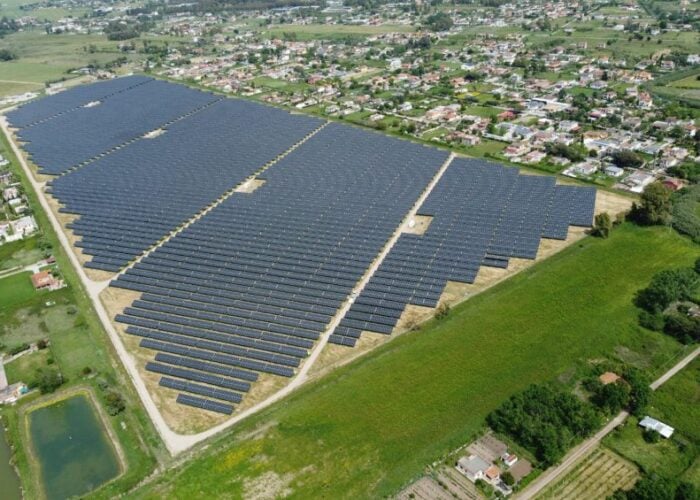
According to German news stories and confirmed by Q-Cells to PV-Tech, the PV project arm of the company is planning to construct the world's largest solar plant at a former military airfield in Brandenburg-Briest at an estimated cost of €400 million. The project could use approximately 730,000 solar modules and occupy a 400-acre area. A decision by the Brandenburg-Briest city council is expected this month.
Through a joint venture initiative between twelve companies and the Desertec Foundation, solar photovoltaics and sustainability will be promoted in the Middle East and North Africa (MENA). The joint venture group signed the articles of association for the Desertec Industrial Initiative (DII) on October 30 in Munich.

Solar Power, Inc. has signed a sales order agreement to supply German solar project developer Solarmarkt Sued Park with up to 25MW of the company's 200 and 205W modules for a project currently being executed by Solarmarkt Sued Park.
Read more >>
The international engineering company M+W Zander has handed over a new solar module factory to Q-Cells subsidiary, Solibro. The final acceptance took place at the Thalheim factory in Saxony-Anhalt, Germany.
Air Liquide is to build a large thin-film production unit to serve customers in the world's largest Solar Valley in Thalheim near Leipzig, Germany. The unit will be built to accommodate the increasing demand for thin-film technology in the area. The company will produce more than 38,000 tons of nitrogen per year, representing an investment of around €10 million.
The Lieberose solar farm, in Brandenburg, developed by First Solar and juwi and recorded as the second biggest in the world, will now receive 53MW of output using special cables supplied by Leoni. The 1,000km of cable will carry the current from about 700,000 solar modules.
First Solar and juwi group say that the Lieberose solar farm under construction in Brandenburg has reached status as the second biggest solar power plant in the world and the biggest in Germany.
Further to the news of Germany's economy showing some improvement, Q-Cells has come out and said that it has no liquidity problems at the moment, according to its chief financial officer who spoke to Reuters.
For months now we have been reporting on the global recession and how this has been negatively affecting the PV market world-wide; now, countries such as Germany and France have emerged from the recession announcing a market surge which could in turn improve the prospects for the 2009 solar market results. This surprise return to growth from the eurozone's two biggest economies boosts the hopes for the PV market, rising up from the most serious financial crisis since the 1930s. Germany has not reported a positive market growth since the first quarter of 2008.
Feed-in tariff (FiT) policies are now implemented in more than 40 countries around the world and are cited as the primary reason for the success of the German and Spanish renewable energy markets. As a result of that success, FiT policy proposals are starting to crop up in several other areas around the world including a number of US states.
Solar Holding Inc., a U.S. subsidiary of Roth & Rau, is buying 100% of the shares of Romaric Corp., a manufacturing execution systems company based in Salt Lake City. In addition to boosting its presence in the U.S. market, Roth & Rau said it hopes to use Romaric's extensive experience in the field of software automation for semiconductor and other highly standardized manufacturing companies to extend its own products and services offering to its customers in the solar photovoltaic sector.
There appears to be nothing in your cart!