Over the last two years, US solar manufacturing has been shaken by new turbulence. From the growing fleet of module factories under the Inflation Reduction Act (IRA) in 2024 and the first complete silicon supply chain in 2025, things have changed. President Trump’s budget reconciliation bill slapped new restrictions on components coming into the US, slashed the timelines for the tax credits that drove demand for domestic solar and squeezed projects that were viable with draconian and complex “start of construction” rules.
The Trump administration has made a lot of noise about redressing the balance between American industries and imports. But in renewables, an industry almost entirely dominated by China where the US had genuinely been building domestic capacity, growth has directly been slowed by policy changes.
Try Premium for just $1
- Full premium access for the first month at only $1
- Converts to an annual rate after 30 days unless cancelled
- Cancel anytime during the trial period
Premium Benefits
- Expert industry analysis and interviews
- Digital access to PV Tech Power journal
- Exclusive event discounts
Or get the full Premium subscription right away
Or continue reading this article for free
PV Tech Premium sat down with Mike Carr, executive director of the Solar Energy Manufacturers for America (SEMA) Coalition, an industry group that he says is “dedicated to disentangling from Chinese supply chains”, to talk about the state of US solar manufacturing in 2026, the challenges it faces and the group’s goal to support a fully independent US solar supply chain.
Certainty of demand
“The biggest change over the last couple of years as a result of the tax incentives is we now have a complete silicon-based solar supply chain in the US,” Carr says at the start of our conversation. “The areas where we had completely hollowed out and were wholly dependent on Chinese suppliers—wafer and cell—we now have operating examples and factories opening up.”
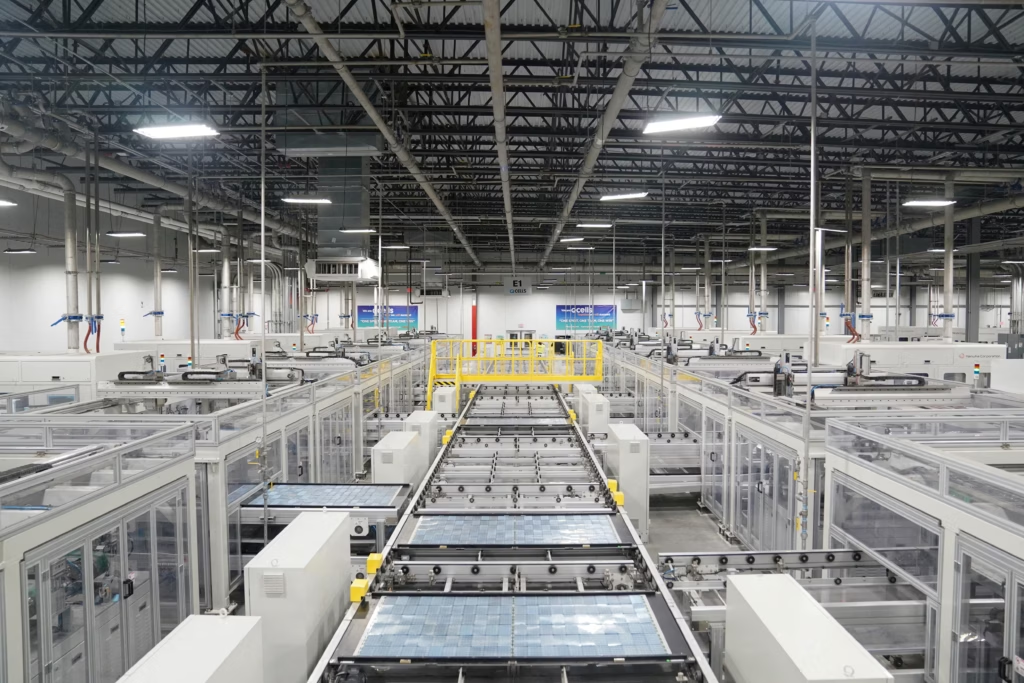
Corning brought its silicon wafer plant in Michigan online in Q3 2025, supplied with polysilicon from a nearby plant run by its subsidiary, Hemlock Semiconductor. A number of manufacturers have begun the process for solar cell production, including T1 Energy, Silfab and Hanwha Qcells.
“I want people to keep in mind that it’s been very successful, the reshoring effort,” Carr says. But he acknowledges that the “biggest reason” that progress was possible were the tax incentives for production and investment, as well as the 45X manufacturing credit, offered under the Biden administration’s IRA. These created a “perceived certainty of demand [and] certainty of supply, which really provided a level of investment certainty that this industry hasn’t experienced before.”
Trump’s “One, Big, Beautiful Bill” (OBBB) undid most of that. The safe harbour rules mean that there is some demand for the next two years for projects that have grandfathered in IRA credits—and will likely want domestic products to boost their tax cut—but beyond that, there’s almost no certainty. “Next generation investment has pretty much frozen,” Carr says.
He says the SEMA Coalition is “increasingly believing that without a substitute for the demand driver that was lost in the OBBB, we’re in a much more precarious position in two or three years that anybody wants.”
Carr is keen to point out the strides the industry has made: the technical proficiency, the innovation, the certainty of investment and demand for domestic product that was possible for the first time under the IRA. But we return to the uncertainty and the fact that demand for domestic solar products has been dented.
Reshoring demand
If Carr is right, and once the safe harbour project backlog runs out the investment in new manufacturing will dry up, the US industry could begin to contract.
“I’m hesitant to call it a contraction,” he says, and cites “market variables” and the efforts that local governments will go to in order prevent a factory shutting down and taking jobs with it.
“That said, there’s definitely going to be pressure,” he says. “As of today, as a developer, you really don’t have an incentive to use a domestic product. It’s that clear cut—it’s simply a pricing decision.” That incentive will decrease further once the safe harboured Investment Tax Credits (ITC) and Production Tax Credits (PTC) projects run out and the Domestic Content Adder goes with them.
If there is going to be a contraction in capacity when demand for domestic product drops, it will likely be the non-integrated module assembly capacity that shuts down, rather than the facilities that are producing cells or are enmeshed with cell producers. Module assembly plants are “very low stakes in terms of investment,” he says, “in the tens of millions, whereas everything else basically starts at US$100 million and goes up from there.”
So what could be done to sustain, or even grow, demand?
“Our starting point is to restore what was lost,” Carr says, meaning the incentives for using domestic solar products. The repeals in the OBBB were “technology specific” and targeted renewables for harsh treatment in contrast to the administration’s early pronouncements of support for US manufacturing industries.
“Going back to the tech neutral approach that existed before, maybe with some rejigging, seems to us a very plausible thing,” he continues.
That rejigging could include an expanded domestic content programme, Carr suggests. When the IRA came in and introduced a 45-55% threshold for domestic content for developers looking to get an extra 10% tax bump, there was no broad US solar manufacturing industry. Now, there is cell production in a few places, and wafer capacity too—proving the case that upstream solar production can be in the US.
He says that the previous 55% threshold for domestic content could become a “starting point—we could see something that would go to 80, 90%—something pretty dramatic,” with the potential to create demand for US components up the whole supply chain.
“I think the proof of those major, multi-billion dollar investments may be enough to get Congress to reconsider,” he says.
There have already been legal challenges and congressional attempts to reverse the measures in the OBBB, including efforts by Republicans to reverse the curtailment of the ITC and PTC. If those gathered pace, it could recreate the demand for domestic solar.
Trade barriers
The Trump administration has leant even further into trade restrictions and tariffs, which it would claim are designed to protect US interests from unfair foreign competition. Some in the solar industry have aided that mission with repeated antidumping and countervailing duty (AD/CVD) complaints to the US Department of Commerce (DOC). Carr is clear that tariffs should be one leg of a “three legged stool” approach, alongside demand and supply-side incentives.
“Trade is a part of the equation, but is just never been proved itself to be sufficient on its own, no matter what you do, because it is such a complicated environment.”
Part of that complexity, when it comes to AD/CVD matters, is the speed and mobility with which Chinese-backed factories can move their operations. The recent expansion of facilities in the Middle East speaks to this, Carr says, and shows a changing strategy to focus on countries where trading arrangements may make it harder to pursue aggressive AD/CVD measures.
Given the SEMA Coalition’s stated aim to disentangle from Chinese supply chains, which currently means supply from almost anywhere outside the US, Carr explains that: “We try to give the administration the best data we can do advance [these cases], but we also want to continue to put that caveat in their heads that this is a part of the strategy, but can’t carry all the weight.”
First of a kind factories
Beyond the policy and trade dynamics shaping the industry, our conversation with Carr turned to the more technical aspects of the US solar manufacturing buildout.
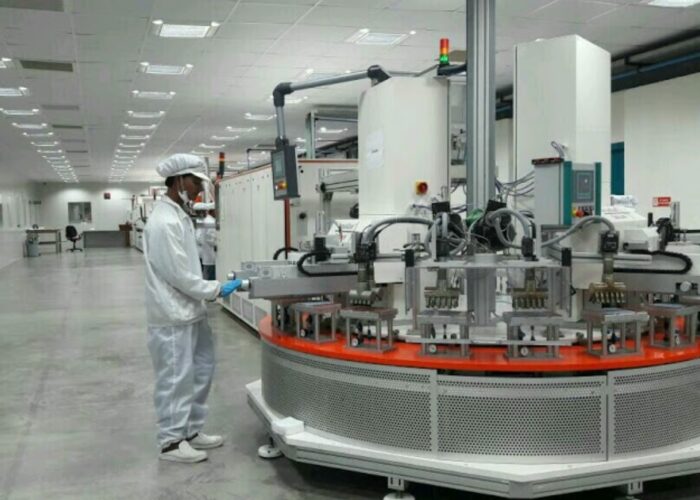
He said that the industry is still in a phase of learning, training and developing technical proficiency at its fledgling upstream production sites. “A cell coming off a domestic line now, it’s fair to call it a ‘gen one’ cell. We can stand on the shoulders of previous innovations, but only to a certain extent because we have to learn how to integrate those things, how to match throughput, find the bottlenecks and work them out.”
He said that the industry is working those things out “fast” to match the expertise on Chinese factory floors, but policy and demand uncertainty makes things more difficult.
The nascent upstream US industry also means that manufacturers are relying on somewhat piecemeal supply chains. Carr says they are “more of less first-of-a-kind factories … a lot of our manufacturers are picking up equipment here and there, they’re not necessarily going for one contractor. You know, there’s nothing like a TrinaSolar proven line end to end [in the US].”
“These are manufacturers finding the best set of things that work here, based on their supply chains, what they have access to quickly,” he explains.
On top of this, he says that the SEMA Coalition and the industry are “keeping an eye” on the future of perovskite tandem cells in the US. Successfully integrating the technology into silicon cell production requires “a tremendous amount of learning by doing, and it really has to be done on the factory floor,” Carr says.
He adds that the Coalition is focused on “making sure that there’s enough operating factory capacity to begin to integrate these choices,” essentially creating the conditions for the US to innovate and become a centre of development for perovskite technology. He said that requires “policy frameworks [which] are as technology-agnostic as possible,” to allow manufacturers to focus on either HJT, PERC or TOPCon silicon technologies as they see fit.
Despite the challenges facing the sector, Carr said he remains optimistic about US solar manufacturing. “The main reason I’m optimistic is the level of commitment we see from our member companies, investing billions of dollars against a tough task—beating ‘China Inc.’ at anything is a tough task.”
“The depth to which these these folks are willing to kind of dig in and try and make that happen has been very impressive … I can’t help but be optimistic about how far we can go with this if we get just a little bit more policy support to to help us see it through.”
Mike Carr is speaking at the PV CellTech USA 2026 conference in the San Francisco Bay Area on 13-14 October 2026. You can find out more about the event and buy tickets here.