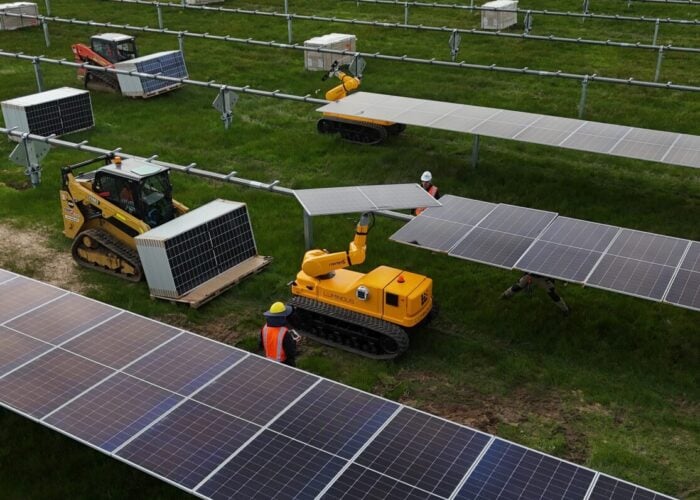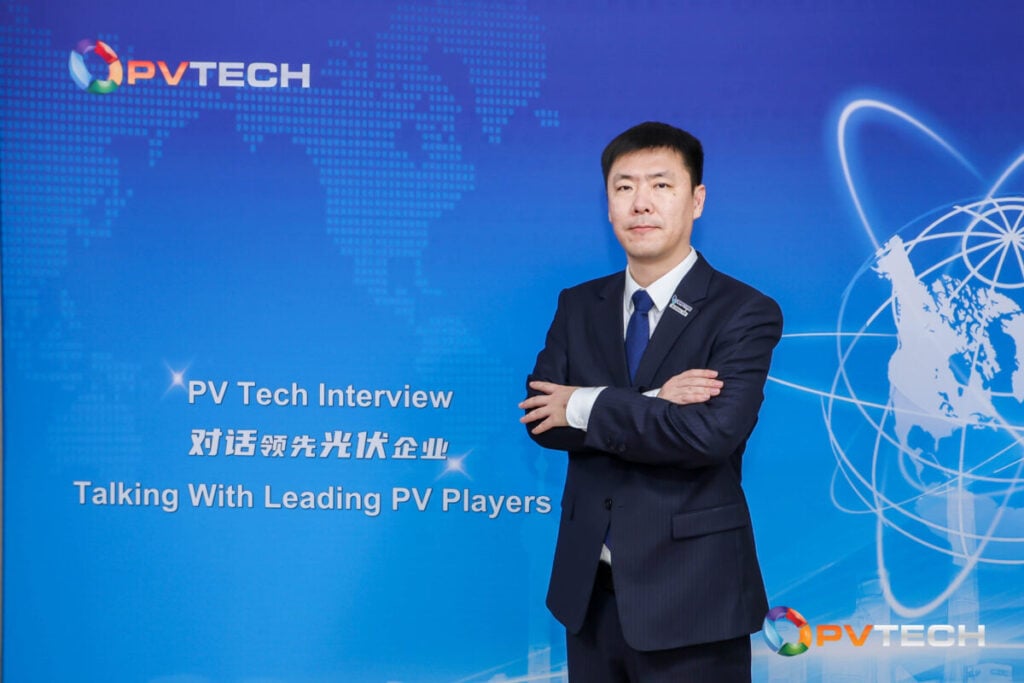
At SNEC 2024 last week, PV Tech spoke with Bruce Wang, founder and CEO of Leapting Technology, about the potential for processes such as automation in the global PV sector. Leapting is a high-tech company specialising in intelligent automation for the PV industry, and the company demonstrated a number of robots at the event.
These included a module-mounting robot, a module-cleaning robot and a module-inspection robot, all of which aim to improve the operational efficiency of PV plants, and reduce the need for human workers to complete many of these tasks.
Try Premium for just $1
- Full premium access for the first month at only $1
- Converts to an annual rate after 30 days unless cancelled
- Cancel anytime during the trial period
Premium Benefits
- Expert industry analysis and interviews
- Digital access to PV Tech Power journal
- Exclusive event discounts
Or get the full Premium subscription right away
Or continue reading this article for free
“We know that human labour costs, right now, are the major costs of a PV power plant, especially for utility-scale [and] big power plants,” said Wang, who went on to note that the company has 3GW, 7GW and 5GW of annual production capacity of its mounting, cleaning and inspection robots, respectively.
Wang also suggested that these products would be of particular interest to the US, Europe and Australia markets, as these are “high labour cost regions” that would benefit from an increased use of automation and artificial intelligence (AI) in operations and maintenance.
“We need a very strong technology team [and] a research and development (R&D) team, but we also need vast venture capital to support our R&D,” said Wang. “I think this is a good opportunity to make our technology happen. It’s a good opportunity that people want to invest more for PV power plants, because they can get a much lower electricity cost, but also they want to reduce their on-site jobs.”