The South Korean Ministry of Economy and Finance has unveiled a plan to invest KRW33.6 billion (US$22.9 million) in research and development (R&D) by 2026 in solar tandem cell and module technology.
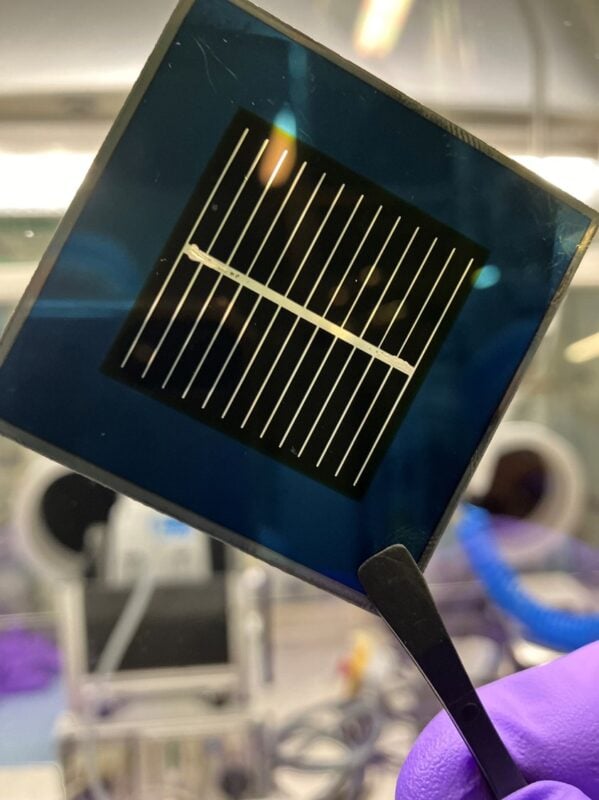
This includes four R&D projects, with a total KRW17 billion in investment, for 2026 that includes the development and demonstration of commercial-area (of 1.7m2 or larger) perovskite-crystalline silicon tandem PV modules and the optimisation and verification of tandem cell design.
Try Premium for just $1
- Full premium access for the first month at only $1
- Converts to an annual rate after 30 days unless cancelled
- Cancel anytime during the trial period
Premium Benefits
- Expert industry analysis and interviews
- Digital access to PV Tech Power journal
- Exclusive event discounts
Or get the full Premium subscription right away
Or continue reading this article for free
For next year, South Korea will also continue its investment in 14 ongoing R&D projects and promote R&D development of solar glass technologies such as Building-Integrated Photovoltaics (BIPV).
The investment is part of several innovation projects in the climate and energy field that also include investments in next-generation power grid, offshore wind power, and green hydrogen, among others. More details about the government’s plan for these projects can be accessed here (in Korean).
According to the Ministry of Energy and Finance, the investment in next-generation solar power will focus on securing core technologies for “ultra-high-efficiency” tandem solar PV cells, including solar glass and supporting the research and development of the technology for its commercialisation.
The project also aims to support the commercialisation of the technology with the establishment of domestic and international standards and certification systems to create an early market.
This programme targets to reach efficiencies of 32% for tandem cells by 2028, before reaching 35% in 2030. For tandem modules, the efficiency targets are set at 25% in 2028, before reaching 28% at the end of the decade.
“The government will actively support the private sector through infrastructure development, system improvement, fiscal, tax, and financial support, and establish a problem-solving support system,” said the report from the South Korean Ministry of Energy and Finance.
Projects selected for subsidies will be based on several factors, including national agenda, input from relevant ministries and local governments and expert opinions, among others.
The government’s body released a timeline of goals it aims to achieve with solar tandem technology in the coming years. By next year, the goal is to develop core materials and analyse causes of degradation, while in 2027, it aims to start the development and demonstration of commercial modules.
In 2028, it targets to achieve the tandem cell and module efficiencies mentioned above, while also beginning the commercialisation of modules.
Finally, in 2029, it would work on the development and demonstration of low-carbon and bifacial tandem modules before reaching the targeted efficiencies set for 2030.
Among the reasons for the South Korean government to finance next-generation of tandem solar technologies is the monopoly of solar cells from China with more than 80% of the global module production.