Residential solar and energy storage could meet all the projected demand from US data centres over the next five years if tech companies invest in household energy infrastructure.
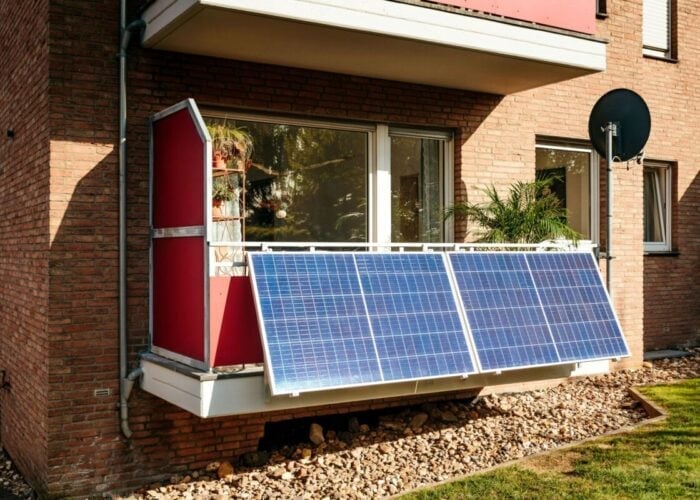
This is a conclusion drawn from a report by US-based electrification non-profit Rewiring America, which says that the 98GW of projected new electricity demand from AI data centres in the US could be met, and even exceeded, by investments in residential energy storage, solar and heat pumps.
Try Premium for just $1
- Full premium access for the first month at only $1
- Converts to an annual rate after 30 days unless cancelled
- Cancel anytime during the trial period
Premium Benefits
- Expert industry analysis and interviews
- Digital access to PV Tech Power journal
- Exclusive event discounts
Or get the full Premium subscription right away
Or continue reading this article for free
Through its modelling and research, Rewiring America claims that so-called “hyperscalers”, the tech companies operating global networks of data centres, could “more than meet their total planned capacity needs” by paying for residential storage and solar PV systems across the US.
These investments would decrease peak residential electricity demand by allowing households to store and use their own power, increase grid capacity through enabling houses to generate solar power and export it to the grid, and reduce energy bills for US homes.
The report said that the cost to hyperscalers of investing in the up-front costs of household energy solutions would be “similar to building new gas power plants”, but with added benefits for consumers and households which large gas plants don’t provide.
The analysis claimed that installing rooftop solar and residential storage at the proposed scale could reduce the cost of an installation by “at least 40% … At this reduced cost, hyperscalers could pay for 30% of the cost of rooftop solar and a home battery and get capacity on the grid at costs comparable to building a gas power plant.”
Rewiring America also said that this approach would be much faster than building new gas plants, or even utility-scale renewables projects, by “order of months rather than years.”
“Electrifying households is a direct path to meeting the growing power needs of hyperscale data centres while creating a more flexible, resilient, cost-effective grid for all,” said Ari Matusiak, CEO of Rewiring America. “The household doesn’t have to be a passive energy consumer, at the whim of rising costs. Instead, it can be the hero and, with smart investment, the foundation of a more reliable and affordable energy future.”
While impressive on paper, it’s not clear that large US tech companies would make these particular investments. AI is a highly strategic and politicised business, with the US and China both forecast to vie for leadership in the sector over the next decade.
The current US government has taken a hammer to incentives for renewable energy, and president Trump called climate change a “con job” at his United Nations address earlier this week. The benefits of lowered emissions and cleaner air that the research highlights may not come into the equation.
There are also utilities, who may take issue with the expansion of residential solar and storage at the proposed scale if it significantly reduces the energy prices their customers pay.
California has seen long-running fights between the state utility system operator and its solar industry over residential solar and storage policy, particularly the net energy metering (NEM) scheme. The regulator made changes to incentivise residential energy storage and reduce repayments for self-generation with solar because the state reportedly had an overabundance of solar generation in the middle of the day. Industry figures criticised this move as an attack on solar energy and customers’ energy independence.