Australian data centre startup WinDC has announced a strategic partnership with Megaport that will connect its renewables-powered AI factories to Megaport’s global Network-as-a-Service platform.
The partnership allows high-density AI computing at renewable energy generation sites to be accessible to organisations across Australia and throughout Megaport’s international network, a global provider of Software Defined Networking (SDN) Elastic Interconnection services.
Try Premium for just $1
- Full premium access for the first month at only $1
- Converts to an annual rate after 30 days unless cancelled
- Cancel anytime during the trial period
Premium Benefits
- Expert industry analysis and interviews
- Digital access to PV Tech Power journal
- Exclusive event discounts
Or get the full Premium subscription right away
Or continue reading this article for free
WinDC states that it operates as the “missing link” between energy and AI, providing portable, renewable-powered AI factories and data centres that deploy eight times faster than traditional facilities, cost 50% less, and run on 100% renewable energy.
The collaboration addresses Australia’s renewable energy curtailment challenge, with the Australian Energy Market Operator (AEMO) forecasting that a hypothetical new solar PV power plant in Victoria and South Australia could face curtailment rates of up to 65% by 2027.
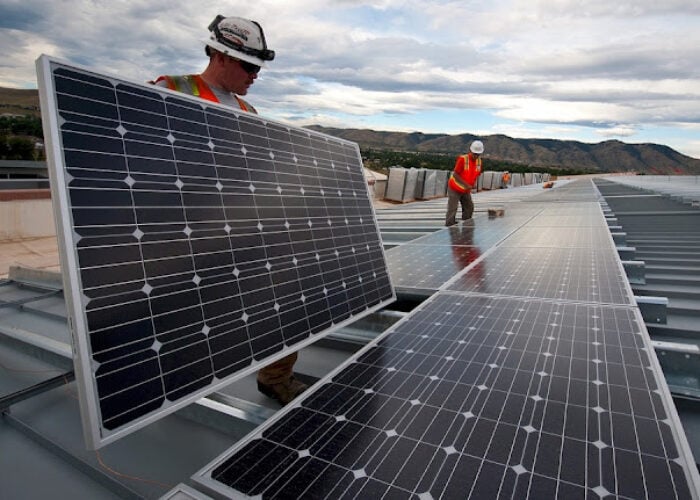
Existing solar PV power plants currently average 4.5% curtailment, representing billions of dollars in lost value, according to WinDC.
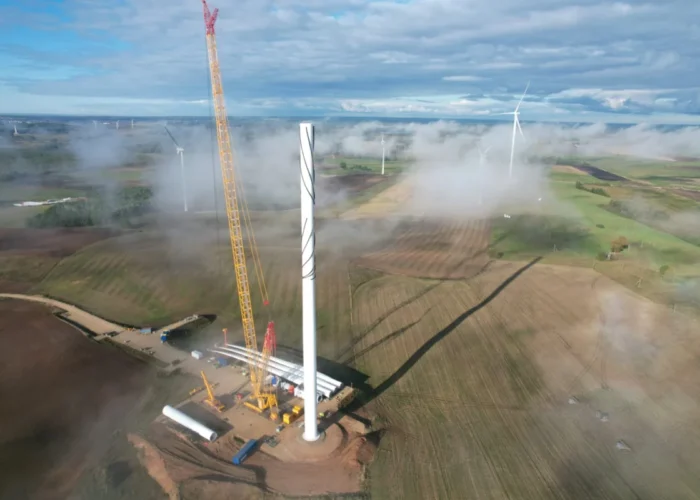
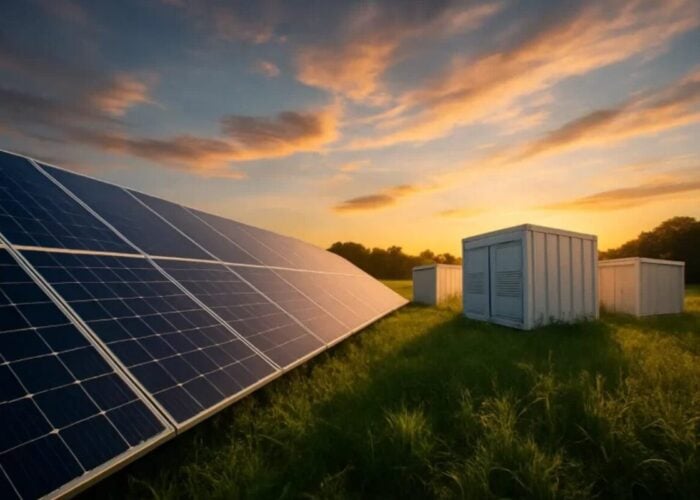
WinDC’s model introduces modular, high-density compute directly at solar, wind or hydro generation sites rather than building data centres in metropolitan areas and drawing power across congested transmission lines.
Each WinDC AI Factory is a factory-built ISO container delivering 100kW to 1.6MW of critical IT load, with GPU- or CPU-dense configurations featuring integrated liquid cooling and N+1 power and cooling redundancy.
The partnership comes as Australia experiences unprecedented data centre expansion. Amazon announced plans to invest AU$20 billion (US$14 billion) in Australian data centres powered by solar PV.
The technology giant secured power purchase agreements for 333MW of solar generation capacity across Victoria and Queensland projects, including the 58MW Mokoan Solar Park, 150MW Winton North Solar Park, and 125MW Bullyard Solar Park.
Data centres are among the most energy-intensive facilities globally, and AI data centre demand is expected to more than double by 2030 to more than 945TWh annually. AI workloads require substantially more power than traditional computing applications, while cooling systems consume significant portions of total facility energy use.
By integrating Megaport’s private, high-speed global connectivity fabric, WinDC says its customers can run AI workloads behind the meter on renewable energy while maintaining secure, low-latency links to cloud providers, enterprise networks, and international markets.
Connectivity options include fibre, Starlink or 5G, enabling reliable backhaul to cloud or enterprise networks.
“WinDC is addressing an urgent and legitimate gap in Australia’s digital infrastructure,” said Michael Reid, CEO of Megaport.
“They are turning stranded renewable energy into usable AI compute. By connecting WinDC to our global platform, we are making that capability available to thousands of organisations worldwide and giving Australia the opportunity to export clean, sovereign AI.”
WinDC founder and CEO Andrew Sjoquist stated that Australia cannot be an AI leader without taking a new approach to infrastructure.
“What WinDC enables is a green edge, AI capability built directly on top of our renewable energy. By moving compute to the source of clean power, organisations can run training, inference, research and critical workloads locally and sustainably.”
The initiative also aims to address delays in transmission infrastructure that contribute to renewable energy curtailment. WinDC’s approach bypasses costly transmission bottlenecks, reduces pressure on urban land and grid infrastructure.
The partnership also aligns with the Australian government’s plan to boost business productivity and grow the economy using AI innovation.
The first WinDC portable data centres are scheduled to arrive in Australia in early 2026.
The Energy Storage Summit Australia 2026 will be returning to Sydney on 18-19 March. It features keynote speeches and panel discussions on topics such as the Capacity Investment Scheme, long-duration energy storage, and BESS revenue streams. ESN Premium subscribers receive an exclusive discount on ticket prices. To secure your tickets and learn more about the event, please visit the official website.