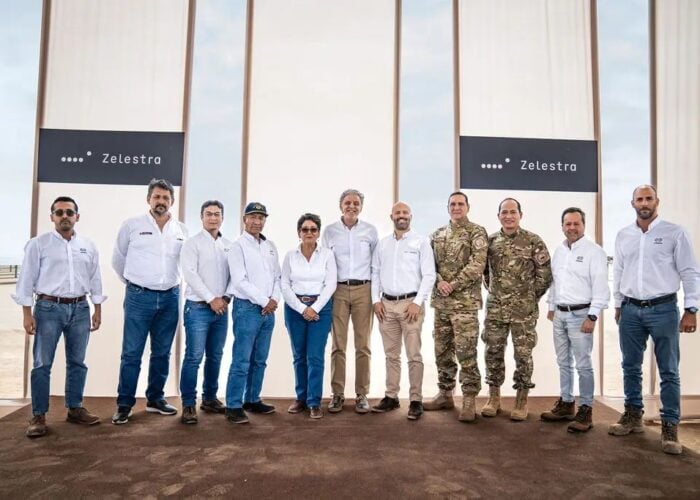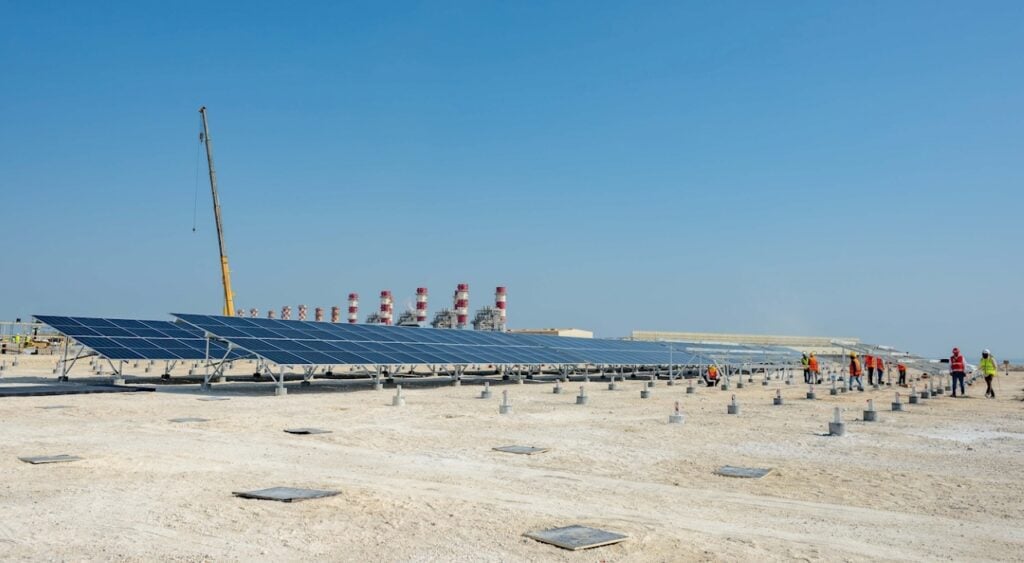
The government of Bahrain has laid the foundation stone for a 100MW solar PV power plant in the Al Dur area of the Southern Governorate.
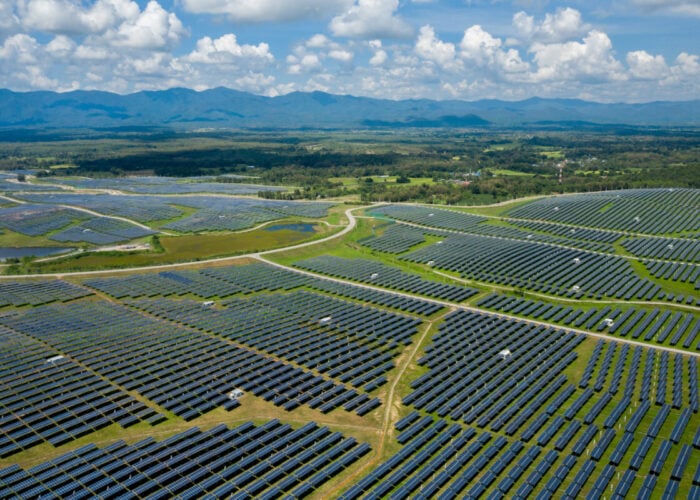
The project is being developed by the Electricity and Water Authority (EWA) as part of Bahrain’s energy transition strategy and is scheduled for completion in the third quarter of next year, with around 135,000 solar panels to be installed.
Try Premium for just $1
- Full premium access for the first month at only $1
- Converts to an annual rate after 30 days unless cancelled
- Cancel anytime during the trial period
Premium Benefits
- Expert industry analysis and interviews
- Digital access to PV Tech Power journal
- Exclusive event discounts
Or get the full Premium subscription right away
Or continue reading this article for free
The solar facility will be developed across two adjacent sites covering approximately 830,000 square metres. Construction is expected to take around 18 months from contract award, with the plant to be connected to the national grid via the 66/11kV Al Dur BSP substation.
Bahrain’s deputy prime minister, Shaikh Khalid, said the development of the Al Dur project as a large-scale, grid-connected solar plant underscores the Kingdom’s shift towards centralised renewable generation capable of delivering meaningful capacity to the power system in line with future energy demand.
Furthermore, he added that integrating solar power into electricity generation would help diversify energy sources, strengthen grid resilience and deliver environmental and economic benefits, in line with the Government Programme 2023-2026, which supports the expansion of renewable energy.
According to the government of Bahrain, the Al Dur solar project represents a key step in developing the country’s energy sector, adding new renewable generation capacity while supporting plans to raise the share of renewables in the power mix to 20% by 2035 under the National Renewable Energy Plan.
Bahrain is accelerating the expansion of its solar capacity through a pipeline of large-scale and distributed projects, reinforcing its long-term Net Zero 2060 ambitions. Recent developments include a 123MWp industrial solar programme announced in late 2025 – featuring the world’s largest single-site rooftop installation at 50MWp – as well as a 150MW utility-scale plant in Sakhir and a 46.2MW project at the University of Bahrain.
While installed capacity remained relatively modest at around 57MW in mid-2023, these projects mark a significant step change in the nation’s renewable energy deployment.