On July 23, 2026, China’s National Development and Reform Commission (NDRC) and National Energy Administration (NEA) officially released the 15th Five-Year Plan for Renewable Energy Development. The plan lays out a roadmap for the country’s renewable energy development for 2026–2030, centred on capacity expansion, quality improvement and reliable energy substitution.
The plan sets four key quantitative targets covering installed capacity, power generation, non-power applications, and supply security. A core priority is large-scale wind and solar PV development across desert, Gobi, and wasteland areas in the Three-North regions (Northwest, Northeast, and Northern China).
Try Premium for just $1
- Full premium access for the first month at only $1
- Converts to an annual rate after 30 days unless cancelled
- Cancel anytime during the trial period
Premium Benefits
- Expert industry analysis and interviews
- Digital access to PV Tech Power journal
- Exclusive event discounts
Or get the full Premium subscription right away
Or continue reading this article for free
To address new energy intermittency, the plan advances a resilient modern power system, providing clear operational guidance for meeting China’s carbon peaking and neutrality goals.
The two authorities completed the official review and approval of the plan on July 6. The document mandates full implementation by provincial and municipal governments, energy regulators, and central state-owned enterprises, requiring them to balance energy security with green transition and align local actions with the national 15th Five-Year overall development framework and supporting plans for the modern energy system.
Major deployment: over 370GW of new capacity planned for Three-North wind and solar bases
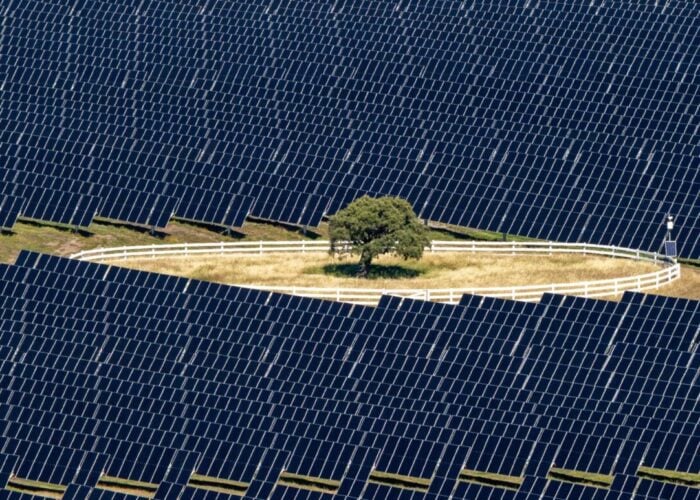
The plan prioritises wind and PV bases in the Three-North regions as the core driver of renewable capacity growth, singling out desert, Gobi, and barren areas such as Kubuqi and Ulan Buh as key development hubs. It integrates PV desertification control, ecological restoration, and green power transmission, supporting the establishment of demonstration bases dedicated to 100% cross-provincial green power delivery.
Under the five-year deployment, seven major wind and solar bases—spanning Xinjiang, the Hexi Corridor, the Yellow River Bend, northern Hebei, and the Songliao Basin—will add no less than 370GW of new installed capacity during 2026-2030.
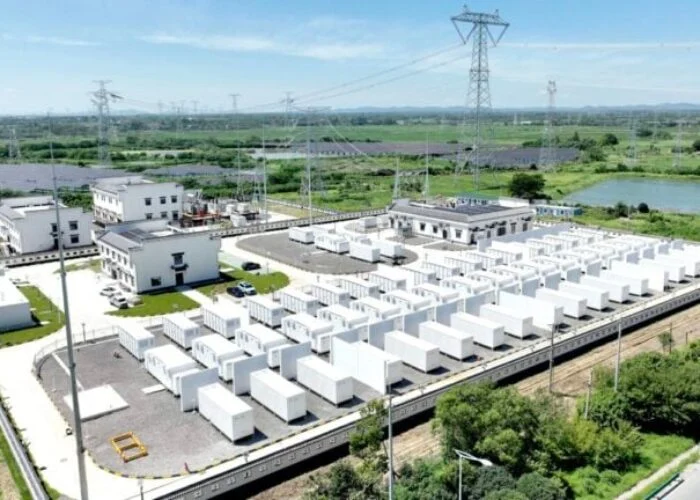
To resolve consumption and transmission bottlenecks, these bases will be backed by complementary regulation resources, including pumped storage, concentrated solar power, and new-type energy storage, building China’s largest clean power supply cluster.
Beyond large-scale centralised bases, the plan adopts a balanced strategy covering centralised and decentralised projects, as well as onshore and offshore installations. It scales up deep-sea offshore wind power, advances integrated hydro-wind-solar projects in southwest China, and develops decentralised PV and scattered onshore wind projects in urban and rural areas, forming a nationwide, all-round renewable energy development layout.
Solar PV and wind to lead China’s new installed capacity by 2030
The plan defines concrete, enforceable medium- and long-term benchmarks with 2030 as the key milestone, featuring four binding quantitative targets:
First, total renewable energy consumption will reach 1.8 billion tonnes of standard coal equivalent, fully offsetting the growth in traditional fossil fuel consumption.
The second target is on installed capacity and power generation. By 2030, total installed renewable capacity will reach approximately 3.5 billion kilowatts, generating 6 trillion kilowatt-hours annually. Wind and solar combined will exceed 2.8 billion kilowatts, accounting for over 50% of total national power capacity, with annual output of 4 trillion kilowatt-hours and a 30% share of total power generation—officially making wind and solar the country’s primary power source.
The third one is about non-power renewable utilisation. Renewable energy used for heating, hydrogen production, industrial raw materials, and other non-power applications will rise 1.5 times from the 2025 level, equivalent to approximately 150 million tonnes of standard coal, significantly expanding the application scope of new energy.
The fourth one is about reliable peak power supply security. To mitigate the intermittency of wind and solar power, the average firm capacity of wind and solar power nationwide (equipped with generation-side storage) will rise to 8% by 2030—11% for wind and 6% for solar. During peak evening demand in summer and winter, the supply share of wind and solar (backed by generation-side storage) will exceed 20%, up 10% from current levels. A total of 300GW of new reliable peak-load clean power capacity will be added over the 15th Five-Year Plan period.
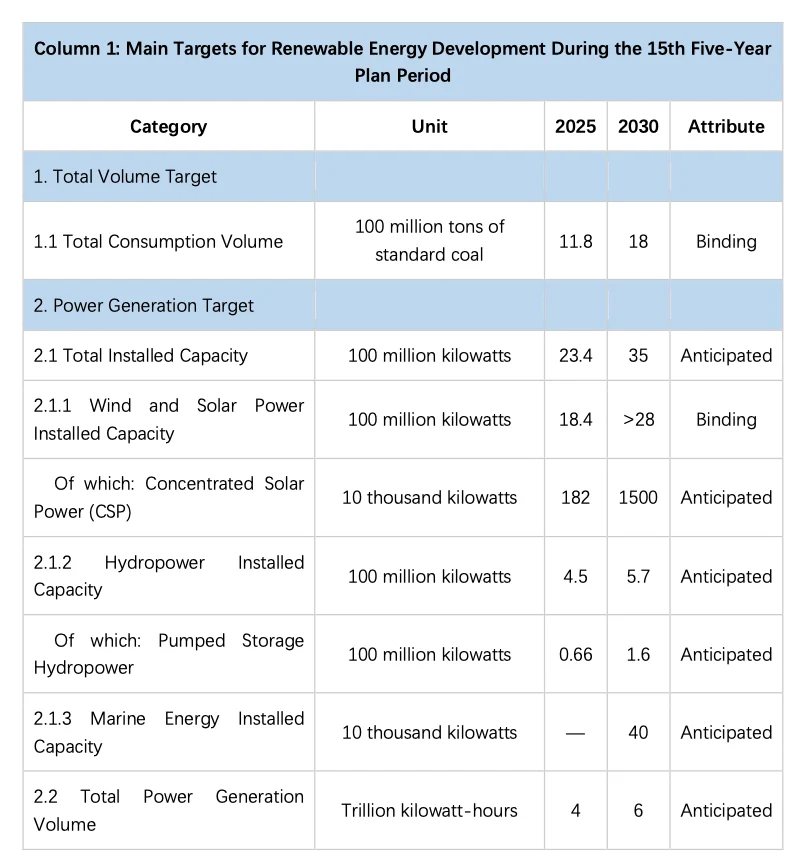
Source of data and image: China’s 15th Five-Year Plan for Renewable Energy Development
Addressing industry pain points: multi-path solutions to boost new energy controllability and dispatchability
To address long-standing industry bottlenecks—including volatile wind and solar output and peak supply deficits—the plan for the first time systematically introduces a “reliable substitution” development framework, backed by a full suite of targeted implementation measures.
First, mandatorily pushing forward the deployment of supporting regulatory resources for wind and solar power plants. All new centralised projects are required to scale up deployment of grid-forming inverters and high-precision power forecasting devices. Existing plants will upgrade peak output capacity through retrofits with energy storage and concentrated solar power facilities.
Second, accelerating concentrated solar power (CSP) development as a long-duration regulating source. Leveraging CSP’s superior long-term thermal storage capabilities, the technology will be tailored to meet the transmission demands of large-scale new energy bases.
Third, scaling up integrated multi-energy systems. The plan promotes hybrid configurations, including wind-solar-storage, wind-solar-CSP, and hydro-wind-solar complementary projects. These systems adopt unified construction, dispatching, and power forecasting mechanisms to effectively stabilise fluctuations in renewable energy generation.
Fourth, upgrading cross-regional power transmission infrastructure. The country will expand inter-provincial and inter-regional transmission corridors to establish dedicated green power delivery channels connecting the Three-North clean energy bases with major load centres in central and eastern China, fully unlocking the generation potential of large-scale renewable bases.
Full industrial chain coordination to unlock trillion-level green growth potential
Third-party estimates total project investment across the domestic renewable energy industrial chain during the 15th Five-Year Plan period will exceed RMB5 trillion (US$730 billion), spanning the entire value chain—from silicon, PV cells and modules, and wind turbine manufacturing upstream, through EPC power plants and energy storage systems midstream, to integrated applications including green hydrogen production, clean heating and data center energy supply downstream.
The plan sets two core priorities of bolstering the self-reliance and controllability of the domestic industrial chain, and advancing global green energy cooperation. It drives technological upgrading of core PV, wind power, and energy storage equipment to solidify China’s manufacturing edge, while scaling up overseas project development and international green standard certification to export China’s new energy technologies and solutions worldwide.
Industry analysts point out that the 15th Five-Year Renewable Energy Plan represents a key top-level strategic arrangement following the new-type energy system blueprint, delivering three pivotal market signals.
First, wind and solar capacity expansion is on a clear growth track—the 370GW increment in the Three-North bases will sustain long-term demand for modules, inverters, and storage equipment.
Second, the industry’s development paradigm is shifting from pure scale expansion to a dual focus on scale and reliability, unlocking major opportunities for storage, concentrated solar power, and grid regulation equipment. Third, renewable energy applications are broadening, with emerging segments including green hydrogen, industrial clean heating, and building-integrated PV creating new growth drivers.
Going forward, provincial and municipal authorities will release localised implementation plans tailored to regional renewable resources and load characteristics, with refined rules for base development, grid connection, and storage deployment. These initiatives will break down national targets into annual actionable goals, steadily advancing China’s green and low-carbon energy transition.