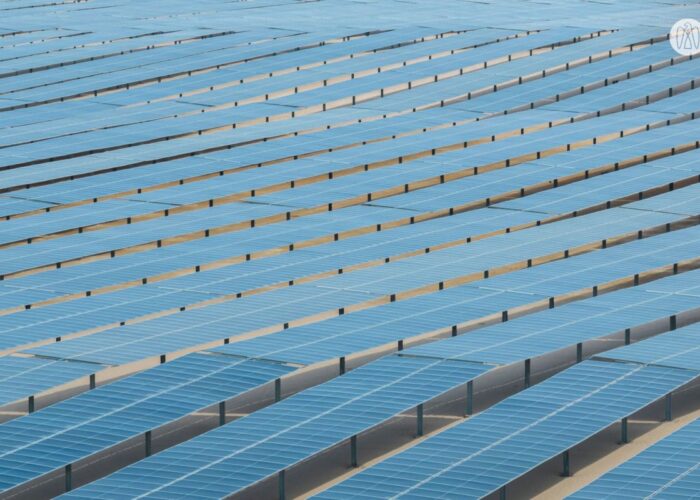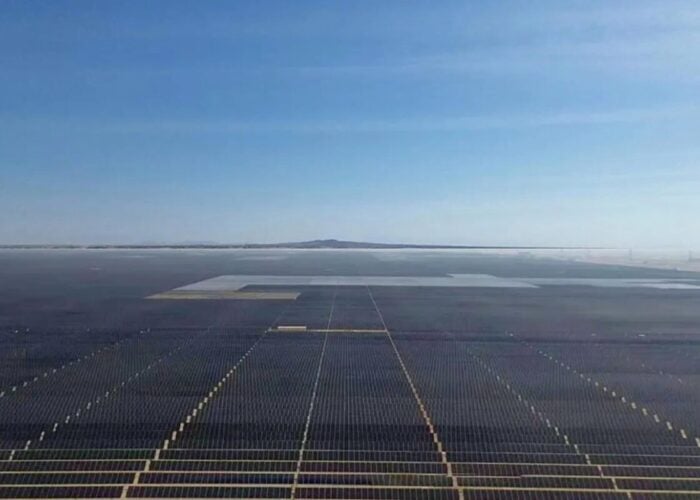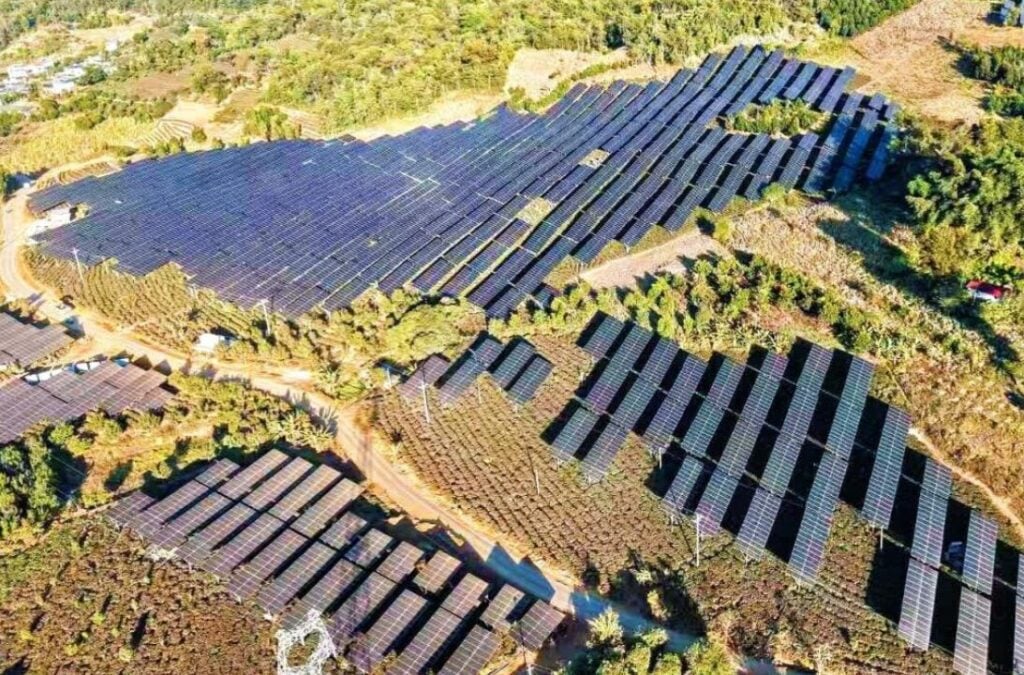
The China Energy Investment Corporation (CHN Energy), a state-owned mining and energy company, has started commercial operations at the remaining 2GW of the 4GW Lingwu new energy base in Ningxia, central China.
This latest portion was brought online last week, on 28 February, and means the entirety of the Lingwu new energy base is now operational. The Lingwu project is part of a larger 6GW Ningxia site, built on a coal mining subsistence area, comprising an additional 2GW facility in Ningdong that is currently under construction.
Try Premium for just $1
- Full premium access for the first month at only $1
- Converts to an annual rate after 30 days unless cancelled
- Cancel anytime during the trial period
Premium Benefits
- Expert industry analysis and interviews
- Digital access to PV Tech Power journal
- Exclusive event discounts
Or get the full Premium subscription right away
Or continue reading this article for free
CHN Energy announced that the operational parts of the project are supported by a number of other pieces of electrical infrastructure, including a 750kV booster substation used by “nearby thermal power plants” and 200km of transmission infrastructure, which delivers electricity generated at the project to China’s east coast. Alongside this “bundled transmission model”, as CHN Energy dubs it, the Lingwu project is co-located with a 400MW/800MWh battery energy storage system (BESS), which the developer expects to expand to reach a size of 600MW/1,200MWh.
The co-location of a BESS alongside a solar PV project is increasingly common in the renewable energy industry, but experts have warned that simply deploying the technologies together is not a “silver bullet” to generate revenue.
Speaking at last week’s Energy Storage Summit, held in London by PV Tech publisher Sola Media, Tom Smout, head of energy storage at consultancy LCP Delta, said that “co-location has a place, but I think it’s quite overhyped by a lot of people,” making the point that the solar and storage assets need to have compelling businesses cases, as individual assets, in order to be profitable.
CHN Energy has reached a number of milestones at large utility-scale projects in recent months, including the start of commercial operations at a 1GW floating PV (FPV) project off the coast of Dongying in China. This is the world’s largest operational offshore FPV project.
The company’s advancement of the Ningxia project follows the China Photovoltaic Industry Association (CPIA) revising down its capacity addition forecasts for 2026. The trade body expects China to add 180-240GW of new capacity in 2026, down from 315GW in 2025, as industry players cut back on production in an effort to bring to an end the long-standing toxic price competition among the leading Chinese players; five leading companies announced earlier this year that they expect to endure losses of up to US$4.7 billion in 2025.