Renewable energy investment fund manager Copenhagen Infrastructure Partners (CIP) launched its second Growth Markets Fund (GMF) this week (4th December), seeking US$3 billion in financing for renewable energy generation.
Building on its first GMF fund from 2019, CPI said that it expects the fund to deliver around 10GW of renewable energy capacity which will reflect around US$10 billion of total capital infrastructure investment. As well as new projects, the fund has a portfolio of development-stage projects which CIP said increases the certainty of the fund’s execution.
Try Premium for just $1
- Full premium access for the first month at only $1
- Converts to an annual rate after 30 days unless cancelled
- Cancel anytime during the trial period
Premium Benefits
- Expert industry analysis and interviews
- Digital access to PV Tech Power journal
- Exclusive event discounts
Or get the full Premium subscription right away
Or continue reading this article for free
Announced at the United Nations’ COP 28 conference in Dubai, the Growth Markets Fund II will focus on funding large-scale solar PV, battery energy storage, power-to-X and onshore and offshore wind in “high-growth, middle income markets” across Asia, Latin America and EMEA.
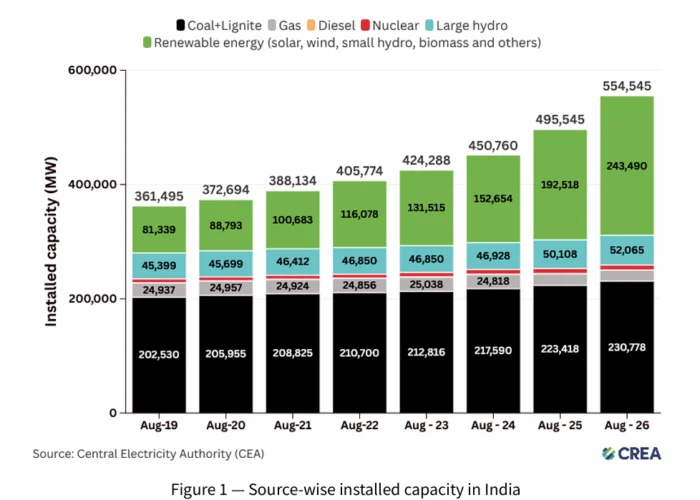
Specifically, the fund will target 15 markets, of which CIP named five: India, Vietnam, Philippines, Mexico, and South Africa. These markets – and the other ten unnamed – have “strong fundamentals” for developing renewables infrastructure, CIP said, which include population and economic growth, with a subsequently expanding middle class, which increases electricity demand.
“These middle-income and emerging markets represent not only a mandatory task for the industry – and we believe that they are also very attractive markets for investors seeking exposure to the some of the highest expected growth rates for renewables. They are estimated to account for 25% of global renewable energy capacity by 2050, as economic and demographic growth drives rapidly increasing electricity demand,” said Niels Holst, partner at CIP and co-head of GMF.
Prior to the announcement of this fund, the most notable attention paid to emerging renewables markets at the COP 28 conference had come from the host nation’s state-owned renewables developer, Masdar. The whirlwind of announced deals and plans that Masdar has issued from the conference have been predominantly in emerging, high-growth markets like Indonesia, Poland and African nations.
CIP said that these high-growth markets will need around US$1.9 trillion in renewables investment by 2030 to contribute their share to the global net zero push.
Christina Grumstrup Sørensen, senior partner and founder of CIP said: ““To reach net-zero, we need to bring affordable, reliable, and clean energy to all parts of the world. With a continuous increase in carbon emissions, successful deployment of large-scale renewable energy is particularly important in high-growth, middle-income countries. This fund will be deploying significant private capital and therefore ensure renewable projects in countries, where it will contribute to growth and job creation and deliver substantial impact in terms of reducing carbon emissions.”
In July, CIP closed the first round of its flagship Copenhagen Infrastructure V (CI V) fund with €5.6 billion (US$6.1 billion) of its target €13 billion for 20GW of renewables capacity across the globe.
This week, the company also received a Notice To Proceed in its construction of a 500MW/1000MWh battery energy storage system in Coalburn, Scotland. The project is expected to be operational in Q4 2025; more information on this can be read on our sister site, Solar Power Portal.