The global PV industry is now in a cyclical correction marked by price volatility, rising trade barriers and intensifying competition, putting many companies under growing pressure.
Against this challenging backdrop, energy technology company Hanersun has bucked the trend with steady growth—driven by prudent operations, a global sales network, and an integrated solar PV-storage strategy. The company continues to expand across key overseas markets in Europe, Southeast Asia, and Latin America, with energy storage now firmly established as its second growth driver.
Try Premium for just $1
- Full premium access for the first month at only $1
- Converts to an annual rate after 30 days unless cancelled
- Cancel anytime during the trial period
Premium Benefits
- Expert industry analysis and interviews
- Digital access to PV Tech Power journal
- Exclusive event discounts
Or get the full Premium subscription right away
Or continue reading this article for free
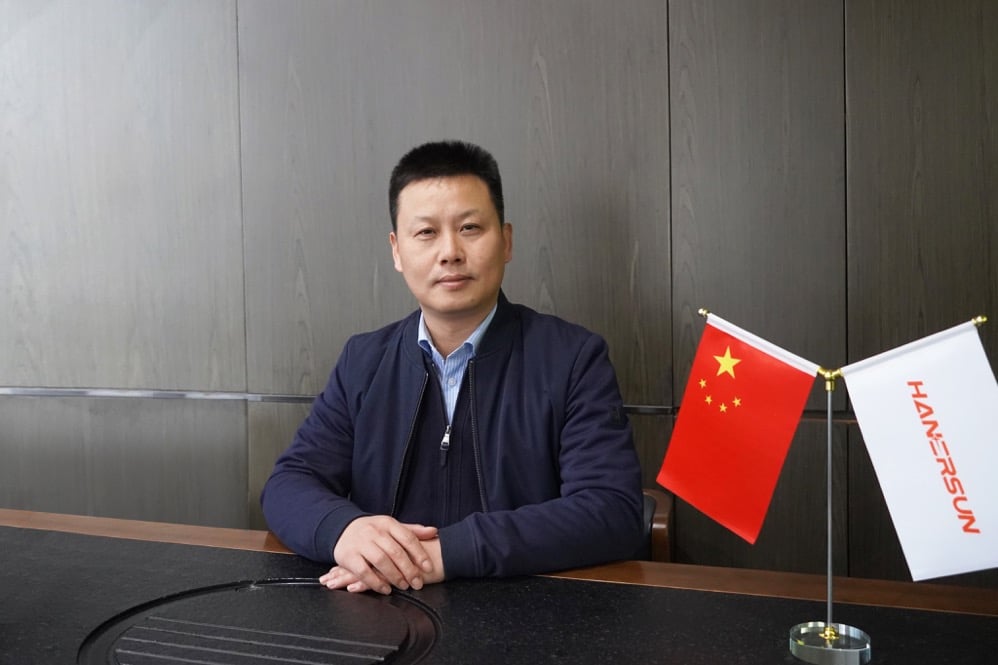
In this feature story, we sit down with Michael Liu, Chairman of Hanersun. Our conversation covers the company’s latest performance, global footprint, market dynamics at home and abroad, industry outlook, trade challenges, and long-term strategy, revealing the core strengths that have enabled Hanersun to weather the downturn and sustain steady growth.
Stable operations amid industry downturn, solidifying foundations for long-term growth
Since late 2023, the global PV industry has slipped into a downward cycle, weighed down by widespread overcapacity and sustained price erosion. Numerous peers have faced severe operational pressures, with some scaling back capacity and others exiting the market altogether.
Asked about the company’s overall performance, Liu frankly acknowledged that Hanersun has not been immune to the harsh industry environment. Still, backed by long-built core strengths, it has maintained solid fundamentals and achieved steady growth despite the downturn.
According to Liu, Hanersun’s resilience amid cyclical headwinds rests on five core strengths. First, a professional, pragmatic, and highly efficient management team—seasoned through multiple industry cycles—delivers strong execution, tackles tough challenges, and combines problem-solving acumen with forward-looking foresight, all of which underpin the company’s stable expansion.
Second, Hanersun adheres to a rational development mindset—expanding sustainably within its capacity, avoiding blind growth, and directing resources toward product innovation, customer support, channel development, and brand building. It steers clear of capital-intensive full-value-chain investment, preserving flexibility amid the overcapacity-driven downturn.
Third, the company has long cultivated premium overseas markets like Europe and Japan, where stringent quality and service standards command healthy margins—shielding it from low-end price wars and solidifying its operational footing.
Fourth, energy storage has become its second growth engine. Since making storage a strategic priority in 2022, Hanersun has steadily expanded the business, now operating a dual-growth model alongside its flagship PV module division.
Moreover, the company upholds a customer-first philosophy. It prioritises brand credibility and market reputation, responds swiftly to client needs, and enforces rigorous quality control standards. These efforts continue to boost Hanersun’s brand awareness among global clients and financial partners.
Amid cutthroat industry-wide competition, Liu stressed that Hanersun abides by a streamlined, “less-is-more” development strategy. The company does not blindly follow trends or attempt to cover the entire industry chain or all technology routes. Instead, it concentrated resources on its core businesses-PV modules and C&I storage-to channel resources to build unrivalled competitiveness within these high-margin, premium segments.
Liu said: “This industry covers a vast array of segmented sectors. Hasty and scattered expansion will only erode core competitiveness. survival and growth hinge on identifying a clear niche and cultivating it with singular focus.”
Global multi-regional PV-storage deployment: breakthroughs across Southeast Asia, Africa and other non-European markets
Hanersun has embraced a global vision from the very beginning and has consistently prioritised overseas expansion. It now operates in over 100 countries and territories across Europe, the Americas, Southeast Asia, Africa, and Australia—with international markets forming the foundational pillar of its growth.
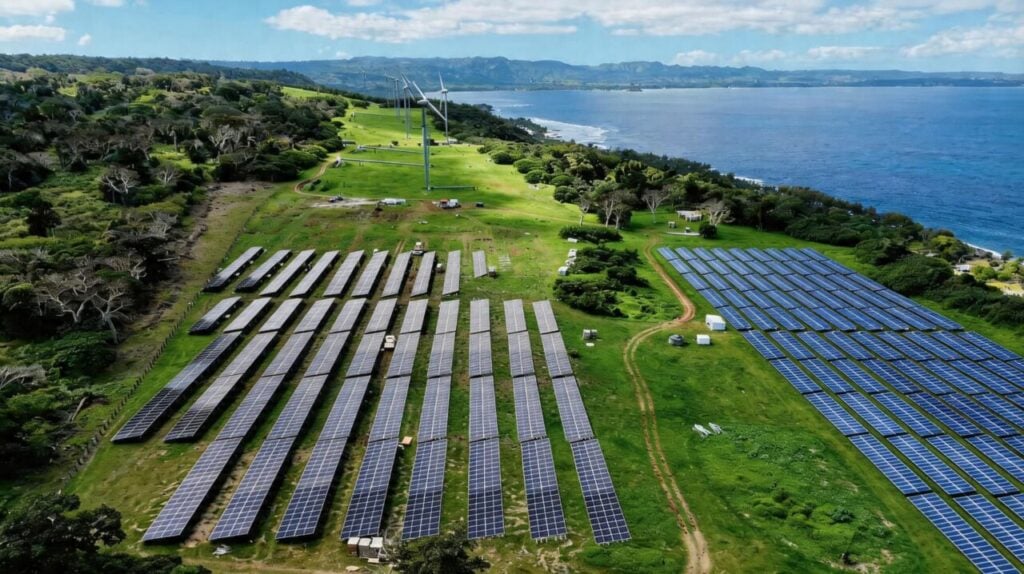
Liu explained that regional PV markets have diverged sharply this year. Hanersun tailors its deployment to local conditions, delivering differentiated performance across its various markets.
“The European PV market has seen an overall downturn this year. Conventional large-scale ground-mounted plants have taken a heavy hit from negative power prices, and the sector is gradually shifting toward decentralised PV and PV-storage integration. Thanks to years of intensive market cultivation, Hanersun has secured multiple landmark milestones across Europe. The key wins stand out: First, the company has expanded its distribution channels to build a more comprehensive regional network. Second, it has brought on board key customers in major European markets including Germany, Spain, Italy and Poland, supplying large volumes to local top-tier partners and dismantling long-standing market access barriers; Third, there has been a marked rise in standalone projects above 100MW, lifting both project scale and customer coverage to record highs,” Liu noted.
Parallel to its expanding PV business, Hanersun’s storage arm has also registered robust growth. According to company briefings, the storage business has carved out a clear position in Europe, focusing on utility-scale and C&I segments. Leveraging established PV distribution networks and client resources, it expanded rapidly across Southeast Europe, posting strong year-on-year gains last year.
“Europe’s storage market is still early-stage but holds massive potential—and we’ll ramp up investment and sharpen our strategic focus there,” said Liu, who remains bullish on the storage business.
To date, Hanersun’s storage products have secured orders across several European nations, including Bulgaria, Croatia, and Romania. Multiple liquid-cooled storage systems have passed authoritative certifications—including SGS and CE—earning widespread market validation within the EU.
Liu added that beyond Europe, emerging markets—including Southeast Asia, North Africa, and Pakistan—continue to show robust growth. The Philippines has seen a sharp demand surge this year, shipments to Pakistan are climbing steadily, and PV demand is picking up across multiple African nations. As Hanersun’s global footprint expands, these booming markets complement its European core, mitigating risks tied to reliance on a single regional market.

On April 1, China officially scrapped VAT export rebates for PV products—a policy shift that became a pivotal factor shaping global supply chains and market prices in the first half of the year. Liu reviewed the market fluctuations and corporate countermeasures before and after the policy took effect.
He explained that the rebate adjustment was officially announced around January 15, giving the industry minimal lead time to prepare. Once the news broke, overseas buyers—fearing higher procurement costs down the line—rushed to place advance bulk orders, triggering a short-term surge in industry-wide bookings. Benefiting from this wave, Hanersun hit an all-time high in Q1 shipments, jumping 195% year-on-year, with March shipments reaching a periodic peak.
Following the policy’s rollout on April 1, the sector saw a marked downturn—prices slipped, overseas clients were already overstocked, and the resulting drop in orders and shipments from April through May weighed heavily on Q2 performance.
Liu remains optimistic about the policy’s long-term outlook. He noted that China’s PV manufacturing holds an overwhelming global edge—backed by a full industrial chain, advanced manufacturing know-how, and cost-competitive products—a lead no other nation can overturn in the next three to five years. While PV companies, already squeezed by thin margins, will face intensified short-term headwinds, the policy will ultimately guide the industry toward healthier, more sustainable growth.
Steady foray into the domestic market: building differentiated competitiveness
Moreover, Liu pointed out that China’s domestic PV market is massive in scale, capturing roughly half of the global market share—an indispensable key market for participants. Even so, Hanersun has refrained from hasty market entry through conventional business models.
China’s domestic PV market is highly mature and fiercely competitive. Relying solely on module sales invites brutal price rivalry, while pure project investment also faces considerable pressure. Drawing on its inherent strengths, Hanersun has adopted a differentiated strategy rather than confining itself to commodity-only sales.
The company integrates local government resources, project assets, and financial investment partners into a unified framework combining project investment, EPC, and BT—forming a closed-loop industrial ecosystem. These integrated energy projects, in turn, drive sales of PV equipment and storage products. Hanersun is now building an independent domestic business team and gradually expanding its presence in the home market.
Hanersun earned widespread overseas recognition before gaining traction at home. Years of deep-rooted international expansion have built distinct strengths to support its domestic market launch. With products long supplied to high-end markets like Europe, its standards, quality systems, and service frameworks match leading global benchmarks—forming the foundation of its confidence to develop China’s domestic market.
Meanwhile, its established global brand reputation serves as a strong market endorsement for its domestic business layout, helping dispel local customers’ concerns regarding the company’s overall brand competence.
“We’re entering the domestic market at a measured pace, focused on steady penetration. With strong cash flow and brand equity from our overseas business, we can give our local operations the time to mature—building recognition step by step and refining our strategy based on real-time feedback,” said Liu.
Industry cycles & tech trend outlook: accelerated sector consolidation
Addressing the current cyclical downturn, Liu predicted that the H2 rollout of upgraded capacity—TOPCon multi-cut and BC cells—will accelerate consolidation, bringing a genuine bottom in H1 next year. In the meantime, intensifying survival-of-the-fittest competition is squeezing small and mid-sized manufacturers with cash flow crunches and mounting operational pressures.
Over the medium-to-long term, Liu outlined three key trends. Consolidation will accelerate, channelling resources, orders, and profits toward tier-one players. For niche SMEs like Hanersun, sustainable growth means avoiding price wars with the giants and instead doubling down on differentiated products, specialised segments, and targeted regional markets.
Second, the rules of competition are shifting fundamentally. The industry is moving past the old volume and price driven growth model. From now on, competition will centre on five pillars—technology, quality, service, brand, and global deployment—with end-to-end comprehensive strength as the decisive edge.
Third, technology roadmap choice is make-or-break. With multiple routes now competing fiercely, a misstep can leave companies far behind. BC technology is gaining ground; Gen2 TOPCon and multi-cut cells are industry hotspots. HJT, while still plagued by high costs and low yields, retains a loyal following for its patent independence, low-temperature welding, and superior bifaciality—and top BC producers are now integrating HJT pathways into their own pipelines.
That said, Hanersun believes any next-gen cell technology must prove its viability across the supply chain, cost structure, and standardisation system before mass rollout—especially during a cyclical downturn. Once a clear route is identified, the company will move swiftly to adjust its technical strategy.
Having weathered countless industry cycles, Hanersun anchors its growth in prudent operations, global expansion, and PV-storage synergies—a formula that has secured overseas share and built resilience through volatility. Looking ahead, Michael Liu acknowledged near-term headwinds—trade barriers, price wars, and cyclical swings—but stressed that the long-term global clean energy transition remains unshaken.
“As the industry consolidates and shakes out, steady, measured expansion is the only path to sustainable success. We don’t chase short-term revenue spikes—we pursue sound growth with global partners, seizing the long-term opportunities of the clean energy revolution,” Liu concluded.