This is the second story of a two-part series charting the expansion of top Chinese solar players into the Middle Eastern market. See here to read the first story.
Technology giant Huawei also counts itself amongst the Chinese players making a move for Middle Eastern solar business.
Try Premium for just $1
- Full premium access for the first month at only $1
- Converts to an annual rate after 30 days unless cancelled
- Cancel anytime during the trial period
Premium Benefits
- Expert industry analysis and interviews
- Digital access to PV Tech Power journal
- Exclusive event discounts
Or get the full Premium subscription right away
Or continue reading this article for free
Last year, the group’s inverter shipments to the Middle East and Africa topped 1.3GW, of which nearly 1GW went to large ground-mount plants and over 300MW to decentralised projects.
“We are aiming higher in 2020,” Rui Ma, Huawei’s General Manager for the non-Smart PV market in the Middle East, told PV Tech in an interview. He explained that the company’s quick rise in this area had benefited from its customer-centric philosophy, continuous innovation and major R&D investment.
At the World Future Energy Summit (WFES) held in January this year, the smart PV division of Huawei introduced the concept of “Optimizing LCOE with AI technology”, by presenting a full range of smart PV solutions specific to large ground-mount and decentralised PV plants.
“Based on our knowledge of AI from research, Huawei is bringing this technology to the PV industry for the first time,” Ma told this publication. “New functions are constantly being added to our PV solutions. The integrated smart chips have turned the PV plant from a pure power generation facility into a thinking power generation system, similar to the simple-to-smart shift for mobile phones.”
Ma pointed at the integration potential between Huawei’s SUN2000-185KTL-H1 inverter and bifacial modules, commenting: “Aided by our AI technology, the inverter can smartly integrate bifacial modules and tracking racks. The optimised tracking algorithm, again enabled by AI automatic learning, can use MPPT methods to maximise the output of a bifacial module.”
A ‘smart brain’ powering Saudi Arabia’s large-scale PV debut
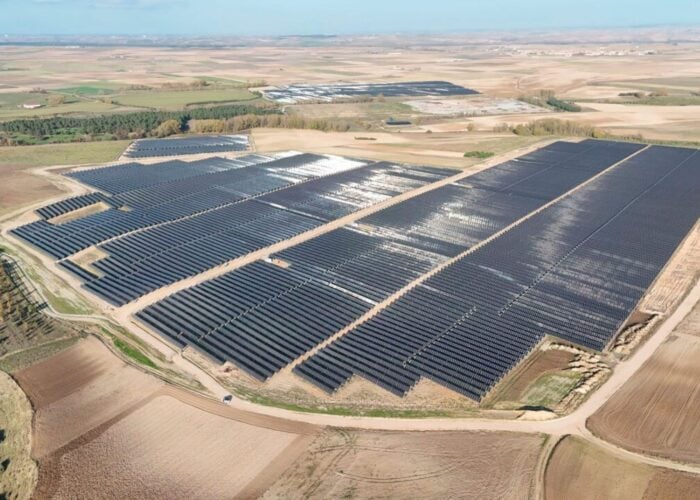
The 300MW Sakaka project, Saudi Arabia’s first large-scale ground-mount plant, is said to have adopted Huawei’s 1500V smart PV solution. Since its connection to the grid in November 2019, the plant has been running smoothly, reaching a maximum performance ratio of 92%. Its actual daily power output in December was 13% higher than that simulated by PVSyst.
As a respected company engaged in cross-sectional businesses, Huawei’s influence over the entire PV industry is obvious to see. The most visible impact is that the company has changed the positioning of the inverter. Instead of being a device only capable of DC-AC conversion, the inverter has become more of a ‘brain’, endowed with intelligent management functions.
With innovative ideas centering on simplicity, digitalisation and smart management, the firm has worked to push the “smart PV” wave forward within the industry. As a company excelling in telecommunications, internet technology, chips and software, Huawei has gradually stood out in developing innovative smart PV solutions.
The Middle East’s decentralised solar opportunity
The AI wave currently sweeping across the whole PV industry looks set to gather further steam in the Middle East in 2020, with solar investors seemingly supporting the trend.
Given the region’s lack of an end-to-end industry chain, practically everything will need to be imported from abroad. Responding to the call, the world’s top PV grands are gathering, with competition starting on the very day when project information documents are released.
“We have been improving our competitiveness and lowering manufacturing costs but, most important of all, we are striving to deliver more value to our customers through technology innovation and lower LCOE over the life span of a plant,” Huawei’s Ma told this publication, adding: “Each year we have allocated over 10% of revenue to product R&D and this number is actually approaching 15% over the past two years.“
“We are always planning potential products that could be offered to our customers. Products that are highly reliable. Such products can stabilise plant operation to generate more power. Our customers, in turn, can secure a higher return on investment as a result of increased revenue and reduced costs,” Ma continued.
“Seen in the bigger picture, I think competition is a significant boost for the PV industry. Companies are required to provide innovation and technical support to meet customer demand,” Ma went on to say. “The large scale of the plants here will lead to an increase in equipment shipments, which will contribute to cost reduction and technology advancement. Only through competition can the PV industry continue to prosper.”
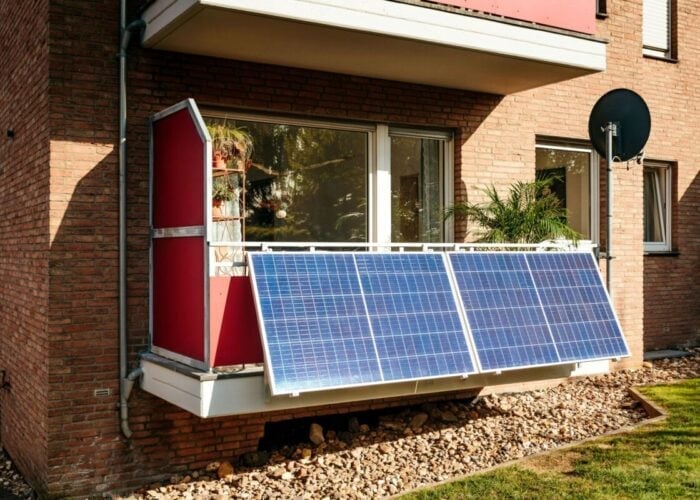
Quizzed over the Middle Eastern and African markets, Ma stated that there is room for growth in the decentralised segment, adding: “That’s why we have also showcased the low-voltage grid-connected products suitable for decentralised PV installations. We expect more countries to introduce supporting policies for decentralised PV deployment and we are ready to work with all stakeholders in the industry for the development of this segment in the Middle East.”